Filter
Tutorial
Tutorial
1970 Shag Haircut with Bangs Tutorial
In this video Russell Mayes, Director of Content for Jatai, demonstrates how to do a 1970 shag haircut. It's a popular hairstyle that has stood the test of time. It's effortlessly cool with volume, layers, and natural style. In this tutorial, the 70s shag hair is cut with a heavy fringe and created with a modern twist. The beauty of this style has kept up with trends and has shown that years later, it's a flattering haircut in any generation.
The curly shag of the 70s was also popular. The shag style complimented the natural curls and gave it nice volume. In this video, the 70s shag is demonstrated with straight hair, but it works nicely on curly hair too.
1970 Shag Haircut with Bangs Tutorial:
Welcome to the Jatai Academy. Today we're going to be doing a shag with bangs, something that's going to be solid and really full. Kind of uh 60s 70s inspired, that Stevie Nicks, Bridget Bardot kind of look. So let's get started.
Taking a Center Section
So we're going to start in the center. We're going to take a flat section right at the front of the hairline and then we're going to take that all the way back to the nape. Same thing on both sides so I have a nice mohawk section going from the front hairline all the way to the back.
As you see here, I'll take my first section around the front hairline hold that up and determine how short I want my shortest layering to be and then using my Feather Styling Razor I'll go through and cut my length off.
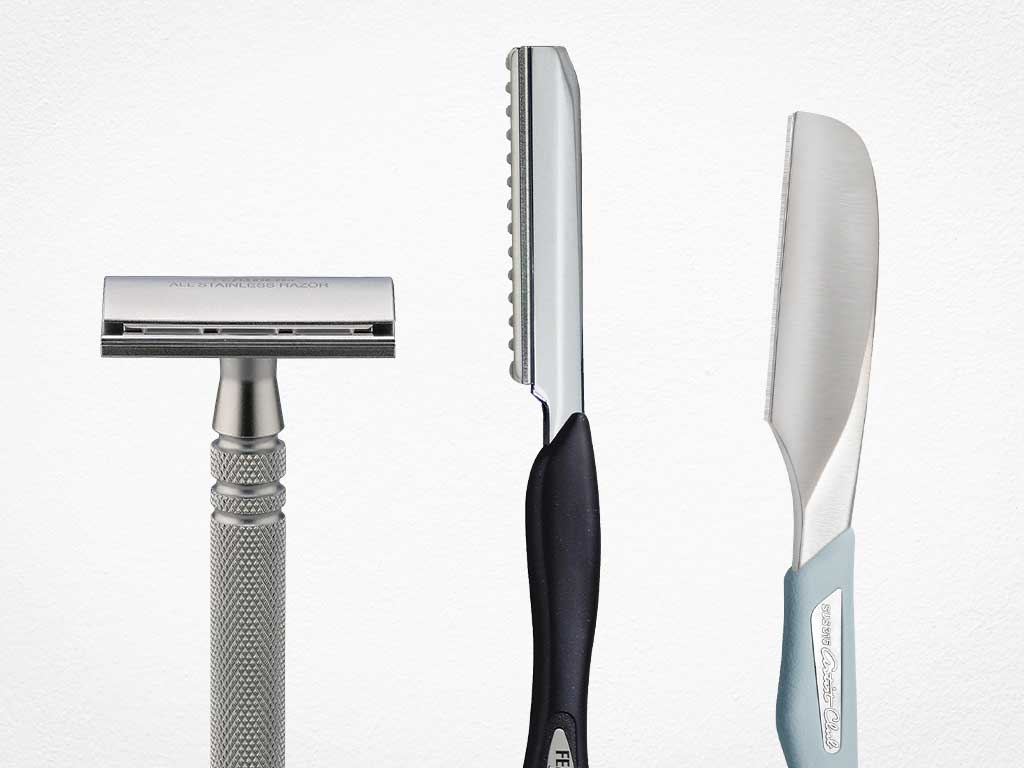
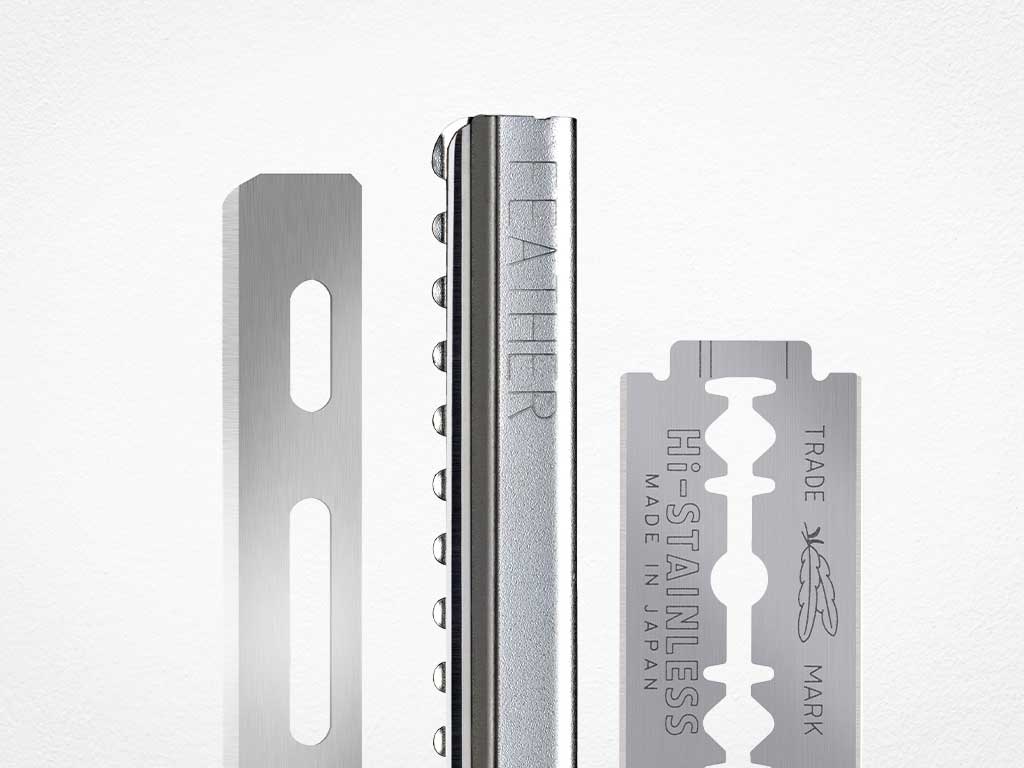
I'm cutting it shorter around the front and longer as I go towards the back. Now one thing I want to tell you about the Feather Styling Razor is I'm using the R-Type Blade. The R-Type Blade covers less of the razor and exposes more of the blade so it's actually easier to cut.
The Standard Blade actually covers more of the blade so it gives you more protection, but it's not going to allow you to cut as thick a section of hair as the R-Type Blade.
So continuing working my layering from short at the front, longer in the back, I'm going to go through and hold each section of my mohawk section at 90 ° until I reach the crown. After the drop crown, I'll pull everything up to that section.
So that's going to give me an increase of length as I go down towards the nape, checking out my layering making sure everything looks even and smooth. Now we're going to continue a parallel section to my first mohawk section and then I'm going to comb it into the center.
So I'm not going to walk my guide from the middle of the head towards the perimeter. I'm pulling all the hair into the center. So what this is going to do is it not only is it going to be shorter in the front it's also going to be shorter in the center of the head and longer as it works towards the ears and longer as it works towards the nape in the back.
So I'll continue to hold everything up at 90 ° from the head into the center of the head following my previously cut guide. And an important thing when you're cutting with the razor is I want to make sure I maintain an even broad razor stroke.
If I use a broad razor stroke it's going to keep all my ends very nice and light and airy. If I take a real tight stroke where I don't take it and move the razor a lot, I'm going to end up with a more solid shape. So I'm using a soft broad stroke here.
Follow us on your favorite social media @jataifeather
Now I'm continuing to work my layering going towards the back following the exact same guide that I was using before. Now we'll continue on. I'm going to take a parallel section and sometimes this section can be a little difficult to take because you're working a curved section on a flat part of the head which is the side.
Pulling everything again directly into the center of my head. So that first mohawk section that I held everything in this haircut as far as the layering goes is being held up in that mohawk section. Holding everything up, the same broad razor stroke that I was taking and just follow through.
If you approach something very very methodical it becomes easier to follow through on the pattern and you can move very very quickly. Once you get the hang of using a razor you can move through this very very quickly and get the length and the texture you want at the same time.
Now we're going to take our last section here on this side of the head. Comb everything up. Anything that hangs over I'll cut off as you can see right there. And as I work towards the back I'm going to pivot around the ear. There we go right through there and continue to work from front to back.
There's our line. Now as we get to the back we're not going to have a whole lot of hair to cut off. So this last section here that we're going to work on there's not going to be a whole lot of hair. So I've been cutting on the inside of my fingers the whole time, but there's not a lot there.
So I'm just going to glide the razor across the outside of my finger and cut any of those long little pieces off that hang over.
Now we're going to go back and take my original mohawk section and the first section on the left side of the head. Finish the same thing on the other side and now we have our layering done. And I think it looks pretty nice and even all over.
Removing Weight from the Top
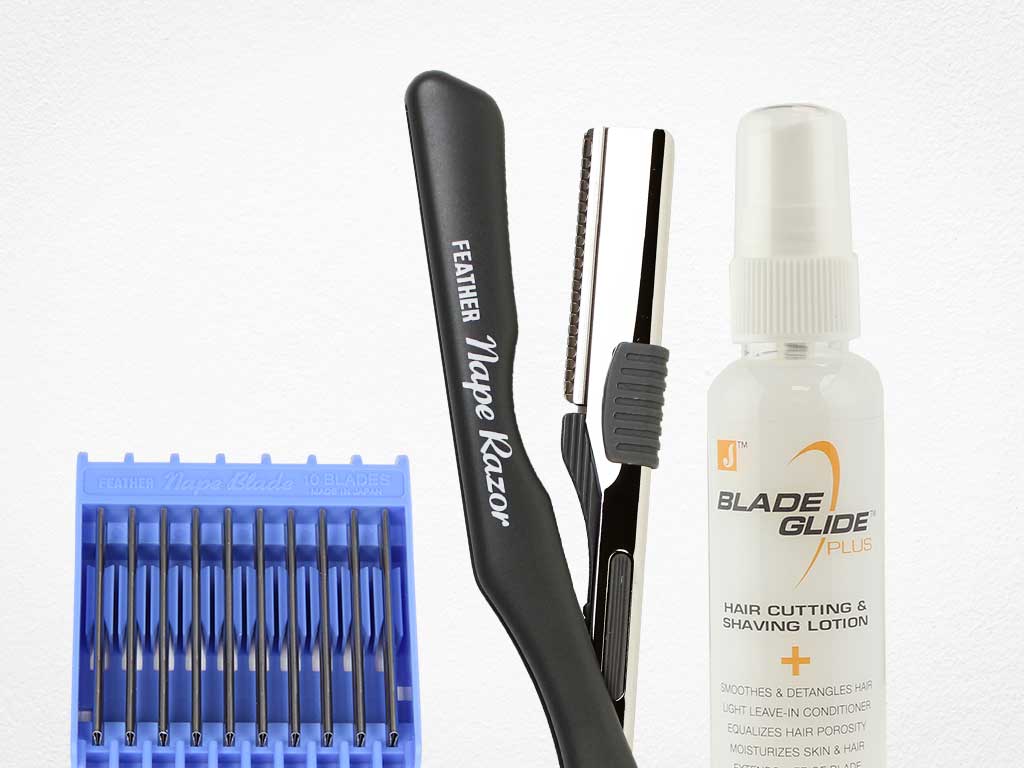
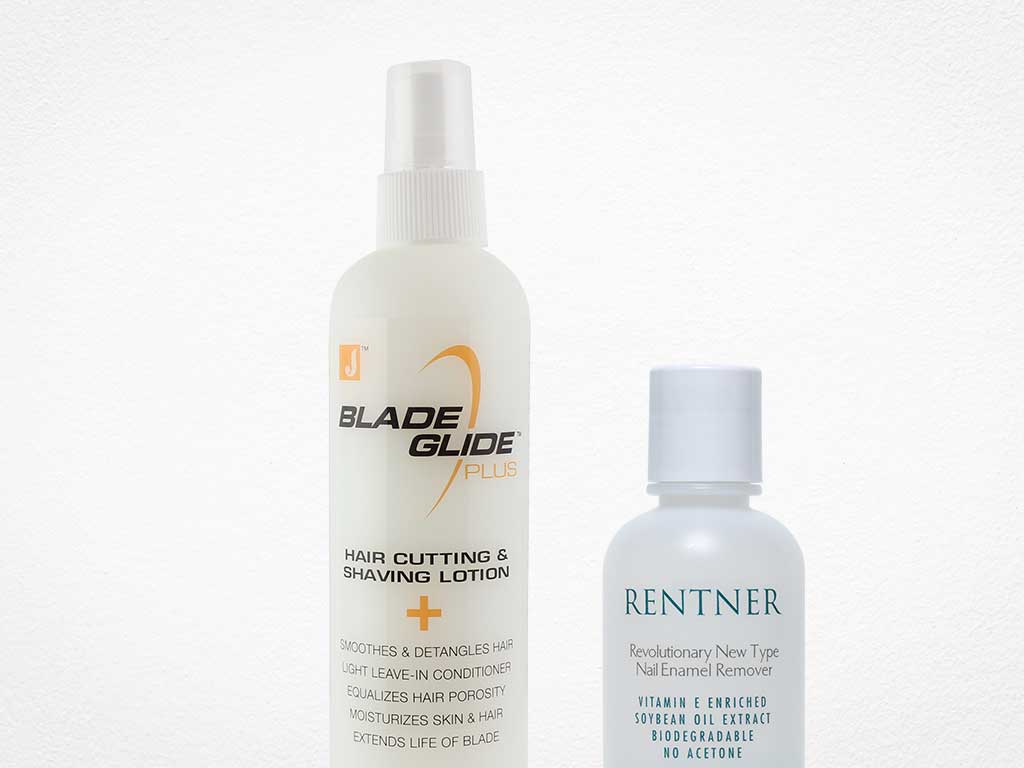
So now we're going to section out around the front because I feel like the layering on top is too heavy. So we're going to take some Jatai Blade Glide, spray that vigorously across the entire section of the hair that we're about to cut because the Blade Glide makes the razor slide across the hair much more smoothly and evenly and gives me a much cleaner cut without the razor trying to snag any hair.
Now we're going to go through and channel some weight out of each section of hair that we started with in the beginning. So we're going to channel it out. Where it's thinner we're not going to take a whole lot.
Where it's thicker you're going to see me take more hair out because I felt like this mannequin head it was thicker on the top and thinner underneath which most of these are. And sometimes you have clients that are like that as well or thicker in one area of the head maybe in the nape, less in the front.
So I'm going to apply my channel texturizing exactly where it needs to be applied. So I'm really paying attention to how much hair I take out with each section. It's not just some haphazardly just willy-nilly throw the razor through the hair. I want to apply it with forethought and with technique so I can make sure that the shape flows exactly like I want.
After I got the first section done I'm going to go through and continue working all the way towards the back. So each section I'll take out as much hair as need be so that I get a nice even amount of weight distributed all the way across the top.
Give us a thumbs up, click subscribe and the notification bell to be notified of future Jatai Academy content.
Now we're continuing on. Now you'll see right there that piece of hair did not have a whole lot of weight in it so I just completely removed it. Thin out the hair on top of it. Texturize it so I have a nice even amount of weight distribution. Cut anything that hangs over around the front off that I don't like.
Now here's my last section right in the nape and I'm going to use the exact same methodology I was using around the front, removing as much hair as I feel is needed. After we do that we've got everything smooth.
Addressing the 1970 Shag Haircut Bangs
Now let's section out our bang section. Let's section out our bang. We're going to take that triangle right in the front and I'm going to cut it in half.
Now after I've cut it in half I'm going to take my center section right there in front of her eyes and I want to cut this longer than I think it needs to be. And I'm going to take a broad razor stroke and cut that off and then look at it and see where it's hitting, seeing how it's flowing.
And now I'm going to cut everything evenly across the front. So I'm not building up any length towards the edges. I want everything evenly across the front so that way I have a little bit of bang that hangs underneath.
I'll cut it a little shorter in the middle but I don't want to cut an angle into it. I want the texturizing to be what allows me to push the hair out of the eyes. So on this section I'm not cutting an angle into it. I may cut it a little shorter right on the nose, but I want to keep that fairly even across and the texture was what's going to give me movement to it.
Now as I finish this I get this even on both sides I like that straight across no problem. Now this section I am going to cut shorter in the middle, longer towards the edges. So I have that hair underneath that's going to be disconnected from this section right here.
You see how it's getting longer towards the edges so that underneath hair allows the longer hair to be pushed up out of the way and gives me an illusion of the hair being longer than it really is because I have that top layer that's a little longer and the underneath layer keeps it out of the eyes so it has that that movement to it without me having to curtain the entire front.
So it's a schizophrenic bag. Underneath is hanging straight and the top is hanging over to the side. And then I'll just fine-tune it to where I get everything exactly like I want.
I like it. I think the bangs look really good. I think we really hit the bangs perfectly today and we got a lot of layering throughout the whole shape which I think is important for this type of shag but still not overly stringy or overly wispy.
It still has a solid shape and I think that that works well especially when you want to get some fullness and some height on the top and have a heavy bang. I think if it's not full all around in a solid shape with a heavy bang it doesn't really fit but that's just my personal opinion and she's ready to go to a Hollywood bungalow. She looks good. She's ready to go.
Check out Jatai Academy. There's all kinds of great information on there that will make you a better hairstylist and barber. Let us know what you'd like to see in the future and we will see you next time. Thank you so much!
Final Look of the 1970 Shag Haircut
Tutorial
Tutorial
Soft Wolf Haircut Tutorial Using a Feather Plier Razor
The wolf haircut is a popular, trendy style that women love. Wolf cuts are beautiful and feminine. Wolf cut hairstyles are characterized by longer layers and differs from a shag haircut in that the front section completely disconnected from the overall length.
Wolf haircuts can be done on various hairstyles, hair texture and lengths. They can be done on short hair, long hair, straight hair, wavy hair, curly hair, fine hair and thick hair. It works will hair colors and hair types. You just might have to make a few adjustments to achieve the desired results.
You can add different types of bangs like curtain bangs or side swept bangs. It also looks good with many face shapes. The wolf cut haircut can also be combined with other styles like the mullet or shaggy looks for a blend of two different styles. It's a versatile haircut!
Watch this soft wolf haircut tutorial and follow along with the transcript.
Soft Wolf Haircut Tutorial:
Welcome back to the Jatai Academy! Today we're going to be doing a version of the wolf cut I like to call the soft wolf cut. And we're going to start here checking out her hair seeing what we got.
We're going to go through and section off an area in the nape. We're going to start with our Feather Plier Razor because I want as much control over my cut line as possible. So we're going to start in the nape here from the occipital to the mastoid. This is going to be my perimeter length and the length of the overall cut.
Establishing the Perimeter Length
So we're going to start pulling everything straight down taking a broad stroke with my razor going back and forth. Since I'm in the middle, this is going to be my neutral my most neutral section. So combing that straight down getting my line cut and then continuing on to the right side and then to the left side.
So keeping a broad stroke because I want these pieces to separate. So the broader the stroke the softer the end result is going to be and the more separation that I can create. So in the center I'll cut from left to right in the middle. And then on the right I'll cut from the inside the center towards the right side.
On the left side I'll cut from the inside towards the left side. That way I can keep my movement the same on both sides of the head just being patient and diligent to make sure I get my lengths similar on both sides.
There we got a little bit longer there on the right side. So just whittling that down until I get this to where I feel like it's the length that I want and it's flowing like I want.
The Front and Face Framing
Now we're going to move up the head. We're going to section from the drop crown to the top of the ears and we're going to comb everything down. We're going to follow our previously cut guide starting in the center and then working out towards the edges around the front.
Again, just following our guide using a broad stroke with the razor then pinching off any little bits that hang out a little longer than I don't like. And then continuing the same methodology to cut my length throughout the entirety of the haircut.
Here we'll take the rest of the hair, comb everything down and anything that hangs over our original guide length will cut off and you'll see I'm cutting from the interior towards the front. Same on both sides.
Now we're going to start our face framing around the front. We're going to take a section from the first bump of the head down to the high point of the ear. Gonna separate that in the middle and I'm going to take my initial length that I want the shortest layer to be.
That's going to be somewhere around her nose and then we're going to start cutting down vertically straight up and down right in the center of her face. So I'm combing all the hair over into the middle of her face holding the section vertically and then cutting from my shortest guide length straight down.
And I want to keep the same broad razor stroke so that I have a consistent amount of softness for the entirety of the haircut. So what really separates a wolf cut from a shag is that this section here on the wolf cut is completely disconnected from my overall length.
So it does not have to blend to the length of the hair that I have in the back. And the less that it blends the more edgy that the cut is. So you can go really really short around the front and make it really stand out or you can leave it softer and longer like I am but it's still going to disconnect from the back.
So I'm visualizing where I want the hair to fall and I'm thinking around the collarbone is where I want this front length to fall. So as I go through and get my initial cut in I want to check and see how it's falling see how it's flowing around the front and then modify my approach as I need to.
So I feel like that's a little solid around the fringe around the bang area so I'm going to go through and channel some sections just to relieve the weight and to help that hair to separate into pieces and to cut it a little shorter right into the center. So I'm just going to take sub sections, hold it forward, channel through, release the weight and force it to separate.
Perfect. Once I feel like I've got that where I want it to fit now where I want it to flow I'll do the same thing on the other side. And this haircut, what really makes it interesting is the separation on the tips. That's what makes any of these shag cuts interesting. And you have to use a razor to get that type of texture.
So if you don't already follow us on YouTube, please click the subscribe button, give us a thumbs up and also you know the notification bell to be notified of any future content that we come out with.
Now we're going to continue that same section which is her left side. We're going to pull everything forward. Now from here I'm going to use my center piece right and the shortest part of her bang as my guide length that I'm starting from. And where I'm going to is the overall length that I created when I cut my first sections in the back.
So, this is going to be connected at the very center of my fringe, the center of the bangs and then disconnected all the way down to my overall length. So the first section I undercut and that's going to pop out and force that to separate.
The next section here is blending through to the guide length in the back. And here you can really see how I took that section. I took the high point of the head right down to the corner of the hairline and the nape using my short piece as my guide and then just completely visualizing cutting that short down into blend to my overall length. Work this all the way through until I get everything blended.
Give us a follow on your favorite social media @jataifeather
Now we're going to start on some layering I'm going to pull a center section, pull that straight up towards the ceiling. Using my shortest piece as a guide in the front where I cut my bangs, I'm going to cut that straight back.
So anything that hangs over that length we're going to pull straight up and cut off. We're going to razor that with a similar stroke that we were using for our overall length and for our layering around the front.
Now if I feel like the hair is really really long I can certainly change the angle of my layering on the top. But here I'm just going straight horizontally across as I pull everything straight up towards the ceiling. Now we're going to pivot our section from the high point of the head.
Now we're going to pivot from the high point of the head around to the right side of the head and we're going to make a pie section. And as we start to pivot I'm going to hold everything into the center of the original cut guide and the new cut guide and then use that as a guide length and raise that throughout so that I get a layering blend from short to long.
And here I just continue to pull everything straight up. By over directing everything straight up you're at a much higher elevation that's going to relieve a lot more weight than if I was to pull it out at 90 degrees head shape all the way down the back of the head.
So here we're going to pivot to my next section. There's my short pieces as my guide we're going to pull that up razor that out and through. Now if you're not comfortable using a Feather Plier Razor or a guardless razor, then you can certainly go through and start doing this layering technique with the Feather Styling Razor because it has a guard built into it so it's a lot less likely that you're going to cut yourself.
Here we're going to pull everything back. You see there's not anything that's really going to blend because we've cut all this around the front. So everything's good. Now we're going to do the same thing on the other side after I check that my layering is nice and even throughout.
Blow Drying and Final Look
I'm liking the way that that's looking so now let's blow it dry. So I'll start by just pulling everything forward to get the bangs kind of back. I'm going to power dry it make it real neutral and then just go through and do a little round brushing to make sure everything is smooth and nice and got a little bit of bend to it.
And here's our end result and I think we've got a nice good amount of layering into the back. It's nice and full. We've got separation throughout and also check out the Jatai Academy. There's a lot of really great information on there that'll make you a better hair stylist or a better barber.
You can really see the disconnection from the front to the back here. I think it looks pretty good. Let us know what you'd like to see in the future and we'll see you next time. Thank you so much!
The wolf haircut is a trendy yet classic style with choppy layers for volume and texture. Whether it's a short wolf or a long wolf, this haircut looks good on many women. This tutorial demonstrates a soft long length wolf haircut using a razor.
Tutorial
Tutorial
Disconnected Layers Haircut Razor Tutorial
Creating a disconnected layers haircut can be a little scary sometimes. When hairdressing you want to make sure you take care of your client in the salon and give them what they want.
Sometimes clients don't really understand the implications of their requests and what that can do to the outcome of the haircut. A disconnected haircut is sometimes one of those haircuts where you have to be careful of how you approach it. Hair cutting to create disconnection is ok as long as it's not over the top (for most clients).
Long disconnected layers can look really nice, but it should be done in a way that doesn't give a mushroom look to the hair or give too much disconnection. Disconnected layers hairstyles can bring more life to the hair and all volume.
But when doing a disconnected long layers haircut, perhaps the technique below will give the results you're looking for. Here's how to cut disconnected layers with seamless ease!
Follow along with this video tutorial or the transcript below.
Disconnected Layers Haircut:
Welcome to Jatai Academy! I'm Russell Mayes, Director of Content. Today we're going to be doing some layering but the layering is going to be disconnected. In the end it's all going to blend seamlessly. It's a really good way to go from really short layering to really long in length very easily. You curious? Let's get started.
Sectioning the Disconnected Layers Haircut
Okay so let's get started here. We're taking a natural or center part right down the center of the head to the crown, from the crown (the drop crown actually) I'm going to go to the top of the ear using my Feather Styling Razor that gives me a good sharp edge to cut with, but it has a little bit of guard to keep me protected from cutting my fingers.
Setting the Perimeter Length
So with my Feather Styling Razor I'm combing everything straight down at zero elevation and going through and taking a pretty deep channel and purposefully trying to cut a point into the hair.
So I want the perimeter length to have a lot of separation. So by going through and holding this down at zero elevation and taking a channel cut all the way until I cut the section off I can end up with pieces that really separate and flick apart on the bottom.
We've cut the bottom part. Now we're going to move up to the top of the head and it's the same pattern that I was using before, combing everything down, finding my guide underneath going through channel cutting and cutting my length off so that I can get that nice soft pieciness on the bottom.
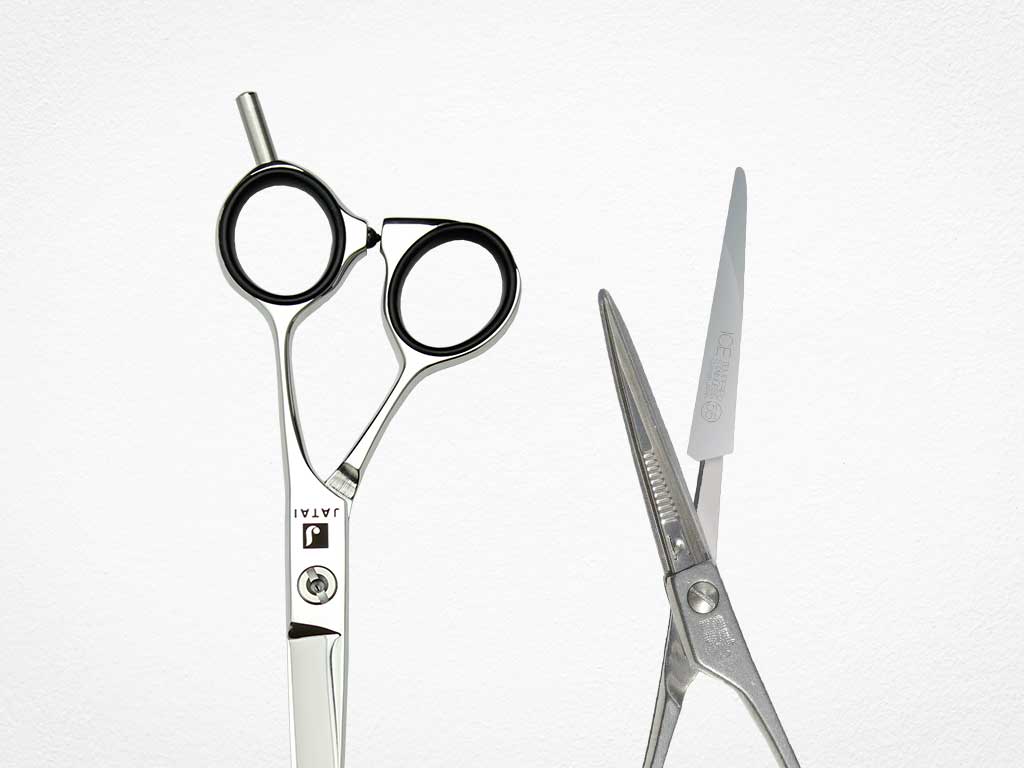
Now if I go through and do this with the scissor it's not going to have the same kind of flow and here you can see we got a nice separation on the bottom and it's still got a nice blunt shape.
Addressing the Front
From there we're going to move around to the front and I'm going to take the first bump of the head from the parting over to the high point of the hairline over the ear.
Then we're going to go back right in the center, take a triangular section, comb that down to where I want my length, cut that, comb everything else forward using that front as my guide.
I'm now going to cut my short piece in the center of the front and angle that line down into my perimeter length. I still want to keep a nice smooth razor stroke on both sides so that I can get it to match.
Now going back into the center you'll notice I'm cutting from the center of the face down as opposed to cutting from my fingertip into to the palm of my hand. This way the hair is going to flow the same way on both sides.
I want to match both sides with my razor action so that I can get that same kind of movement and flow. Here I'm just going to comb everything else from the back of the head down and forward and anything that would hang off my perimeter line that I cut around my face framing. Anything that hangs over I'll cut that off.
So here I'm keeping a solid perimeter shape by keeping my elevation low, but I'm keeping the perimeter texture soft by using a razor.
Check out @jataifeather on your favorite social media platform. We've got all of them. We'd love to hear from you.
Step Layering for a Disconnected Layers Haircut
So now we're going to continue on. I'm sectioning off the head and the four quadrants. Center and then from the high point of the head to the high point of the ear. Here I'll take one quarter and I'll hold that down and where I want my shortest layering to hit I'm going to pull that section straight up in the air hair and cut that really short.
Now with someone as long as her hair is this is going to give you a little pause for concern because you're going to think 'Oh my gosh! That's going to be too short.' But what we're going to go through and do is we're going to disconnect each step of our layering.
So there's my first section right there. You can see it underneath and I'm going to go about an inch longer than that. I'm not going to blend it through.
It's about an inch longer but the razor stroke will give me on, comb that straight up into my previously cut sections and you'll get a nice soft line that will easily allow everything to blend through. I'm going to take my next section, see my guides drop out.
There's the first one. There's the second one. Now I'm going to go about an inch longer going through with my razor keeping the same methodology that I was doing before and going through and using a broad razor stroke cutting that length off.
So by going through and doing this kind of step layering it's going to allow you to build up a lot of length really really quickly. So I can keep the crown very very short and easily blend through my layering down through the bottom without having to over direct in some really steep angle that I'm trying to blend it through.
This will go through and create a tremendous amount of length very quickly and since I'm using a razor. It's going to keep everything nice and soft and it's going to blend through. Here's our last section. Just a last little piece there.
Everything blends. Now look at that. That's layered very very short but I still have a solid perimeter shape. Now we're going to take our guide from the first section on the left side.
Now I'm going to take my section on the right side. Now this part here on the right side (you can see my triangular section right there) this part here I'm going to cut the same length as my parting on the opposite side because this is the new guide for the right side.
So I want to start with the same length on the top and then I will completely ignore all the guides on the left side of the head and comb up and cut this about an inch longer than my previously cut section.
Please give us a thumbs up, click subscribe and the notification bell to be notified of future Jatai Academy content.
Now here we've gone through and done both sides. You can see we got a nice smooth layering with lots of separation and lots of pieciness in the back.
Back to the Front
Now we're going to go through and do the front. We're going to take the same kind of triangular sections that we were working on. There's my guide from the back.
It just dropped out and then I'm going to go through and razor that off with the same methodology that I was doing in the back. But around the front I want to be very very conscientious that I'm going to build this up pretty quickly and you can see my guides drop out from the back so it will blend front to back and top to bottom.
But I want to pay attention to make sure I don't get my layering not stepped enough to where I end up giving mullet layers, where I cut my layering so short around the front that I lose all that length right around the front.
Combing this up, the very last piece. There's very little right there. Oh and we just dropped the comb and she's laughing at me. It's that kind of day and here we go through and check out everything.
Blow Drying and Styling a Disconnected Layers Haircut
We see our layering blends front to back side to side and now we're going to blow it dry and see how we look. On this I start blowing the roots dry first and then I'll go through with a round brush just to get a little bit of a set so I can have a nice amount of volume and a nice little bit of curl pattern to it.
Around the front just curling it to one side to kind of get some flow, get it out of her face. Now we're going to hit it with some cold air to kind of set that movement into it.
When the hair gets hot it becomes pliable. I can pull the natural shape out of it. When it cools down it will re-harden in whatever shape that I want and that's how I go through and style the hair to have body and some fullness to it.
And I think this looks pretty good. We got the layering really short, but we still have a good solid perimeter shape. We got a lot of movement to it. The texture is there and I think that this works really well with her hair. I like it.
Thanks for watching. Check out the Jatai Academy for more information and more content to make you a better hairstylist and barber. Also let us know what you'd like to see in the future and we'll see you next time.
Final Disconnected Layers Haircut Look
Now you know what is a disconnected haircut and how to create it. Disconnected haircuts are a beautiful way to add some life to long hair. We hope you gained some knowledge here and incorporate it in the salon!
Tutorial
Tutorial
A Layered V Cut Tutorial using a Feather Plier Razor
In this video tutorial, Russell guides you through the process of achieving a medium layered V cut tutorial with simplicity and clarity. This is a straightforward demonstration of the steps involved in creating a subtle yet stylish V-shaped hair cut.
Follow along as Russell shares practical tips and techniques, making it easy for you to replicate this haircut in the salon and on your favorite clients. Learn how to use the Feather Plier Razor to cut the hair and maintain modern softness and shape. Jatai Blade Glide is used to keep the hair smooth during the cutting process.
V shapes and V layering is discussed where V layering is when hair is shorter in the front and sides and longer on the back. A V shaped cut is shaped so that the ends angle down into a perfect V in the back.
This V line haircut is a popular hairstyle with long hair, especially when the hair give soft waves or a beachy hair style. This razor cut hair style looks great on all hair types from thick hair, thin hair, straight hair and wavy hair. But doesn't work as well on hair with lots of curls. A Curly hair V cut would make the hair get big really quick from short to long.
A V shaped haircut also looks good on medium to long length hair. In fact the longer the hair, the better. A Long layered V cut is aesthetically pleasing to the visual eye. The V layered haircut compliments the face shape as the layers in front frame the face. It can work with any hair color such as chocolate brown, hair with highlights and blonde hair.
V shaped hair styles have a more dramatic shape. You can see various versions and hair ideas just by scrolling on Instagram or Pinterest. A V shape haircut is a beautiful and feminine cut hairstyle that is versatile and is low maintenance so the client won't need frequent regular trims. Watch this layered V cut tutorial and follow along with the transcript.
Layered V Cut Tutorial:
Welcome to the Jatai Academy. Today we're going to be doing a study on V-shapes and V-layering. Now V-layering is basically where the hair is shorter in the front and on the sides and longer in the back. Now it's not a mullet but it has that that V angle and shape in the back that's very very popular especially on long hair where you put that little bit of beach wave into it. It's very pretty. So let's get started.
Sectioning Your V Shaped Haircut
So to get started I'm going to separate the top of the head from the bottom of the head and I'm going to take the recession all the way straight back to the crown and then I'm going to do the same thing on the other side. See if that matches. That looks pretty good. Match that all the way around.
So we're going to separate the top from the bottom. When I go through and do this layering I need to be conscientious of how my overall length is going to affect my layering.
So if this is my longest point in the back which I want to keep that long because I want it to be longer in the middle of the back, I can pull that forward and see okay that's the length. I pull this shortest piece up here. I know I can't go any shorter than about that right there while still maintaining this overall length in the back.
The next thing I want to take into consideration is the angle of my parting up front. If I angle here and I pull my section parallel, because I'm holding it at a graduated angle it's going to be heavier around the front and it's going to shift back. So do I want it heavy or do I want it light?
Using the Feather Plier Razor to Create a V Shaped Hair Cut
Take my vertical section. I'm going to pull that forward. I'm going to open my Feather Plier Razor. This gives me the most control and the cleanest cut line of all the razors that I have in my arsenal. I'm going to pull this forward. I'm going to determine my length which is about right there and now I'm going to go through and take a nice broad razor stroke parallel to my parting.
From here close the blade when I section so I don't have to worry about cutting myself. I'll take a parallel section straight back. Pull this forward. Alter the curvature of the head. That's the elevation that I'm going to hold this section.
Open my blade. There's my guide. Cut that down and through. Now we're going to go all the way down to the corner of the hairline. I'm going to remove my first section. So now I only have my second and my third. At this section I'm going to hold it at that elevation.
Continue to pull forward. There's my guide. Now I'm going to remove my second section. Pin that out of the way. The next section parallel to my previous and I'm just going to continue to work this all the way back into the center of the head.
There's my guide and as I get closer to the back I should have less hair to cut. Take my next section straight down the center of the back of the head.
Again this is the elevation that I'm holding it. Open that blade. There's my guide. Very little to cut. I finish this side. I'm going to go through and do the exact same thing on the other side.
See if our lengths are the same and they look pretty good. And you can certainly see that this shape is already developing into a V. So the longer the hair is the better that I think that this shape works. The thicker the hair is the more you can take out in a lighter in an area you can get it without it feeling real mullety.
Address the Top for a V Shaped Layered Haircut
So we're going to go through, take a section straight across the top. Pin all this out of the way. I'm going to go through and use a little bit of Jatai Blade Glide just to make sure that the moisture is consistent and also to make the blade glide through the hair easier and cut more consistently.
I'm going to tilt the head down just a little bit so you can see where I'm coming from. There's my guide on the side and we're going to go through cut this straight across to my guide from the other side.
My next section is going to be parallel and I'm basically going to do the same thing I did to the sides just going across the top. Now the reason I separated the top out is because when I start going off the curvature of the head it starts getting elevated a lot more than the sides so it's easier for me to keep control of it by taking the section separate.
Make sure I'm going off the curvature of the head. There's my guide. We're going to go through cut that straightacross.
Next sections parallel to the previous sections as I continue to work that back. Now here I'm going to tilt her head down a little bit and this is the elevation that I'm going off of. Now as I get to the back, you'll see that start to elevate quite quickly.
Go through. There's my guide. A nice broad stroke. Next section and only one after that, lowering the head again. This is the elevation that we're going off of. Get my razor right. Get my section right. There's my elevation. There's my guide.
Go through cut that through and again as I get to the back I should have less and less hair to cut. Last section this is where I'm going to elevate it all the way up. Proper elevation. There's my guide. Go through, cut that length off.
Now by going through and cutting with a razor that's going to keep the ends very light and airy and I think very very consistent and I think very pretty for this type of haircut. Not much on this side. Perfect.
Styling the V Shape Hair Cut
We've got, we got our shape cut into it. I think it looks very nice. It flows really well. We've got this kind of bohemian chic going on with a little bit of uh rocker thrown in. So let's blow it dry. Take a look at it.
We finished our blow dry. You can certainly see the shape developed pretty well. We've got this longer center of the back with it fuller through the back of the head where we left most of the length. As we layered it more around the front, it transitions very well into the back and we have this very you know bohemian 70s inspired kind of shape and that's just the way we blew it dry. V cut hairstyles tends to work well on all types of hair, thicker, thinner, wavier, maybe not curly hair. Super curly hair because it can get real big real quick going from this short to long, but it works really well on most hair. The longer that it is I think the better that this shape works and the better it looks especially if you're going for one of those balayage beach wave type of shapes. A long V haircut is preferable but I think this V hairstyle works really really well. So let us know what you'd like to see in the future. Please check out the Jatai Academy. There's all kinds of great information on there that will make you a better hairstylist and barber and we really appreciate you watching. We'll see you next time.
Final Layered V Cut with Layers
Here's the final V Haircut with Layers look. As you can see the hair in V shape in the back is seamless.
Tutorial
Tutorial
The Bixie Haircut Over 50 Tutorial
As women get older they look to more mature hairstyles. But they still want something stylish and up to date. Short haircuts are often associated with being more mature. And as women age, generally their hair gets thinner so giving it more hair texture and layers to appear more voluminous is desired. You can find many haircut ideas for short hair but you might want to look at bixie hairstyles for older women. It's time to watch this bixie haircut over 50 tutorial.
Unlike the mullet or sometimes the shag, bixie haircuts are more favorable for older women. It can work well with the young modern woman and it can work great for women over 50. It's classic style that can be worn by women of all ages. The bixie is basically a pixie bob haircut. It's a combination of a bob in the back and pixie cut in the front. It's a short hairstyle that's trendy yet classic.
Follow along with the bixie cut video below or read through the transcript. This bixie haircut over 50 tutorial video guides you on how to create this beautiful haircut for your older clients.
Bixie Haircut Over 50 Tutorial:
Welcome back to the Jatai Academy. I'm Russell Mayes, Director of Content for Jatai and today we're going to be studying how to do a bixie haircut. A bixie is basically a bob in the back and a pixie in the front.
So we're going to start here with a natural center part. We're going to section off a little above the occipital bone to the center of the ear. Then we're going to take a triangular section right in the center and I'm going to use my Feather Plier Razor. It is the sharpest razor I have. It also has the most control and gives me the most detail of any of my razors in my collection.
Creating Graduation in the Back
I'm going to pull this out at 90 ° from the head and I'm going to imagine what angle of graduation that I want to create here in the nape. So pulling it 90 ° and cutting it a little longer at the top of the section getting a little shorter at the bottom.
And I'll just go through with a nice even razor stroke all the way through and then I'll start to pivot from the center out towards the edges. I'll pull that back into my previously cut section, find my guide and then follow my guide as I work forward.
So this is a classic you know triangular graduation type of graduated bob that we're doing in the back where it's nice and tight down at the nape and slowly starts to stack and build some volume in the back of the head.
Now I'm going to continue my sections here and continue my razoring and trying to keep the razor stroke the exact same throughout all my sections so I can keep an even amount of weight distribution through each section that I'm doing.
I've gone through and prepped the hair with a little bit of Jatai Blade Glide to give it a nice smooth cutting experience. Now we're here. We're working on the last section. You'll see me pull that out, find my guide from underneath and work towards the edges here around the jawline.
And I want to hit this right around the jawline right just a little bit under the ear so when it falls forward it falls and curves with the jawline and with their natural bone structure. Now I'll go through and do the exact same thing on the other side.
Starting back at the center. Taking my center section and continuing to razor just like I did on the other side. The important thing here is that I'm cutting from the inside towards the outside. As opposed to always cutting from right to left, I'm cutting internal out.
Doing this method makes cutting the right side of the head a little bit more difficult because I actually have to cut over the hand that's holding the section. So I'm cutting from the inside of my fingers towards the tip of my finger.
Where on the other side I was cutting from the tip of my finger in towards the knuckle of my fingers. And just following the same guides that I was doing and trying to create the same angles and the same shape on both sides. Again, pulling out my last section, following my guide, working that in and trying to make sure I fit this right under the ear right around the jawline.
Sculpture Cutting
Now here after I've finished all of that I'm going to go through with my Feather Styling Razor. Now the Feather Styling Razor has a guard on it so I don't have to be as careful. So what I'm going to do here is called a sculpture cut where I'm just basically running the blade across the top of the hair and going through and tapering it and thinning it.
At the top of the section up where my parting is, I use a lot less pressure. And as I get down to the nape where the edges are I'm using a lot more pressure. So I'm going to take out more hair down at the bottom of this section and less hair at the top.
So what this is going to do is it allows me to keep the same shape that I have but I'm thinning it out a little bit around the edges and making those bottom hairs flow and separate and become really really soft.
Now this method does take a little bit of practice. So the first time you're going to do it you're going to go through and use way too much pressure and just whack a big hole in it. So I urge you to practice this on a mannequin head or practice it on somebody that loves you that can't get too mad at you because the first time you're going to remove some hair.
Continuing the Graduated Bob
So now we're going to go back and continue our graduated bob. We're going to take our next section. This is going to go to the high point of the ear. We're going to pin all the other hair out of the way. I'm going to pull this out off of peak curvature of the head which means that if I lay the comb right at my parting at whatever angle of elevation that that comb is showing me that's the elevation that I'm going to pull the hair up to.
And then I'm going to use my guide from underneath and continue my graduated bob. So this will help me build up some shape, build up my bob in the back. But also because I'm using the razor it's going to keep all kinds of texture into it and I can control how much weight builds up.
So I can have a really solid shape, but it will be very very soft in its appearance because I'm using a razor to apply the shape. Do the same thing on the other side just, trying to make sure I get the sides matching being careful not to cut myself too.
If you haven't already, please give us a thumbs up, click the subscribe button and the notification bell to be notified of any future Jatai Academy content.
Now we're going to continue on and taking parallel sections to the previous sections that I had underneath and just continuing that on both sides. I'm going to pull everything pined out of the way start in the center, find my elevation. Right there is my elevation. That's how I'm going to elevate that and hold that up and then follow the guide underneath, keep a broad razor stroke and continue my graduated bob.
Now whenever you're going to start to use a Plier Razor you know a razor without a guard, I have to be very sensitive to the razor stroke and the moving of it back and forth. If I can take the razor and just go straight up and down, I won't cut myself even if I touch my finger.
The reason that I'll cut my finger is if the blade is moving back and forth, not just up and down. So sometimes I start with a circular motion and that's when I can cut myself. Whereas if I just continue to go straight up and down, I run far less of a risk.
Here you can see where my graduated bob is giving me a nice little corner right around the front and continuing that nice solid shape. Going back to cutting with the razor, start small. Take your sections small. Don't start with large sections. Small sections are a lot easier to control.
When I apply the razor to the hair, I want the razor moving. Moving razor cuts so much easier than me trying to force it. And also, I want to make sure that I have a very very sharp blade. The sharper blade makes it effortless to cut. If I feel that the hair starts to push or I have to push the razor against the hair to get it to really cut, it's time to change the blade.
Now here's our last section and I'm just combing everything in its natural fall and even distribution around the natural parting. And anything that hangs over from the hair underneath, I'm going to cut off. Now this elevation here as you see I'm getting around the front.
The Fringe
Around the front I will elevate it less to build up a little bit more of a solid shape there around the front. So elevate more in the back, a little less around the sides. That will give me a nice bob shape.
And just taking my time and making sure everything fits in nice and tight like I want. Continuing the same thing on the other side, trying to match my razor stroke as much as I can. The more that I can match my razor stroke on both sides obviously the more even and the smoother and the more balanced that the haircuts going to be.
I could always go back in and you know thin hair out more by channel cutting it, but the more optimize that I can get while I'm cutting it the better it's going to be and the more that the shape is really going to set in.
Here we're going to start around the front. I'm taking a section from my bang section all the way to the high point of the ear and now I'm going to go through and start working on my little pixie bangs and blending that into the corner of my little bob shape right there around the bottom.
I think this is too much hair so I'm going to pin some of that hair out of the way. And I'm pulling this straight forward. There's my little bang shape and I'm cutting that down in a nice broad stroke all the way to the corner of my bob shape in the front. Right there. That's the length I'm going to and I want to make sure everything blends through.
As I need to I'll go through and channel cut some of that out to make sure that my texture is really soft and really separated around the front. I want to see a lot of separation around the front to give me a little bit more movement and a more lived in type of shape.
I think that you know hair fashion right now is all about soft movable shapes. It's not about this real precise glass smooth types of precision that was so prevalent in the 70s. There's so much more freedom of movement in in today's modern hair shape than it was in the past.
So we're going to continue on with that. Now we're going to take our next section, pull that forward, follow our guide from underneath. We're going to channel cut first and then cut the length off so that we can kill two birds with one stone, channeling, removing of weight and removing of length.
If you don't already, please follow us on your favorite social media @jataifeather. We've got Facebook, Instagram, Twitter (X), Pinterest and even TikTok.
Beveling the Shape
Now I'm just shaking it to see how it fits in to see if I need to remove any more weight around the front. Going to continue on. As I continue back from the front, I am elevating the hair. So by elevating it it's going to remove more weight than if I just continue to pull everything forward.
So this is going to actually bevel my shape going from the front to the back. So I'm cutting a round shape not only from the top going down but a round shape from the front to the back.
So it's going to have more fullness around the back especially around the ears because that's going to give me my bob shape, but it's also going to be really really layered really textured so I get that pixie shape around the front and around the top.
So I get that shortness and that airiness around the front, but I also have some hair to give me some fullness around the ears and make it much more interesting than if it's just a pixie haircut all over.
Continuing to channel through. I'm going to do the same thing on both sides. I'm going to work this all the way to the center of the back and then continuing to elevate bringing that into my previously cut section.
Being mindful of my razor stroke. Being mindful of how much texture that I'm applying, how thick each section is. Because when you hold it up you can see where the sections are thicker. I'll take out more like right through there. That's pretty thick. We'll take some of that out.
As I get to the bottom maybe it's not so thick so I don't take as much out. So I want to pay attention to that and each section gets its own attention to detail to make sure it fits within its own boundaries. That's why I'm always shaking it so much like this to see if there's any weight that sticks out like I don't want and to make sure everything's flowing and give it a nice kind of lived in.
Final Look
So here's our end result. Here's our shape. We're going to go through and blow it dry and I'm just going to put the diffuser on, put a little bit of texture spray into it and just go through and diffuse it and use my hands to style it as opposed to using a brush because I want this to have a natural lived in shape. And the diffuser and my hands will help me develop that.
Put a little bit of styling cream on it at the end just to smooth some of my texture out make sure that I got my pieciness in there like I want. Here's our end result. And you know I think it looks pretty good. We got a nice little bob shape there on the sides in the back that you can tuck behind the ear or I can have that come forward. Got a lot of variety. I like it.
Please check out the Jatai Academy. There's all kinds of great information on there to make you a better hair stylist and a better barber. Also, let me know what you'd like to see in the future and thank you so much for watching. We really do appreciate it.
Short Bixie Haircut Over 50 Final Thoughts
As you can see If you followed along in the video, you can see how this bob pixie haircut can work with a range of ages. It's classic yet modern look can be adjusted and styled based on client preferences. You can make it a pixie bob haircut with bangs or small curtain bangs and you can style it for more volume or more flat. It's a versatile cut that women can appreciate.
Tutorial
Tutorial
How to do the Butterfly Haircut with Bangs on Long Hair Tutorial
In this article we're going to be doing a long length butterfly haircut with curtain bangs using the Feather Styling Razor. Follow along with the video. The video has been transcribed below.
How to Do the Butterfly Haircut Tutorial Video:
Channel Cutting
So this is how to do the butterfly haircut. We're going to start in the middle with a section straight down the middle all the way back center back of the head. We're going to go from occipital to mastoid. That's going to separate all the flat area. And then since that area is a little bit thick I'm going to take a subsection of that and just give me enough hair
I can control using my Feather Styling Razor and the special pink edition. We're going to comb everything down and I'm going to go through and channel cut each one of these little sections so that I can get a piecey separation but still maintain all my length.
So my razor stroke is probably about a 2 inch stroke but by going through and putting the tip of the blade in and channel cutting it, I'm not only texturizing the ends but I'm also cutting the length at the same time.
Now here I'm going to go through and continue the same methodology, take my next flat section, comb that down find my guide, go through with my razor, channel cut that into the desired length that I want so I can maintain separation on the bottom but still keep a very solid shape.
I can certainly go through and channel deeper if I want more separation, more thinning. But I just want this texture to be on the ends so I'm going to go through and keep it just on the ends concentrated to where I want it to be and just follow the same guide that I had before and try to keep the same razor stroke of about 2 - 2.5 inches.
Here I'll comb everything down make sure I don't have any long little stragglers and now I'll just continue this same methodology all the way up the head until I run out of hair. Same thing just combing everything down using my guide and continuing until I run out of hair, until I cut everything one length in the back.
Butterfly Wing Bangs
Now the whole idea behind the butterfly cut is that I keep my layering around the face and the back of it doesn't have a whole lot of layering. It's mostly concentrated around the face with beautiful face framing layers.
So from here I'm taking from the first bump of the head where the bangs are to the high point of the ear. I'm going to pull a little section out in the center. I'm going to pull that forward and right about the tip of her nose I'm going to go through and channel cut this to make sure I get the right length that I want and also to get the separation that I want.
So I want separation and pieciness and light and airiness on the ends but I still want a solid shape internal. So I'm going to use my little piece as my guide that I did right in the middle.
Now I'm going to take a broad razor stroke and go through and cut this entire length off. Now the difference between me channel cutting and just razoring the whole length of it off is by razoring the whole length of it off I'm actually going to get a lighter airier separation on the ends but I'm going to maintain a more solid piece.
Whereas if I channel cut it, I'll force that to separate into pieces that are much more defined so I'm pulling everything forward following parallel to my main parting that I took and cutting my length that I want.
I'm going to do the same thing on the other side. Take a nice broad razor stroke cut all that length off but I still want to maintain all of my length. So by razoring this front off, I'll show you how I create shortness in the front and then build that up into a lot of length in the back.
So once I get everything fit in around the face look I want by pulling it forward I'm actually going to feather everything back. And this cut is very reminiscent of a 70's you know Farrah Fawcett kind of feather cut.
Addressing the Back Sections
After I get everything fit in like I want around the front, I'll continue my sectioning towards the back of the head. Here I'm taking from the high point of the head right to the mastoid. I'll find my guide underneath and then I'll continue that same broad razor stroke all the way down.
Now here where I started in the center I blended that with my guide underneath. As I continue to work down I will increase the length so it only blends at the top of the head, but as I get closer to the bottom of the head it gets longer and longer and longer. So I'm actually step layering it going from the front to the back but keeping it blended right there at the top in the bang section.
Checking my overall length and shape and seeing how that's fitting in around the front and making sure that looks good before I continue on to the opposite side. And I'll do the same thing.
It's going to blend right at the top center where her bangs are and it's going to gradually increase in length as I go down the head and get into my perimeter length. So by keeping it short and layered around the front and then disconnecting it as I go towards the back I can still get a blend because it is blending from the top to the bottom.
Checking the lengths there making sure they're looking pretty good. Got a little bit right there on the left side making sure that that blends in. And taking my time because this is important that I get the textures right and the shape even around the front because when I feather it back I want it to be as symmetrical as possible on each side.
Now since it's not a real precise haircut on the shape that I'm cutting, it needs to be precise and how it fits the head. So as I continue to work back, the sections blend at the top and then gradually step disconnect as it it goes towards the bottom but I want to make sure that I'm keeping all of my sections very very symmetrical and the same on both sides.
I don't want one side to get layered more than the other. I already have an off center part so I have to deal with the weight distribution but by keeping my partings the same on both sides I can maintain a symmetry in the haircut. After I finish that I'm going to go right back to the center of the back of the head pull everything forward and down.
Now you notice the further in the back I go, the more I angle that section down. The more that I angle it down the more weight that I'm going to create. The more I pull it forward the more feathering back that I'm going to create.
So after I go through and cut the entire side I'm going to shake it out and check it. It's going to be layered a lot more around the face. It's going to be lighter and a lot heavier in the back. But I want to check and make sure that my flow is proper. It's flowing out of the face and giving me that kind of feathery butterfly wing kind of look.
Now this one's going to be a little shorter because I've cut a real short little bang right in the center that I'm using as my guide. You could certainly do this a lot longer like Farrah had it and have that flip more around the face but on this one with some bangs it gives it a little bit more neutrality and interest around the eyes.
So I'm going to continue the same thing on the opposite side here continuing to pull everything forward and down and making sure that that blends in through with the front. Making sure I'm taking my time and that my partings are symmetrical on each side.
Continue to pull if nothing cuts. If nothing reaches, nothing gets cut. I'm going to pull and check following through with my razor. Now as I go through and razor, I'll start at the base of the blade back closest towards my hand and then as I razor motion, I'll go more toward the tip.
I don't want to just razor with just the tip. I want a razor using the entire length of the blade so that I can use the whole blade and it doesn't dull out just the tip. Check this side make sure everything's looking pretty good, shaking everything out and seeing how it looks.
And I I think that this is looking pretty good. Real solid on the bottom but very light and airy around the face. So let's go through and put a little texture spray into it and go through and blow it dry.
Blowdrying
I'm going to blow dry everything back off the face and then we're going to put a little bit of curl in it just to enhance it a little bit. You can certainly see that we got a lot of layering around the front.
It's feathering back off the face. We can put more curl in there if we want, less curl if we want. From beginning to end, this is how to do the butterfly haircut. We hope you enjoyed this demonstration.
A few notes about butterfly haircuts in general. Butterfly haircuts work best on medium to thick hair. They don't work as well on thin hair. It can work on any hair color from blonde highlights to brunette to colored hair.
The butterfly cut creates wispy layers in the front for extra volume. It's the short layers in the front that gives the butterfly haircut it's name. It's a lovely style that can work on medium to long hair.
You can do a short butterfly haircut with curtain bangs but the hair should be at least to the collar bone. And while this was a tutorial on a butterfly haircut with curtain bangs straight hair, it can also be done with wavy or curlier hair types.
The Final Butterfly Haircut Look
Follow along on how to do the butterfly haircut in the video above or watch it at Jatai Academy's Education Connect portal. There's a lot of great information on there that'll make you a better hairdresser.
Tutorial
Tutorial
Step-by-Step Curly Mop Top Razor Haircut Tutorial
It's 2023, the age of TikTok and Instagram where social media is a driving factor in hairstyle trends. Before social media, influential people like the Beatles were the inspiration for hairstyles, but today TikTok influencers like Josh Richards set the trends.
And the trending haircut for teenage boys is the curly mop top haircut. This top hairstyle is characterized by longer hair that's low maintenance but with a textured appearance, also known as a wet mop.
In this article we will go through the steps to creating this style using a Feather Plier Razor. Russell Mayes, the Director Content for JATAI, is an excellent educator who explains step-by step how to give this popular haircut.
Curly Mop Top Razor Haircut Tutorial:
Sectioning
Start your sectioning with a center section to the occipital bone and then from the occipital bone to the mastoid to separate the bottom out of the back.
Graduation
Taking the center section, comb everything straight down and with long broad stroke, go back and forth across the section with the Feather Plier Razor. Slowly, gently, methodically try to graduate the section so you get a little bit of stack. But you don't want a lot of weight.
Repeat on the right and left section. Bevel the sides a bit but leave the hair a little longer towards the middle. Check the lengths on both sides to make sure it's even.
Channel Cutting
Take the next flat section from the occipital bone to the top of the ear. Now go through and channel cut the section. By channel cutting one direction and then cutting the length off the opposite direction, it will give more separation of curl and removal of weight. The goal is to have light airy texture on the ends with a lived-in look. The only way to achieve this is to channel cut with the razor.
Now separate the front of the head from the back of the head which is the high point of the head straight down to the high point of the ear. Elevate the hair off the peak curvature of the head. Continue to channel cut the sections in one direction and then cutting across the other direction.
Front Sections
For the front, take the first flat section around the hairline to the section right behind the top of the ear. This allows you to have a little guide from the back. Come the front section down to the length that you want. In this case, it's the tip of the nose.
Channel cut the section and cut across the section as before but be very diligent and methodical with your approach. You don't want to just go in and shred the hair. Continue to work the remaining sections in the same way until you run out of hair to cut.
Final Look
When finished, use some curl cream and ribbon out the curls to force the hair to curl together to have a nice soft texture. Take your time and get the curls to clump together. It goes a long way to fight the frizz. Use a diffuser to dry the hair or let it air dry.
And there you have it! This curly mop top haircut is versatile and can work on straighter hair textures as well. No need to login or sign-up. Watch it instantly!
About the Feather Plier Razor
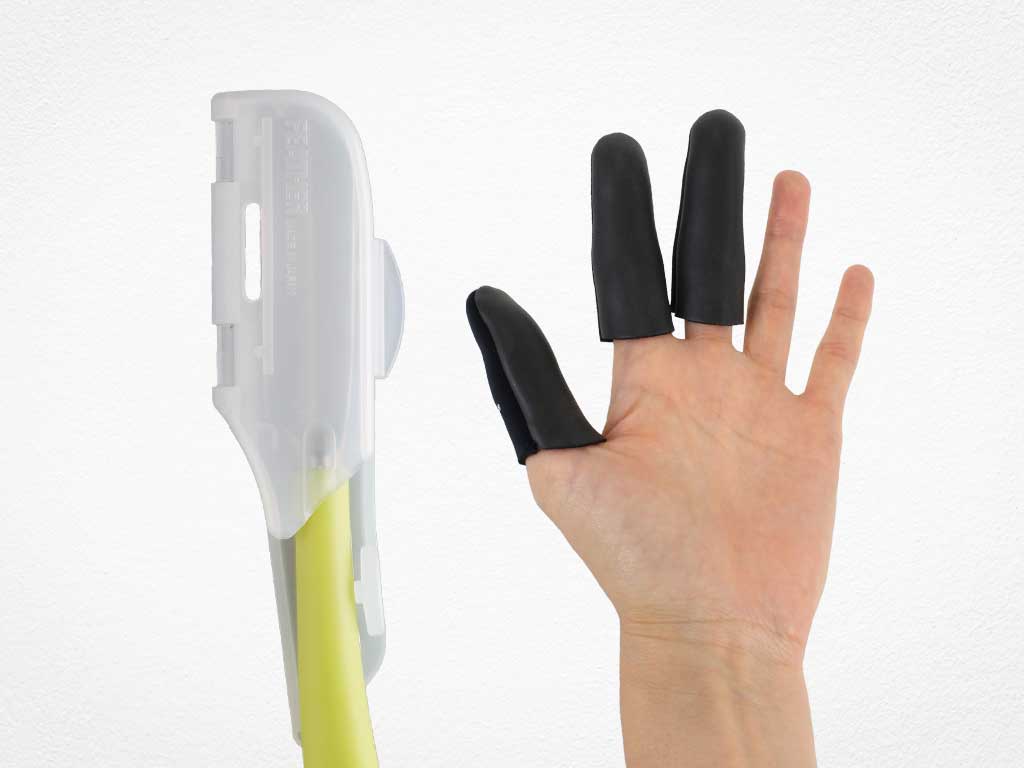
The Feather Plier Razor is an advanced haircutting razor that should be used with caution. Since the handle uses bare blades you can easily cut yourself if you're not careful. Be sure to practice and get adequate training before attempting to use it on a real client.
You can also, use a Feather Styling Razor which uses guarded blades to achieve similar results. Since the blades have a guard, they will not cut you.
Tutorial
Showing 19/19