Filter and sort

132 products

0 selected
$

0

$

675.00

0 selected
0 selected
0 selected
0 selected
0 selected
0 selected
0 selected
0 selected
0 selected
0 selected
0 selected
0 selected
0 selected
0 selected
0 selected
0 selected

Feather Styling Razor Black Handle

Feather Styling Razor

$46.95

Option Selector

+3

Feather Plier Razor + 2 Packs Plier Blades Bundle - Cartridge

Feather Plier Razor Blades

From $16.00

Feather Styling Razor Standard Blades 10pk

Feather Styling Razor Standard Blades

From $12.65

Feather Artist Club Professional 20 Blade cartridge

Feather Artist Club Professional Blades

From $14.00

Feather Styling Razor Kit - Black

Feather Styling Razor Kit

$59.00

Option Selector

+3

Feather Switch Blade Shear Blades

Feather Switch Blade Shear Blades 4.5"-7.5"

$14.50 $10.15
Option Selector
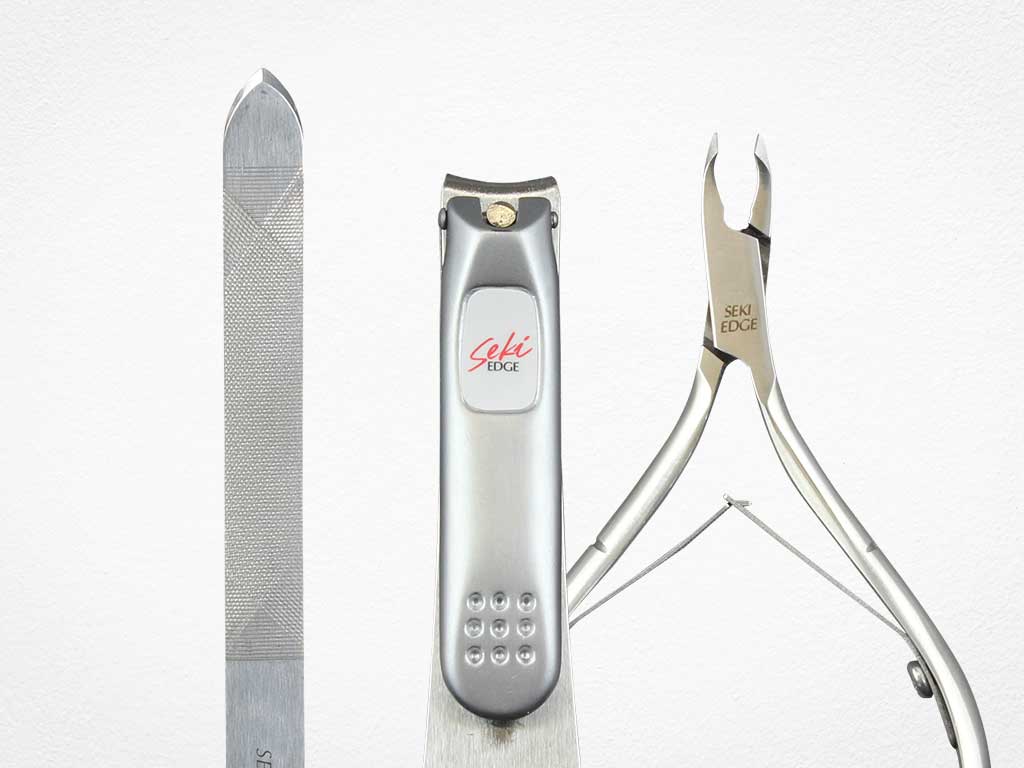
Seki Edge Stainless Steel Nail Clipper SS-112

Seki Edge Stainless Steel Nail Clipper (SS-112)

$25.00 $18.75
Option Selector
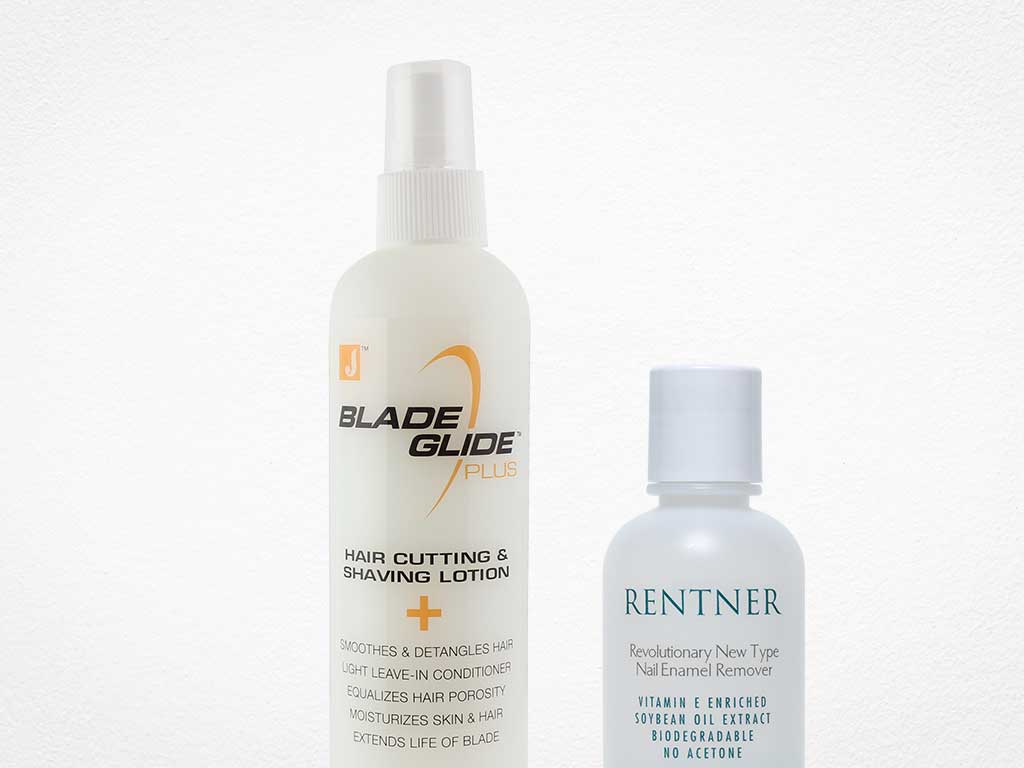
Jatai Blade Glide Plus 8oz

JATAI Blade Glide Plus 8 oz

From $10.95

Feather Artist Club ProGuard 15 Blade cartridge

Feather Artist Club Pro Guard Blades

From $16.00

Feather Nape and Body Razor Blades 10pk

Feather Nape Blades

From $12.65

Feather Plier Razor

Feather Plier Razor

$150.00

Option Selector
Feather Artist Club Super 20 Blade cartridge

Feather Artist Club Pro Super Blades

From $16.00

Showing 16/132

RELATED ARTICLES

The Best Fingernail and Toenail Clippers on the Market

The Best Fingernail and Toenail Clippers on the Market

by JATAI, 15 Nov 2021
One usually doesn't think about nail clippers too often, but they sure come to mind when your nail tears or if your nails are getting too long and need a trim. Having a good quality nail clipper can surprisingly give a certain satisfaction you wouldn't expect. It's easy to pass off a nail clipper as just a tool you need to trim your nails, but have you ever used a nail clipper that delivered a subpar experience? For example, have you ever tried to use a nail clipper that required a lot of pressure to cut through the nail or that left jagged nails? It's not an uncommon occurrence. For many people these are their biggest gripes. And who wants to deal with frustrating and unpleasant experiences. Even the smallest of tasks (such as clipping your nails) shouldn't give you a headache or another thing to be annoyed with. Nail clipping is something one does pretty frequently so it's important that whatever nail clipper you're using will stand the test of time. The good news is there are some high-quality fingernail and toenail clippers that can deliver sharp, clean cuts with minimal pressure. While having an awesome nail cutting experience is not on the top of everyone's list, it is a small task that can be made much more pleasant with superior tools. Introducing Seki Edge nail clippers! These are high quality Japanese nail clippers forged with Japanese stainless steel, manufactured and hand-finished by craftsman. What's really cool is that the makers of Seki Edge, Green Bell, are descendants of samurai sword makers who merge traditional samurai sword making techniques with modern ones. As you can imagine, these nail clippers have sharp blades. Imagine a samurai sword cutting your nails?! That's pretty insane. Made in Japan, they are quality tested and go through many steps to achieve this perfection. With tools that are sharp like samurai swords, you're sure to get an awesome experience. When cutting your nails, it's important to use the proper nail cutter for the type of nail you are cutting. Fingernail clippers are small overall. Since fingernails are generally smaller than toenails, they are made to more easily cut around the fingernails with ease and control. In fact, if your toenails are small too, you can use fingernail clippers to cut your toenails.   THE DIFFERENT SEKI EDGE NAIL TOOLS Fingernail Clippers Fingernail clippers can be useful for cutting children's nails (both fingernails and toes) as well as softer, brittle nails. For less pressure and for smaller nails, use a fingernail clipper. Seki Edge carries a variety of fingernail clippers. Some have special features such as a built-in nail file or a nail catcher to catch nail clippings.  The Seki Edge Stainless Steel Fingernail Clipper SS-106 is the most popular fingernail clipper in the line. It's sleek, sophisticated and works like a charm. If you like a fingernail clipper with all the features, the Deluxe Fingernail Clipper SS-101 has all the bells and whistles you need. It has a built-in nail catcher and nail file. So this all-in-one Japanese nail cutter is economical and provides a lot of value.   Nail Scissors You can also use a nail scissor, but these are less common. Nail scissors are used if you want more control or if you are trying to shape your nails a certain way.   Toenail Clippers When it comes to cutting toenails, a heavy duty toenail clipper is best. Since toenails are often much thicker and wider than fingernails, a stronger and larger nail clipper may be needed. Toenail clippers feature larger, wider jaws and are overall larger than fingernail clippers. The Seki Edge Stainless Steel Toenail Clipper SS-107 is the most popular Seki Edge toenail clipper and can generally do the job. Another nail clipper that is on the rise is the Seki Edge Stainless Steel Nail Clipper SS-112. It's gained massive popularity due to its fantastic cutting ability. It also has a built-in nail file on the top of the lever. It's heavy and delivers a smooth clean cut.   Nail Nippers A thick nail can be addressed by either a heavy duty nail clipper or a nail nipper. Nail nippers have very strong curved blades, sharp cutting edges and are especially useful for very thick nails. While toenail clippers for thick nails are available, sometimes they are just not strong enough to cut through the thickest of nails. With a nail nipper you can steer your cuts for more cutting control and they have very powerful jaws that cut the nail from the side as opposed to the top and bottom. This makes cutting a very thick nail much easier. For special circumstances such as an ingrown toenail, use a nail clipper with a straight edge or an ingrown nail nipper. Ingrown nails should be cut straight across to prevent the nail from growing into the corners of the skin. If the ingrown nail is also very thick, try the Seki Edge Ingrown Nail Nipper. It's a unique nail nipper where the jaws curve outward so that you don't cut into the nail. Instead, it cuts away from the nail helping you cut straight across.   CONCLUSION Each Seki Edge nail clipper gives a precise cut. They have a sharp curved blade on the top and bottom that come perfectly together to create clean cuts. If you're looking to have nicely trimmed toenails or fingernails, these nail clippers are the best place to start. You won't go wrong with a Japanese nail clipper by Seki Edge. In fact, it will be the only one you'll need. While the Seki Edge line carry several different nail clippers, it is a full personal care line with other tools such as nail nippers, cuticle nippers, grooming kits, eyelash curlers, tweezers and more. To complement the nail clippers, perhaps pair them with a nail file or cuticle nippers. Even if you get your nails done by your favorite nail tech, you can still do some maintenance at home such as trimming hangnails or filing down chipped nails. And if you're a DIYer then these are the best manicure investments you can make. If you want a set that includes a variety of manicure tools, a nail grooming kit can be a good choice. From two to nine pieces, Seki Edge grooming kits have a selection of tools important for any manicure. Most of them include a Seki Edge nail clipper. There have been many satisfied customers who swear by Seki Edge nail clippers. They are ranked very high on other popular websites and review sites. And if you're still not sure if these nail clippers are for you, there are extensive reviews on YouTube about them! That's right...the social proof on these clippers is plentiful. You have found the best fingernail and toenail clippers on the market here. Give your nails the pampering and TLC they deserve and feel the edge with Seki Edge.   Product, Nail Clippers
A Simple Guide to Tweezer Types, Uses and Features

A Simple Guide to Tweezer Types, Uses and Features

by JATAI, 11 Oct 2023
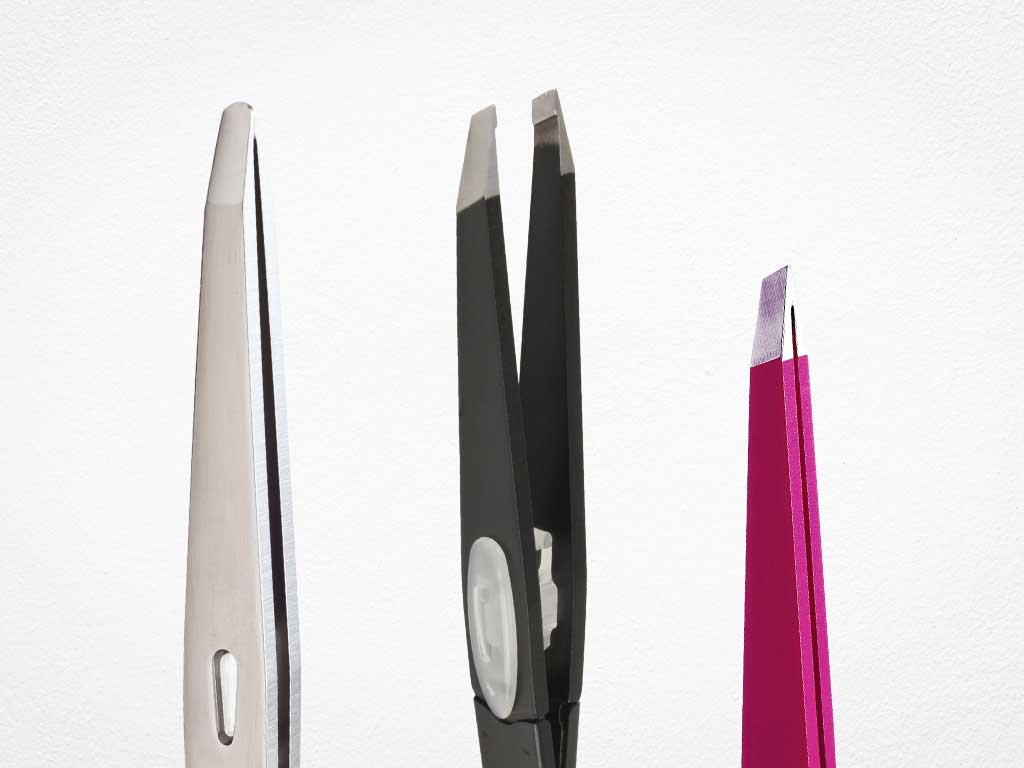
Tweezers are versatile and indispensable tools that have been used for centuries for a wide range of purposes, from personal grooming to intricate tasks in various industries. These small, handheld devices have evolved over time, and today, there are numerous types of tweezers available, each designed for specific uses. Here is a simple guide to the different types of tweezers, their uses and the key features to consider when choosing the right tweezers for your needs. Types of Tweezers Slanted Tweezers Slant tweezers are the most common type and have a slanted tip that is perfect for general grooming tasks such as plucking eyebrows or removing small hairs. The slanted tip provides precision and control, making it easier to grab and remove hair from the root.   Pointed Tweezers Pointed tweezers have a sharp, pointed tip that allows for highly precise tasks. They are ideal for tasks that require accuracy, such as removing splinters, ingrown hairs, or for detailed crafting and jewelry work.   Flat Tweezers Flat tweezers have a flat, wide tip that makes them suitable for gripping larger objects or holding items in place. They are commonly used in electronics, medical procedures, or when handling delicate materials like fabrics or papers.   Rounded Tweezers Rounded tweezers, as the name suggests, have a rounded tip. They are often used in medical and cosmetic procedures that require gentle handling, such as applying false eyelashes or removing contact lenses. They are also great for those who have sensitive skin or need to take extra care not to poke themselves such as diabetics.   Curved Tweezers Curved tweezers have a curved tip, making them ideal for accessing hard-to-reach areas or for tasks that require a specific angle, like removing splinters or working with small electronic components.   Uses of Tweezers Grooming Tweezers are widely used for grooming purposes, particularly for shaping eyebrows, removing unwanted facial or body hair, and maintaining a neat appearance. Slant tweezers are the go-to choice for eyebrow maintenance, allowing for precise plucking and shaping.   Medical Procedures In the medical field, tweezers play a vital role in various procedures. Pointed tweezers are used for removing foreign objects, splinters, or debris from wounds. Rounded and curved tweezers are commonly used in surgical procedures or for delicate tasks such as suturing.   Crafting and Jewelry Tweezers are invaluable tools for crafting and jewelry-making enthusiasts. Pointed tweezers are perfect for picking up small beads, stones, or other tiny components, while flat tweezers provide stability and control when working with delicate materials.   Electronics and DIY When working with small electronic components or performing DIY repairs, tweezers are essential for precise handling. Flat or curved tweezers are often used to place or position components, while pointed tweezers can assist in tasks such as soldering or circuit board repair.   Features to Consider Material Tweezers are typically made from stainless steel or titanium which offer durability and resistance to corrosion. Stainless steel tweezers are more affordable, while titanium tweezers are lighter and more resistant to staining or discoloration.   Tip Alignment Ensure that the tweezer tips align properly and meet precisely when closed. This is crucial for accurate gripping and plucking without causing discomfort or damage.   Grip and Comfort Look for tweezers with an ergonomic design and a comfortable grip. Some tweezers feature a textured or rubberized handle, providing better control and reducing hand fatigue during prolonged use.   Spring Mechanism Some tweezers come with a built-in spring mechanism that helps reduce hand strain and fatigue. This can be especially useful for individuals who require repetitive or extended tweezing sessions. The Seki Edge Amazing Tweezer has a unique spring technology that transfers strength from the hands to tweezer tips to prevent hand fatigue.   Maintenance Consider the ease of cleaning and maintenance. Tweezers should be easy to sanitize and keep hygienic, particularly if they are used for medical or personal grooming purposes. Tweezers are versatile tools that serve multiple purposes in various fields. By understanding the different types, uses, and key features, you can choose the right tweezers for your specific needs. Whether it's grooming, medical procedures, crafting, or electronics, having a reliable pair of tweezers in your toolkit will undoubtedly prove invaluable in countless situations.   Product, Tweezers
Cutting Your Hair at Home: Advice from Professional Hairstylists

Cutting Your Hair at Home: Advice from Professional Hairstylists

by JATAI, 19 Jul 2023
During the pandemic salons and barbershops were forced to close for an extended period. This caused many people to find new ways of maintaining their hair. Whether it be cutting their hair at home or letting it grow out and run wild, trying something different was forced upon many people. Hair professionals, on the other hand, had to learn how to cope with the lack of income coming in and got creative with how they could use their skills to make some extra money. One of those ways was teaching people how to cut their hair at home. Fast forward a few years later, many people have gladly returned to the salon and barbershops for their favorite services and haircuts. But many have adapted a new hairstyle and others have figured out they can cut their hair at home or at least do maintenance between haircuts. Some people even found they could razor cut their own hair completely. One might think that razor cutting your own hair is scary in fear of cutting off too much or cutting it wrong. There’s also the fear that razor cutting hair will leave hair frayed with split ends. This fear is valid but with a little knowledge this fear can easily be overcome. We asked some professional hairstylists if they could provide some tips for home users who want to get better at cutting their hair at home. Here’s what they had to say…   Gregory Patterson Gregory is a hairstylist based out of NYC. He’s a global educator and a celebrity brand ambassador. His IG is filled with quirky videos, haircutting tips and he always seems to be having fun! We asked him for 3 tips he could give for cutting hair at home. Here’s what he said.   1) PREP is EVERYTHING Especially when it comes to using the Feather Styling Razor at home, you want to use great tools in your hair that allows for an easy “slide and glide.” This not only helps you brush through any kinks or knots but also provides a perfect pairing when sliding your Feather Razor down the hair strands. USE A SUPER SHARP RAZOR BLADE!  You can get a couple uses out of your razor blade but use a freshie every time if possible. This creates clean sharp hair ends, avoids drag and helps to eliminate frizz and split ends. To eliminate frizz, you can use leave-in treatments, creams or oils that are right for your hair type and texture.   2)  Dry vs Wet Haircutting There has always been a debate about razor haircutting on dry hair vs. wet hair. Here’s my take… Call me controversial and a rule breaker (I’ve never been one to do things just one way), but I love to use my Feather Razor on both wet hair AND dry hair, especially when it comes to cutting your own hair. If you aren’t technically trained and don’t have a great understanding of hair physics, many things can go wrong when cutting wet hair. I always say “wet hair lies, dry hair truths.” Wet hair can bounce back, shrink up, group curls with strong hair growth patterns and create holes or imbalance in your finished shape. With dry hair (and specifically cutting your dry hair at home) it’s much easier to navigate the map. You see exactly what happens to the hair immediately. Whether you wear your hair air dried or blow dry it and style it, dry haircutting should be done after it’s in its final dried and/or styled state. So if you normally air dry your hair, wait until your hair is air dried and then dry cut it. And if you normally blow dry and style your hair, do that first, then dry cut it. If you always let your hair air dry (never or rarely blow dry it), dry razor hair cutting can give amazing results. You will see exactly where and what you want to take off, layer, texturize, and detail.   3)  “MORE means MORE” The MORE you lift the hair and cut, the MORE layering you create. Below is a great guide to follow to understand the effect you’ll get from lifting your hair at different “zones” and the layers that can be achieved. Cutting CLOCK GUIDE Remember, the higher you lift into a “time zone” the more layering you create, meaning the more hair you will remove. BEFORE you cut or slice the hair that’s in your hands, ask yourself every time “What time is it?” Is that the time you’re wanting? If so, go ahead and cut or slice the hair. If not, lift the hair higher or drop the hair lower and then cut your hair at this “time” all around your clock (head shape). So what are these time zones? Imagine a clock with the numbers 1-12 on it. Now apply this to your head where 6:00 is the floor and 12:00 is the top of your head. If you cut your hair between 6:00 (floor) and 9:00 (ear) your layering will land anywhere from your ears and below. This is minimal to moderate hair removal in terms of length and weight. Your hair will have movement and layering within that zone. Depending on how high you lift within this time zone, you will get soft layering that falls anywhere from your ear height and below. If you cut your hair between 9:00 (ears) and 12:00 (top of head), you will get moderate to maximum hair removal in terms of length and weight. The layers are dependent on what “time” you lifted the hair to. Hair will fall anywhere within the 9:00 to 12:00 zone AND 9:00 to 6:00 zone. If you elevate the hair from 6:00 all the way up to 12:00, all of the time markers will become touched (6:00, 7:00, 8:00, 9:00, 10:00, 11:00, 12:00). This is the maximum elevation which gives the maximum hair removal. Keep in mind that these time markers are in reference to the right side of the head. The same would apply to the left side of the head where the time markers would be 6:00, 5:00, 4:00, 3:00, 2:00, 1:00 and 12:00. It’s very important to establish what your end result looks like. Then, reverse engineer to determine which technique(s) you will need to achieve the desired shape, movement, layering and amount of weight removal. The main takeaways:   1) PREP is Everything. Use good quality tools and sharp blades. 2) Dry vs Wet Haircutting. It’s okay to dry cut (in my opinion) as you will see exactly where and what you want to take off. Just make sure it’s in the air dried or blow dried and styled state before dry cutting. 3) MORE means MORE. The higher you lift the hair before you cut, the more length and weight gets removed. The lower you lift the hair before you cut, the more length and weight stays on.  Use the Clock Guide to help determine how much hair removal you want to achieve.   Shay Mullins Shay is a hairstylist based out of Sacramento. She specializes in shags, mullets and creative haircuts. She has a cute, fun style about here that shows through her content. Every once in a while, you’ll see her razor cutting her own hair too! Here are her tips. 1. Never use a razor on dry hair.  You should only use a razor on wet hair because using it on dry hair will damage your hair and create split ends, leaving your hair looking and feeling frizzy and damaged. 2. Make sure you hold the hair you’re cutting taut. You should hold the hair taut to maintain control of the section you are cutting. Holding it loose can also create damage and frizz. 3. In this reel I’m removing internal weight from my hair so it looks less bulky without removing any length. I’m visually looking at my hair and seeing what looks heavy, grabbing those pieces and carving out anything that looks like it needed to go. If you do this at home be very mindful of what you’re cutting or you could accidentally cut into your length. After every carved-out piece I take, I then re-zhuzh my hair back into place to make sure it looks good.   Tiana Walter Tiana is a stylist who provides hair tips and tutorials on YouTube. She talks about her favorite products and gives some useful styling tips. She also uses a Feather Styling Razor.  Tiana’s content is educational and you can learn a lot from her in all areas of haircutting and styling. Here are her tips for cutting your hair at home. Cutting your own hair at home can be intimidating, but with the right tools and techniques, you can achieve a fresh new look and have some fun! As a hairstylist, I understand the importance of a good haircut and want to share three tips to help you successfully cut your own hair at home.   1. Invest in the right tools To achieve a professional-looking haircut, you need to have the right tools. This includes a pair of sharp scissors, a comb, and a hair clip. Avoid using kitchen or craft scissors as they can cause split ends and make it difficult to get a clean cut. A pair of hair cutting scissors will make the job much easier and ensure a smooth cut.   2. Cut your hair when it’s dry Cutting your hair when it’s wet may seem like a good idea, but it can actually be quite challenging. Wet hair is heavier and stretches when you comb it out, which can cause it to look longer than it actually is. This can lead to uneven or asymmetrical cuts when the hair dries. Cutting dry hair allows you to see the exact length and shape of your hair, ensuring a more accurate and precise cut.   3. Take it slow and steady When cutting your hair at home, it’s important to take your time and be patient. Start by washing and drying your hair, and then comb it thoroughly to remove any knots or tangles. When cutting, take small sections of hair and cut them one at a time. Don’t try to cut too much hair at once, as this can lead to uneven cuts or mistakes that are difficult to fix. Remember, you can always go back and cut more if needed, but it’s much harder to fix a cut that is too short. Before cutting hold the hair where it will “live” or land. Is this where you want the length to be? Take your time, take a deep breath and have fun! Cutting your own hair at home can be a fun and gratifying experience, but it’s important to approach it with the right mindset and tools.   Kelly Bird Kelly is a stylist and educator specializing in razor cutting. She loves to create shags, work with curls and natural texture, does non-toxic coloring and blonding and more. She is based out of Bellingham, WA. She offered some great tips. 1. Razor cutting works best when you have enough grow out to cut, at least an inch is ideal, less is doable once you have a bit more practice and understanding of the tool.Remember to step back and look at your work. We get up close in the mirror to see what we are doing when cutting our own hair so it’s important to take a couple steps back and really look at the shape. 2. Don’t start a home haircut when you are in a rush or have an event to be at. It just never works out well. 3. Take before and after photos for your own reference. It is so helpful to see the changes and take notes of what you do and don’t like. Adjust your technique next time. There are no rules despite what some people may tell you. We have all learned through trial and error. Wet hair, dry hair, small section, big section. Try different things and do what feels good to YOU! It’s your hair, you get to be an artist, and most importantly have fun doing it.   Megan Reid Megan is a hairstylist based out of Orlando, FL. She’s a lover of color services and does both scissor and razor cutting. She showcases some beautiful cuts and color on her Instagram page. She also chimed in with some tips on bang cutting. I love using the JATAI Feather Razor for cutting my own bangs! It’s perfect for taking off length and creating texture at the same time. My best advice would be to start with the hair wet, comb forward where you want to create your shape, and then start carving away! I choose to cut my bangs wet because I find the razor glides smoother through the hair. I will define it a little once the hair is dry with the razor as well! Another good tip is to always start with a new blade. Most importantly have fun! There’s so many cool shapes to create! Cutting your hair at home is best for in between maintenance. Whether it’s trimming bangs or adding in a few face framing layers, these can be done at home. But for full haircuts, it’s best to leave it up to a professional as they will have the proper techniques and skillsets to give you the haircut you want. Using a razor to cut your hair at home is easier to use than scissors simply because the cuts are less precise. With scissors, if you make a wrong snip it’s easily noticeable. Scissors are less forgiving. And as you can see, there is much controversy about cutting hair wet vs. dry.  If you’re looking to cut your hair at home which includes razor cutting, take some of the advice from professionals. Experiment a bit and see what works!   Product, Haircutting Razors, Tips & Techniques, Hair Trends
What You Should Know About Using a Double Edge Razor

What You Should Know About Using a Double Edge Razor

by JATAI, 11 Oct 2021
As a man, getting the perfect shave seems so cliché. But cliché as it may sound, getting a great shave has always been an important result for a man's grooming routine. It is important to note that getting a great close shave requires a few things: using the right razor, using the right blade and having good technique. For the at home shaver, most men use cartridge razors, electric razors or a foil shaver because they are easy to use without cutting themselves. Men who want a quick shave resort to these kinds of razors. However, the shave is generally not as close as it could be. If you want a much closer shave and have a little more time to dedicate to shaving, it's best to use a double edge razor. Or if you're more adventurous, a straight razor is the best shave you can get. If you're not ready for a straight razor, a double edge or safety razor would be the next level up. There are several convincing reasons why using a double edge razor can be more beneficial. Are you ready to become a wet shaver?   WHY YOU SHOULD SWITCH TO DOUBLE EDGE RAZORS  1) You get a Better Value for Your Shaver Double edge blades are very inexpensive and you also have two sides of the blade to shave with which means twice the shaving capacity per blade. Because double edge blades are only composed of a thin sheet of metal, they are easy to produce and package. Each blade is easily under $1 each. However, cartridge blades contain several blades and have a plastic housing that results in a higher cost. Often replacement cartridge blades are well over $2 each and can run as high as $5 per cartridge! 2) You can Often Get More Shaves Out of a Double Edge Blade This is because double edge blades are sharper than cartridge blades. Since cartridge blades often contain anywhere from 2 to 7 blades in a cartridge, the blades don't have to be as sharp because if one of the blades doesn't cut the hair, the second, third or fourth blade will cut it. On the other hand, a single edge blade will be expected to cut off most hair in a single pass. Of course, the number of shaves you can get out of any blade also depends on the quality of the blade itself. Not all double edge blades or cartridge blades are made the same. For example, Feather Double Edge Blades have a reputation of having some of the sharpest blades around so you can generally get more shaves out of them than other brands.   3) You'll Likely Get Less Irritation When you are shaving with a double edge blade, you're shaving with a single blade. When multiple blades pass the skin multiple times, this creates irritation. Think about it. If 5 blades pass the skin 3 times, this is 15 blades going over the skin. On the other hand, if 1 blade passes the skin 3 times, this is 3 blades going over the skin. Less irritation means less redness, razor burn, razor bumps and better for sensitive skin.   4) Cartridge Blades Often get Clogged When there are many blades close together like in a cartridge blade, the hairs get stuck between the blades. Even after rinsing, sometimes the hair just doesn't pass through. With a single safety razor blade, hair can pass right through after a rinse. Clogged hairs between blades is a big nuisance and can also affect your shaving quality.   5) Safety Blades are Better for the Environment Since they are single sheets of metal they can decompose. Meanwhile, cartridge blades have plastic around them and plastic does not degrade easily. They sit in the landfills and end up in our oceans. If the environment means anything to you, this could be a very good reason to switch.   KEY DIFFERENCES There is a difference in how cartridge razors are used versus double edge razors. Cartridge razors are designed to remove as much hair as possible at one time and a double edge razor works by gradually reducing hair with each pass. Another thing to note is that double edge razors have a higher learning curve than cartridge razors. You'll definitely need some practice as there is a much greater risk of cutting yourself. However, once you get the hang of it, the results are worth it. When using a double edge razor be sure to replace the blade when they start to get dull to prevent any nicking or cutting. The number of times you might use a double edge razor blade depends on the quality of the blade and the technique. It may also help to designate a specific day of the week to change the blade. While double edge razors can help with skin irritation, there are other ways you can reduce these issues by simply taking care of your skin. If you are tired of razor burn, ingrown hairs, redness and bumps, it's important that you pay extra attention to the quality of your skin. Sensitive skin can be more prone to razor burn so exfoliate and remove dead skin cells before you shave so you can achieve a clean shave every time. This also helps to prevent ingrown hairs as exfoliating removes hardened proteins that block the hair follicle.   HOW TO SHAVE WITH A DOUBLE EDGE RAZOR 1) To begin, prep the area you want to shave by wetting it with warm water. When it's wet, this allows the hair to soften and swell making it easier to shave. A good time when this occurs is after a shower. 2) Once the area is wet, apply shaving cream or use a shaving brush. Lather your face using a swirl motion to distribute the cream evenly. 3) When shaving, shave in the direction of hair growth. Do not shave against the grain, especially on your first pass. Hair grows in various directions on different parts of the face and neck so pay attention to how your hair grows. With thicker hair, shorter strokes should be used. With more fine hair, strokes can be longer. Strokes should not be applied with pressure when using a double edge razor. 4) Let the razor glide over the skin for best results at a thirty degree angle relative to the skin. A 30 degree angle is the optimal shaving angle. If you notice the blade is getting dull, rotate the handle and use the remaining side of the blade to shave. Shaving at the right angle can be achieved by using the right razor. Feather Double Edge Razors are designed to easily achieve this optimal angle.  5) When there is build-up in the razor, be sure to run it under a stream of water or fill a sink with hot water and rapidly move the razor back and forth to remove the hair from the blades. Repeat this process as necessary until your clean shave has been achieved. Your morning shave should take no more than 10 minutes. 6) It's important to note that to get the closest shave, it may be necessary to stretch the skin in the opposite direction of the razor's path with the free hand so that the razor glides more easily. Stroke downward with the razor. Stretching the skin opens the hair follicle that exposes more of the hair shaft so it can be cut shorter. 7) Post shave, rinse your skin with cold water to close the pores. Follow up with proper skin care products such as toner and a good moisturizer. And voila! You've completed your first traditional wet shave. Getting a great wet shave with a double edge razor is well worth it. It takes some practice and a little know how, but once you get the hang of it, you will love the outcomes and say good-bye to yesterday's cartridge or electric shavers.    Product, Double Edge Razors