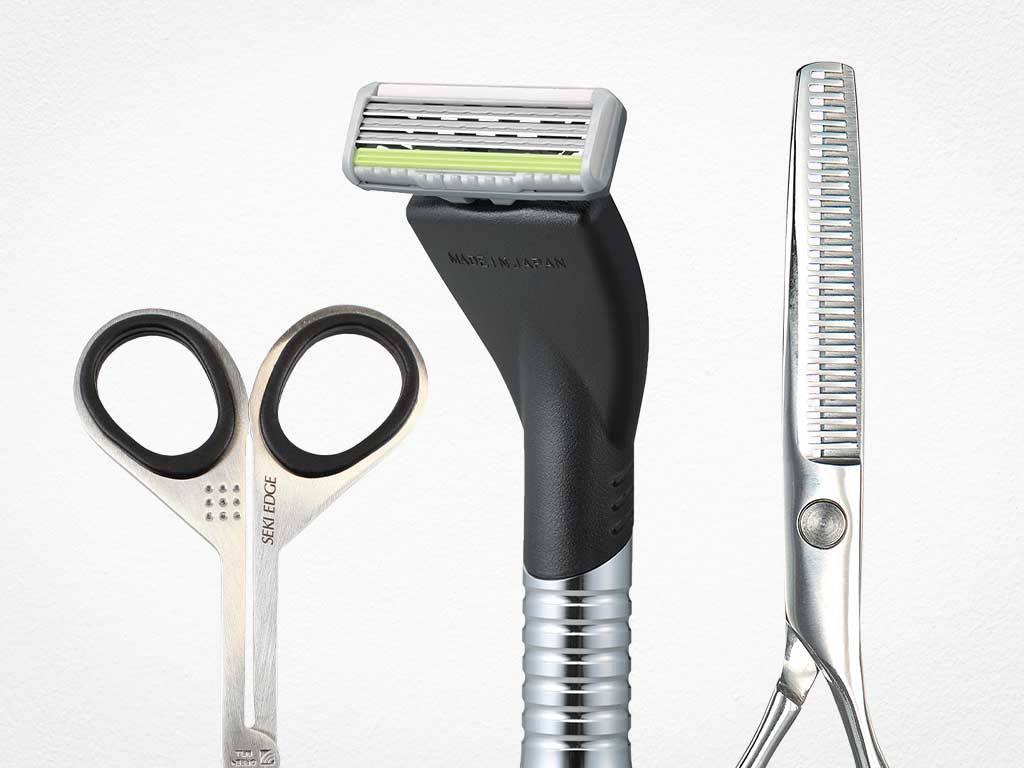
Jatai Academy Trend Connect Desktop Banner
Jatai Academy Trend Connect Mobile Banner

TREND CONNECT

Trend CONNECT puts 'what's new' together for you when it comes to the season's most current trend updates in fashion, hair design, make-up, skin care, nails and grooming products. From the runway to the red carpet, Trend CONNECT puts you in touch with what really impacts your world as a stylist, barber, nail artist or consumer.

SIGN UP FOR UPDATES
Filter

Tutorial

The Star Trek Mr. Spock Haircut Tutorial

Tutorial

The Star Trek Mr. Spock Haircut Tutorial

Today we have a fun treat! As Halloween approaches it's only fitting we do a haircut that could potentially be a costume. In this tutorial we look at the Star Trek Mr. Spock haircut. While Star Trek had several main characters including those played by William Shatner, George Takei and Nichelle Nichols, Leonard Nimoy was one of the biggest. Playing Mr. Spock he had a haircut characterized by straight bangs and pointed sideburns. The Spock haircut name has stuck but elements of this style have continued to show up in contemporary styles like the emo and edgar haircut.  Watch this Spock hair tutorial and follow along with the transcript.    Spock Hair Tutorial:   Welcome back to Jatai Academy. Today I'm going to be sharing with you the most versatile haircut in the entire universe, the Mr. Spock. Now, and I know what you're saying. You're saying that is not the most versatile. But hear me out. I'll show you how to do the haircut and then I'll explain why it is the most versatile. Let's get started.   Scissor Over Comb So, my first section, I'm going to start here in the nape. I'm gonna go through and taper that in a little bit tighter and fit that in a little cleaner with some scissor over comb. I'm going to use my Jatai Tokyo Scissor. I tend to like a long, skinny, pointy, sharp blade when I'm doing my scissor over comb. I feel that it gives me a little bit more a better ability to get more detailed and fit everything in close like I want. A fatter blade I can't get as tight in. So, a skinnier blade I like better. So now I'm going to comb this a little bit to the side just so when I bring this up and out I can get a little bit more tension on it. If I comb everything straight down and I come up some types of hair I don't get as clean of a cut. So by combing it a little bit to the side when I pick it up I get a little bit more tension and can get a little bit cleaner scissor over comb. I'll start real close here at the bottom and then just visualize in my mind's eye what type of tapering that I want as I go up and out. Then I'll comb everything down and say, "Okay, I like those lengths. Now let's go through and clean that up." So at first I did a crude shape. So now I'm going to go through and start refining my shape. So, how do I refine my shape? As I go through and I try to trace the previously cut line that was already there. So, I'll go through and do that again. On wet hair, it's going to be a little bit harder to see than if I was to do this on dry hair. The more times that I pass and the more scissor strokes that I apply, potentially the cleaner the cut can be. After I get the center like I want, then I'm going to take a step over to the right. Now I have a guide. The guide is in the center. The first section I didn't have a guide. I was just using the force to cut everything like I want. Now that I have a guide, I'll use that center section as the guide length. And then anything that hangs over off to the side, I will cut a little bit shorter. I want to make sure I don't go through and cut this section shorter or less consistent than I cut in the middle. So, I'm going to take a little bit more time as I start to refine that in. Now, I'm going to go through and do the next section. And I'll continue to work this over all the way to the ear until I run out of hair. I'll start with a crude cut and then fine-tune my crude shape and fine-tune and fine-tune until I get it as smooth as I can see. Give us a thumbs up, click the subscribe and the notification bell to be notified of future Jatai Academy content.   Layering And once I got that dialed in to where I feel that that's good enough while it's wet and I can refine it more when it's dry. Once we reach this point, we're going to start working on our layering now. A center part right down the middle all the way into the nape. Okay. Now, from here, I'm taking this and I'm going to go through and head shape layer this all the way into the back. Since I did my Bettie Page bangs on this model before, I'm going to use that as my guide. But you don't have to have that, I'm just going to go through and take a flat section of head. And what I mean by that is the section against the head is flat. So that's a flat section. I pull that straight up. Oops. Cut that straight across. Remove a little piece. Take a small piece as my guide. Take my next flat section. Hold that up 90° from the head shape where that section is flat. There's my guide. And cut the head shape into it. Tilt the head down to make it more comfortable. A small piece where it's flat. Hold that straight up. There is my guide length. And cut that. Oops. Take a small piece as my guide. My next little flat section. Now, if I have a model who has a flat-ish head, then I understand what the optimal head shape is. So, I will go through and mimic what that would be as I work back. After I finish that, I will go through and separate that in half and pivoting from the crown. I will now blend this length into my tapered length small piece as my guide. So I have the center section as my guide and also the length I'm cutting to. Cut that down and through my next section. Hold into the center of both of those two sections. Pin that out of the way. And there we go. And that's looking pretty good. I will go through remove my center section and then pivot adding my next section. So I have my second section, my third section. I will go through and start at the top. Take a small piece from the inside as my guide. Hold that straight up off the head shape. Cut that down and through my next little flat piece. There's my guide from underneath. Cut that through and work that all the way into my taper. And now at this point I no longer pivot. Once I get to the ear I will take a parallel section. Small piece is my guide from the middle parting and from the previously cut parting. There's my guide. Cut that through. Small piece as my guide. There's my guide from underneath. Blend that into my tapering. And that's looking pretty good as we go through there. Now I will take the parallel section, use that as my guide, and continue to take parallel sections, working forward until I run out of hair. Starting at the top, there's my guide length from underneath. Small piece as my guide. Take my next section. There we go. Small piece as my guide. Working that down and through into my previously cut guide. So, I will cut it from the top down and then cut it from the bottom up just as a cross check or as an opposite check to make sure that my line blends in nice and smooth. And I have a nice round beveled shape. Remove the previously cut guide. And then I have my last cut piece parallel.   Follow us on your favorite social media @jataifeather   Creating the Spock Point on the Sides Small piece as my guide. Make sure I have enough of my guide from the previously cut section. There we go. Small piece as my guide. Basically, the shape that I'm cutting is a round tapered shape. So, it's going to be a little bit longer in the top and it's going to taper down as it gets to the edges and around the hairline. It's going to taper down really tight in the back and then on the sides, I'm not going to taper that in. I want to keep that kind of solid-ish so I can really exaggerate that little Spock point. Since my mannequin head doesn't have a whole lot of sideburn, I am going to go through and cut a little bit of that in. So, I'll comb this down. Determine where I want it to hit, which is going to be about half of the ear. Start there. Get my length cut in. After I get my length cut in, I'll go through, start cutting some of this hair off to reveal the peak over the ear. We want to make sure that his pointy ears are revealed. So, I'm taking it from the back, being gentle over the ear, just letting everything fall in its natural fall, and just fine-tuning that shape in from my taper in the back up and over the ear. And I'm going to take my time. I'm not going to try to rush this. This is the very, very important part of this particular cut. If I had decided to modify this and just taper the whole thing in on the side, that's okay. I don't have to spend so much time making sure that my little point is so strong here in the front. But on this particular head of hair that I'm working on, I need to make sure that that's really dialed in. So, I'm taking my time just combing everything down and point cutting my shape in.   The Front Straight Line All right, after we've got our sides dialed in, now let's go through and work on our front. Now, we did some Bettie Page bangs earlier, and this was my model for that. So, they already have the short bang, but Mr. Spock doesn't have Bettie Page bangs. So, I'm instead of curving this, I'm going to take my short piece and try to blend that across so it's a straighter line. Maybe not as exaggerated of a curve. So, we'll start whittling that down a little bit in the middle to cut some of that curve off.   Fine-Tuning All right, here is our finish after we've blown everything dry. And I think we're looking pretty solid here. I do need to go through and clean some things up, though. So, I want to go through and the first thing I want to focus on is making sure everything in the back here is glassy, smooth, and seamless in its tapering. So, I'm going to go through with my Jatai Tokyo Thinning Scissor. This is the perfect blending scissor. It removes enough hair that when I need to remove weight, it distributes the weight perfectly, but also if I just want to retrace what's already there and make sure everything blends, it's perfect for that. So, that's what we're going to start with. I'm going to start right in the center. And all I'm going to do is I'm going to put the straight blade on the bottom. All I'm going to do is go through and retrace what's already there. I'm not trying to cut more hair off. I'm just trying to hit the very tips and make sure everything blends glassy smooth by just hitting the tips of the hair. And that's already making that smoother. So, just retracing what's already there as I work from the nape all the way up into the crown here around the front. Just comb everything down in its natural fall the way it's going to live. And then just take my time and fine-tune this line around the front.   The Versatility of Spock Hair The reason that I say that this is the most versatile haircut in the entire universe is that it's fundamentally a classic shape that has been modified into so many different ways. If you take this even shorter and you cut the sideburns off, you have a Caesar. If I let the top get, you know, longer and I take the sides and the back and taper that really, really short, then I have kind of the lad haircut that's very very popular in Britain. If I let the top and the sides get a little bit longer and have it kind of brushed over, then I end up with a more of a mod kind of bull cut, a Bieber-ish type of shape. If I let the top get longer and I take the sides and the back really, really short and perm the top, it looks like a modern Edgar that's very, very popular right now. So, the basics of this shape make it the most versatile haircut that you can do on any of your masculine clients. tapering it, rounding the shape, and just keeping your proportions varied and the textures varied, and you can do a lot of different types of haircuts. If you only knew this one haircut, you could modify it to fit a large proportion of the masculine clientele that's available today. Anyway, check out the Jatai Academy. There's all kinds of fantastic information on there that will make you a better hair stylist and barber. Let us know what you'd like to see in the future. Thank you so much for watching. We'll see you next time.  
Short Faded Mohawk Haircut Tutorial

Tutorial

Short Faded Mohawk Haircut Tutorial

The short faded mohawk hairstyle is a popular men's cut. There are many versions of this style. You can have shaved sides for more of a skin fade or a more tapered look. You can create a mohawk burst fade for a more distinct look. You can make a high fade or low fade mohawk as well. As you can see, the variations are limitless! Mohawk fade haircuts are more edgy because there are greater differences in the length of the hair. Mohawk taper haircuts are more conservation because the sides are a bit longer and not as close to the skin. The hair length on the sides vs. the top can make it more conservative or more edgy. Watch this short faded mohawk haircut tutorial and follow along with the transcript below.   Short Faded Mohawk Haircut Tutorial:   Welcome to Jatai Academy. I'm Russell Mayes, Director of Content. Today we're going to be doing an in-depth study on one of my faves: the mohawk taper. Now, the mohawk taper can be very, very subtle and conservative, or it can be very edgy and very extreme depending on the amount of texture, the length and where you're going to place it. We're going to show you how to taper it properly, how to fit it to the head, and how to get the right amount of texture in your haircut. So let's get started. All right, so to get started I want to cut my short part first. So I'm going to take from the center of the recession back to the quarter part, and I'm going to curve that around until I get down to the nape. Now, I'm not going to go all the way to the tendon. I'm going to go a little bit further in to exaggerate the fact that my mohawk is going to be separated all the way from the sides into the back.   Tapering the Sides with Scissor Over Comb So I'm going to start with my Jatai Tokyo Scissors. This is a 6-inch scissor, and I like using a longer blade when I'm doing scissor over comb because I feel like it allows me to work with a much bigger section. And I want something that has a nice point to it so I can go through and feel like I can get a lot more detailing than if I had a really small, really rounded-tip scissor. We're going to start here on the side. I just want to go through and remove some hair, starting to taper from really short up to a little bit longer as I go up. So I'm going to go through and just, real crudely go through and cut shorter and get longer as I go toward the top of my sections. And I'm not worried about really fine-tuning everything in. I just want to get a crude shape going from short at the hairline to a little longer towards the parting. Now once I get most of that hair out of the way, I want to start fine-tuning this shape. Now to fine-tune it, we're going to put the comb in, and then I'll make a cut. I'll move the comb up a little bit more, make another cut. Up a little bit more, make another cut. So it's like - bam, bam, bam. Guess what happens next? Bam. Yes. Bam. And I just continue that as I work all the way from the bottom up to the top. The more times that I hit this section, the closer that my scissor strokes are, the smoother that my scissor over comb is going to be. So just start low - low expectation as you go up to the top and continue to fine-tune that as I get to the top of the section. And this is just to get rid of some hair and start my tapered shape in. I don't want it really long here at the top. I want to keep that closer to the head. Alright, so now that I've got all of my scissor over comb down and got my basic taper in on both sides - I got it a little longer at the top, tapered in over the ears, basically graduated - I'm going to go through and take my clippers.   Creating the Fade on the Sides The clippers, I'm going to use an attachment. I'm going to start with a 1, and I'm going to close everything down. So you can adjust open or closed. Open just means that the cutting blade is a little bit further away from the teeth, so it gives me a little softer cut and is going to be a little bit longer. Closed is going to be up closer to the cut of the teeth, so it's going to cut a little bit cleaner and be a little bit shorter. So I'll just lay it against the head, go up against the head. Once I get to where the head starts to curve, then I'll bring the clipper away from the head. So it's this sort of rocking motion to get it close over the ear, and then as I come up, I move the clipper away from the head so that it allows it to get longer. Here in the back, I'll start low, work around the ear. Since the ear doesn't really move, it's a little bit more difficult. Basically, work that angle in a little bit tighter over the ears. Now once I've got this line here done and I got everything kind of clean like I want - it's as close as I can get - then I'll open up the blade a little bit. That gives me a little bit more softness so it's easier for me to blend this a little bit higher. And now I'm just going to use the straight blade, and I have to finesse this a little shorter over the ear and do the same sort of C-shaping method that I was using to get a soft blend. Open it up real tight. Skin just over the ear. Angle this part of the blade away from the head; the bottom part of the blade is all the way touching the head. And once I get this area here real short, I'll start to open the blade and then softly blend that line out through there. Real gently open up a little bit more and that just allows me to taper that in and fine-tune that line out from the head. After I get this done on one side, I'll go through and do the same thing on the other side.   Follow us on your favorite social media: @jataifeather   Blending the Sides Back with my scissors, I'm going to go through and, whatever this parting was, I'm going to take a parallel section to that. I'm going to go through and pull this straight out horizontally, leaving it a little longer right here in the front. And then we're going to go through and point cut all of this length off. I don't want to go through and completely disconnect this. While this is kind of a tapered mohawk, I want this to be a little more on the conservative side. So we're not going to go through and disconnect and leave a lot of this hanging over. There's my parting line. We're going to go through and point cut everything off as we work this all the way down. It doesn't have to blend 100% with the previously cut hair, but I want it to be pretty close. As I get to the bottom, I may need a little more length right through there, which I think is a good thing. So we've got that cut off and I think that that length is looking pretty good. So now we're going to continue to walk my guide and pull everything over to this side. There's my guide from underneath, following my previously cut guide. Now I'm not pulling it down to my short section. I want to continue to pull this straight out at whatever the head shape elevation is. Last section, right at the nose. I'm continuing to point cut this, even though I'm going to go through and cut the top a little bit shorter to get my point taken out. But I want to make sure I have some texture to it. I don't want this being cut really, really bluntly and then having to go back and re-cut everything to have some texture in it. The more blunt the line is that I put into it, the harder it's going to be to start to develop some texture into it. Now that I've got my sides basically etched in – I will go fine-tune that in a minute - but I want to go through and cut the length on the top.   Cutting the Length on the Top And what I'm going to do is I'm going to take a parting. It's going to be a little further back so that I can pull this hair from the front into the top of that parting, right where the head starts to curve so that can leave a little more length here in the front. There's my parting. I'll lay my finger, I'm going to pull everything back into that, and then go through and point cut that to square it off and to cut the little point off that I went through and cut in it by pulling everything to the left side and to the right side. Take my next section - pull it back into that parting, follow the front guide, squaring everything off a little bit. Next parting - plant the finger, same thing. Now once I get to the crown, I'm gonna go through and do the same thing, but in the opposite motion. So here I'm pulling everything back to here. So what I'm gonna do now, is so I can develop and leave a little length in the nape, I'll do the same thing. Find where the occipital bone is and pull the hair up to that point. Square that off. Take my next parting, pull everything up into that. Square it off. Last section - back into the crown. I see my previous guide from the front and I'll match those two into the middle.   Adding Internal Texture So now I want to add some internal texture. I feel like the hair is too thick. So I'm going to take my Tokyo Thinning Scissors from Jatai. This is going to go through – and it's seamless but it will remove quite a bit of hair. So the more times I hit it, the more hair that I'll remove. I want to methodically go through and thin it on the first pass just to make sure I have an even amount of texture that going through the whole thing. So I'm going to start here in the bottom - hit that a few times in the middle and then work out toward the ends. So I lift it up right in the center of the section and take some of that weight out. Now I'll go through and do the other side - center of the length, and then a little on the ends to taper my texture and to taper my thinning so I can remove the weight internally and then soften the edges up. So I'll start here in the front, half way. Half way in the middle. And then as I get closer to the edges to smooth that texturizing out. Now I'll do one right down the center now. Oh come here. Now I want to go through and take a little bit of this edge off right through there and I'm going to do that with my texturizing scissors and just go through and trace that hair that's hanging over that I don't think blends very well and just soften that up.   Give us a thumbs up, click subscribe, and hit the notification bell to get notified of future Jatai Academy content.   The Final Short Faded Mohawk Haircut Look Here's our end result. I think we're looking pretty good. I think this looks, you know, cool enough without being too over the top. I think it gives it a little modernity without being so extreme and in your face. We've still got this real ultra-clean edge over the ear which - you know once you've had short hair it's hard to let it grow out. So this keeps it feeling clean but you also start to have a little more length in the back, you got a little bit more through here and the back of the head. You got some texture to it. This looks really, really good. It's really modern. And you know I'm glad my clients have been asking for this kind of haircut and demanding it and forcing me to practice at it. Check out the Jatai Academy - there's all kinds of fantastic information there that will make you a better stylist and barber. Let us know what you'd like to see in the future and thank you so much for watching. We'll see you next time.   Final Thoughts on the Short Faded Mohawk The short mohawk fade consists of short hair on the sides gradually leading to longer hair down the middle for a short mohawk. This haircut can be done on straight hair as well as curly hair. The curly mohawk gives the mohawk strip a lot of texture and fullness. Hair type can make a big difference in the overall look of this style. What you want is a lot of texture in the mohawk portion if possible. For styling, use a pomade, gel or mousse. For a stronger hold, use a pomade. For volume and body, use a mousse.
Military Haircut for Women Using Scissor Over Comb Deep Dive Tutorial

Tutorial

Military Haircut for Women Using Scissor Over Comb Deep Dive Tutorial

When it comes to a military haircut for women there are certain criteria that must be met. Hair should be well groomed with a neat appearance. While hairstyles for military women have more versatility, their hair must be secured above the collar and not interfere with headgear. This means female military hair is often worn as a ponytail or bun. Hair can be short or long as well. But in this tutorial we will look at the iconic G.I. Jane buzz cut without using clippers. This is a bold look that can be done in a way that's not the same length all the way around. Watch the video tutorial and follow along with the transcript.   Watch this Military Haircut for Women Scissor Over Comb Tutorial: Welcome back to the Jatai Academy. I'm Russell Mayes, Director of content for Jatai. Today we're going to be doing a G.I. Jane inspired buzz cut, like a military kind of haircut, and we're going to use this as an opportunity to take it into a technical deep dive of scissor over comb. It'll give us an opportunity to practice. We're going to cover all the key points, how to move the scissor, how to move the comb, what kind of scissor you want, how to apply it and when to take a break. So let's get started.   The Military Haircut for Women Tools So the first thing I want to start with is my scissor. I'm going to use my Jatai Tokyo Scissor. This is a 6-inch scissor. Longer scissors work better for doing scissor over comb. Sometimes a fatter blade works well when you're trying to just motor hair off, but I find a good basic normal scissor that's not too thick or not too thin but long enough gives me all the options that I need for being able to do scissor over comb well. The next thing I need to pay attention to is how you hold your comb. Holding your comb properly will enable you to do better scissor over comb more smoother and apply the technique much faster. So I'm going to start by taking the butt of the comb putting it right in the crotch of my pinky. I'm going to put my thumb and forefinger on the spine and the teeth side of the comb. Now this way I can rotate my comb back and forth and it allows me to get into a rhythm as I start to go up and down. And as you start going over this you're going to go over this a lot of times. So this enables me to have a nice smooth scissor flow and enables me to focus on what's being cut, not on the comb itself. Scissor Over Comb So the first thing we want to do is go through and I'm going to lay the comb against the head, pull it out a little bit and just cut this across. I'm doing a very crude cut. I'll move up maybe a half inch maybe a quarter inch as I go up the head straight this way until I run out of hair. Now you're going to see little lines in it and that's okay. I'm not worried about it being perfectly flawless at this point. I want to go through and get that extra length off so I don't have to waste my time going through and cutting all of my length off. And I'll just attack this horizontally across the back and just go up and out. Follow us on your favorite social media @jataifeather Now at this point I want to go through and start really cutting it short. At the bottom I'm going to cut it the width of the comb. As I go up, the comb is slow going to start to come off of the head just slightly as I go up and round it to the crown. Comb down. Start low. Put my comb in. Follow the head. Put my scissor in same width as the comb. So whatever the comb width is that's going to be the length that I leave. Once I get about right here that comb starts to leave the head as I come up and out. Now I start to get a nice smooth transition as I'm going from against the head to away from the head. I'm not worried about all the little scissor lines that I have right now. I'm starting to whittle the shape down. So I start very crude with maybe five or six passes and then as I continue up the head I go maybe 15 passes and by the time I'm finished I will probably have gone over this a couple of hundred times with my scissor as I start to work up the back of the head. And I'm working to the ear.   Addressing the Finer Details Now I'm going to change my comb to something that's a little more detail oriented. The bigger the comb, the more crude the shape is. The smaller the comb, the more detail I'm focusing on. So now I'll start and do exactly the same methodology I was doing before, but this time I'm going to go through and scissor it a hell of a lot more. So as I start to start low I'm uh-oh. I'm following the head shape as I slowly come up and once I hit the occipital bone I start to come away from the head a little bit. After I've got that section done through there I'll go through and do the next section and the next section and the next section all the way over. And what you should see is a light dusting of small little baby hairs that are going to land on your hand. As I get to the occipital bone I start to come out from the head a little bit and what I'm looking for is this very very light dusting of hair. I want it to be almost fur like so that that way I can be assured that I'm getting a nice detail cut. When I'm focusing on scissor over comb, it's less about how much hair I take off and if I can see it as much as I get into a rhythm of going through and cutting my shape and I hear the scissor cutting. Cuz sometimes the amount of hair that gets cut off is so small that you can't see it and it starts to fine-tune the shape. And when it gets really fine-tuned I'll see something that looks like a little bit of a line right, but I can't judge how much hair I'm going to cut off. Or I'm used to cutting in my fingers, I can see how much I'm cutting. Here I can't see so what I have to do is go through and just trace what's already there and once I trace that line anything that sticks out that's not supposed to be there will get cut off. Now we're starting to get a nice soft shape through there and I'm going to go through and do the same thing on the other side. That's looking pretty good through there. I'm liking the way that that's looking and that didn't take me too long. So now let's continue our tapering into the sides of the head. Just going through and crudely starting to whittle my shape in and down against the head. And once the head starts to round then the comb will come off of the head slightly as I work up and over.   Smoothing & Tightening the Military Haircut for Women Once I got that shape done I got that down to where I feel that that's as good as I can get with my big comb then I will go in with my smaller comb and smooth that out and tighten that. Now why don't I just go with the small comb in the first place? Cuz it's too hard to deal with that much hair. The longer the teeth are on the comb, the more hair that I can deal with. The smaller the teeth are on the comb, the less hair I can deal with. And it forces me to deal with smaller sections of hair. Start here at the bottom if I need to come under the ear. Get the motor running and slowly start to go up as the comb. As the head starts to round I leave the comb from the head and start to round the shape out a little bit. I will generally do this right to the mastoid. Very good. Now once I've got this done and this done you'll notice I got this little transition here between the front and the back. So when that happens I'm going to tilt the head. We've got this hairline and this hairline which is parallel. So now I'm going to go through parallel to that and work that up and out. What that does is that allows me to still follow the head shape and then continue to work that up and out. So I'm pretty comfortable with that. Now we're going to go through and do the same thing on the other side. Alright, so now we're going to start here on the top and in the front. I'm going to take this section, pull it back just a little bit so I leave a little bit of length right here at the front and just crudely start to remove... come on baby...my length up here on the top. And I'll do that until I get to the crown. Next section. And I'm doing the same sort of methodology that I was doing underneath. It's just now I'm working from the front going back and then I'll work on the sides blending into the top, but I just want to get a rough shape of all this hair on top being cut short. So what I'm going to start doing is just going through and working in little pie sections just to go from short and rounding my shape out. Cut that up and over. Give us a thumbs, up click subscribe and the notification bell to be notified of future Jatai Academy content.   Freehand Haircutting As I get close to everything being dialed in like I want I can go through and then freehand over the shape just to get those little whispers of hair off, but I want to be very very mindful and conscientious because as I start to tire out I don't want my hands to start shaking and then I end up cutting a hole in the haircut and then I have to go back in and recut the whole thing around it because I got sloppy near the end. And that's usually when things are getting dialed in where you have a momentary loss of muscular coordination and the next thing you know boom! There's a hole. When you first start doing scissor over comb it's going to be rough on your hands and your hands are going to cramp, your thumbs are going to cramp. You know it's not going to be pretty. So I want to work a little bit and if my hand starts cramping I'll take a break. And it's okay. You don't have to power through it. I mean I've got 30 something years of experience and my hands are strong from all the years of doing this and your hands will be too when you're doing it as long as I have and as much as I have. Practice. Practice practice practice. The key to this technical deep dive about doing scissor over comb is the flipping of the comb, the motoring of the scissor. Make sure you have a blade that's long. If it's too short it's going to take you forever. A longer blade allows you to cut through more hair at one time than a smaller blade. Smaller blades force you to deal with small sections. Larger blades you can deal with larger sections and then just follow the shape and follow your guide and keep dialing it in and dialing it in and dialing it in until you get everything nice and smooth like you want.   Final Military Haircut for Women Look You look very G.I. Jane. Anyway, alright I hope that this technical deep dive has helped you picked up some pointers. Practice. Get your hand strong and you'll be able to do it great as well. Please check out the Jatai Academy. There's all kind of fantastic information on there that will make you a better hair stylist or barber. Also let us know what you'd like to see in the future and we will see you next time. Thank you so much. When it comes to female military haircuts, the styles are simple, groomed and have a neat appearance. Military hairstyles for females can be short or long but pulled out of the way. This very short cut is reminiscent of G.I. Jane and while it's not a military women haircut that's common, it is a possible style that can be worn!   Tutorial
1990s Layered Jennifer Aniston Meets Gwen Stefani Hair Tutorial

Tutorial

1990s Layered Jennifer Aniston Meets Gwen Stefani Hair Tutorial

Watch, read and learn in this 90s Jennifer Aniston meets Gwen Stefani hair tutorial! Hair in the 1990s had some notable styles that have remained iconic to this day. One of the most popular were Gwen Stefani hairstyles and particularly the one where her hair flips out. Of course, Jennifer Aniston also had the iconic Friends hairstyle that everyone remembers. Learn how to re-create that fun 90s layered look with this blended Jennifer Aniston and Gwen Stefani hair tutorial!   1990s Layered Jennifer Aniston Meets Gwen Stefani Hair Tutorial:   Welcome back to the Jatai Academy. I'm Russell Mayes Director of Content. Today we're going to be doing '90s layering. Layering in the 90s was all about getting the hair to flip out and to get some pieciness to it and some softness and a lot of movement to it. It was about having glamour but a casualness to the glamour, a more of a lived in kind of glamour. So we're going to use Gwen Stefani and Jennifer Aniston as our inspiration and I'm going to show you how to get the hair to piece out and flip on the bottom, how to get some fullness and force the hair to flip. So let's get started.   Cutting the Perimeter Okay I'm going to start with a natural center part. So I'm going to start right in the middle. Take a flat section right there in the center. This is going to be my guide length for both sides of the head. Now when I comb this, I'm going to comb this just like I do all of my other perimeter shapes. I'm combing clean from the root down. Once I get to my fingers I am going to switch it up because the 90s layering is all about hair that flips and has a lot of movement and a lot of flickiness to it. And to encourage that I am going to turn my fingers up. So as I point cut, that's going to slightly cut the top layer of this section shorter than the underneath and will encourage it to flip. We're going to comb everything straight down. I am using my Jatai Osaka Scissor. This is 5-1/2." It's got a good amount of sharpness to it and it's got a nice blade point to it so I can go through and point cut this very easily, making sure that the line is even on both sides but not necessarily blunt. I want this to have some soft separation so I'm going through and doing an exaggerated point cut with my fingers flipped. After I finished the first section I'm going to continue taking parallel sections all the way up the head until I run out of hair and I have cut my entire perimeter shape. My next section here I'm going to start right in the center again. I'm going to comb everything out of the way. In the middle, comb everything straight down curving my fingers up as I go through and point cut that through. Next section, there's my guide from underneath, a nice exaggerated point cut as I continue to work from the center of the back into the sides of the head. Exaggerating my flip. Aright so we got our last section here. We're going to comb everything down, still flipping my fingers, making sure everything blends through. Length is looking pretty good. So now let's move on to our layering. Flickered Layering Okay on my layering we're going to start right in the center. I'm going to take a center section and where it's flat that's going to determine the width of my section so I got a center section from the front running all the way down to the center of the back. So now I'm going to right at the crown, separate the front from the back. Straight up in the air measure where I want that to hit around her face. Let's start with about right there. Go through deep point cut that to keep the textures the same and to keep my layering really flicky. I'll take a small piece as my guide. I'll take the next section working towards the back. Comb everything clean from the root all the way up straight up and cut that horizontally straight across point cutting it to keep the texture really soft and flicky. Small piece as my guide. Go right back to my crown. There's that. Cut that all the way through. So far we're doing just regular layering, but as of right now to make it 90s, I'm going to take my next guide and from here instead of pulling that at 90 or over-directing up, I am now going to pull this straight out the back. There's my length. Cut that straight up and down. My next piece, the perimeter starts to fall out. There's my guide. Cut that straight up and down. So what I'm effectively doing is leaving a corner in my layering right through the crown. So what happens is when this falls that's going to build up weight. Because it's layered more underneath, it's going to cause the shape to collapse and force this to flick out even more. So I'm forcing as much flip into this as I can get by layering it this way. Straight across and then once I get to the crown, straight out the back. The next section parallel to this first section all the way straight back into the crown, into the nape. Pin this hair out of the way and now at this point I'm going to pull everything, this next section, into the center section right here into the center of the head. There's my guide. Cut that across. Small piece as my guide. The center section and the new section straight up. There's my guide length. Everything gets pulled straight up towards the ceiling. I reach the crown right here. Straight up again and I'm pulling everything into the center. Follow us on your favorite social media @jataifeather   There's my guide from underneath and the top. Pulling everything to the center. Come on. There you go. Now we got the first two sections. So now I'm going to take the rest of this whole right side and do exactly the same thing. I don't think very much hair is going to reach but I'm going to hold it up and check and make sure that nothing does. And if anything does I'm going to cut it off to the previous guide that I had in the center of the head. There we go. Small piece is my guide. Quarter part to the crown. Pull everything to the center. Using my center first, mohawk section as my guide, cut that through. Small piece as my guide. Next section pull everything straight back into the center. Cut that down and through. Now that we've cut this whole side, let's comb it back and take a look at it and see how it's looking. So as I start to shake it you can automatically see how it's forcing the hair to flick out into these pieces and it's getting really separated and you can really see individual little pieces of layers flick out. So let's go through and do the same thing on the other side. So since I held everything straight up, I need to go through and make sure that my layering really fits in around the front because if I pull everything straight up when the hair falls, it's going to show, it's going to mirror this hairline in the end result of my perimeter. So when I comb this down, it's actually going to go back down, recession and then down. So I need to go through and make sure I have a smooth blend so that my layering doesn't get lumpy around the front. Very simply take the first bump of the head to the high point of the ear over the hairline. Do this on both sides. So now that I got this sectioned out. This is all the hair that has the ability to fall in the face. So I want to make sure that that smoothly blends and it doesn't reflect the hairlines from me pulling it up.   Blending So we'll comb this forward. Now I don't want to go through and recut everything. I just want to go through and blend this line around the front. So I'll take a deep point cut. Take half of it to the right side and half of it to the left. I'll continue to hold this hair straight down combing it clean from the part all the way through and clean up any little discrepancies that I have from pulling it up in the air.   Give us a thumbs up, click subscribe and the notification bell to be notified of future Jatai Academy content.   We're going to continue. Comb everything straight down a natural fall. Place our fingers. You can see right through there. So I'm going to take a little bit of that out, a little bit below it. I want to cut that a little deeper there. There we go. I like that. So now I have that blended so I don't have to worry about my face framing being lumpy. Alright, so let's blow it dry see what we got.   Jennifer Aniston Meets Gwen Stefani Hair Tutorial: End Result Here's our end result. I think we're looking pretty good. I think this is you know very much spot on to what Gwen Stefani was doing when she was going to all the award shows in the 90s and she grew her hair out. She was wearing the flip, but it's also reminiscent of Jennifer Anderson when she had her Rachel cut where it was really layered but it was flippy on the bottom. And I think the flip gives it a more casual kind of glamour as opposed to this overtly voluminous glamour. And I think it's a nice little technique to have in your back pocket when you need it. So check out the Jatai Academy. There's all kinds of great information on there that will make you a better hairstylist and barber. Also let us know what you like to see in the future and we will see you next time. Thank you so much for watching.   Tutorial
Simple Long Layered Haircut Tutorial

Tutorial

Simple Long Layered Haircut Tutorial

1
A simple long layered haircut is a popular style among women with long hair. If you're looking to update and refine your techniques for long layering, this tutorial can help. Long layered haircuts are classic, timeless and beautiful. Hair layers give volume, dimension and depth. It removes weight and makes hair come alive. To learn how to cut long layers in hair, follow along with this YouTube video tutorial and transcript.   Simple long layered haircut tutorial:   Welcome back to the Jatai Academy. Today we're going to be studying how to cut a layered haircut. Long layering means you're going from really short to really long and trying to make sure everything stays nice and smooth. It's not very easy, but I'm going to show you a pattern that works really well without making it lumpy. So let's get started.   Sectioning You know one of the fundamentals of cutting hair is excellent sectioning. Until you can really section hair properly, every haircut you do is going to be amateur at best. So let's spend a little time making sure that we get nice clean sectioning that fits the head, that positions the haircut properly on that particular person's unique head shape. And that will all go towards making the end result so much better. So we're going to take a natural or center part all the way down to the center of the spine, occipital to mastoid, match that on both sides if I can. There we go. Establishing the Long Layers Cut Baseline After I've gone through and done all my sectioning properly, I'm going to go through and establish a baseline. A baseline is the overall length of the entire haircut. I'm going to be using my Jatai Osaka Scissors. Now the Osaka Scissor is a long thin blade. So the long blade allows me to deal with a large section of hair, but also since it's got a little point, I can go through and point cut to it. But since it's beveled a little bit I don't have to worry about jamming myself and point cutting my finger. I can focus on point cutting the hair. Also the metal that this is made of is very very good. So it's going to stay sharp for a long time. First thing as with all of our baseline establishing haircuts will start right in the middle. Comb everything straight down. Get to the desired length that I want and then I'll go through and point cut my baseline because I want to keep this baseline very very soft. If the hair is too fine or overly fine, I may go through and blunt cut this. I just find it's so much easier to go through and point cut a line as opposed to blunt cut the line and then try to soften it afterwards. So after I've established my length, I'm going to go through and parallel section this all the way up section by section until I run out of length and just make sure everything's the same length all over. Layering Around the Front So after I've gone through and established my baseline all the way around either by blunt cutting or point cutting as I did, I'm going to go through and start fitting the layering in around the front because it's technically part of the perimeter of the shape even though it is the layering. And the layering, usually the most important part is going to be the shortest piece around the face because that's the piece that they see and that's where it's the most important to them. So I want to make sure I get that piece of layering right before I continue that on to the rest of the head. So to section that out, I'm going to put my finger right at the high point of the ear. And then I'm going to lay the comb against the front of the head where that falls through. You can start to see where the short piece around the front is going to fall. Now sometimes, if the client has a lot of bang like she does which is pretty short, it's going to be kind of hard to establish where I want my shortest layer to be if I don't have enough hair. So in that instance I will go through and take the section a little further back and take that to the mastoid which is that bump right at the base of the ear behind it. So that way it gives me more hair to determine my layering around the front and also gives me a little bit better blend. Take a little piece right in the middle. This will be the length of my shortest layer. So let's just say that she wants this to fall right around her mouth. Maybe when it shrinks it'll be between her mouth and her nose. So I want to go somewhere in between there.   So I'll measure visually and then kind of pull that up and leave my hand planted there in the air. Re-comb everything to my fingers where I'm holding it and then cut that length. See that falls right at the middle of her mouth. Keep my section clean. There's my guide from. Visualize where it's going to. Support my scissor and then go through. Cut that down and through and continue to build upon that angle as I get further and further down the head. And as long as I don't cut that piece of hair off at the longest piece of my layering I'm fine. If I cut that too short then I bevel my layers around the front and it becomes Farrah feathers as opposed to face framing layers.   Follow us on your favorite social media @jataifeather   Get that out of the way. Go all the way down to my length. There we go. Perfect. Okay after I've got both sides, the initial face framing done, I'm going to take the rest of the hair comb this down and forward. And anything that hangs off down here at the lower part, I'm just going to lightly blend that down and through. There shouldn't be a whole lot and it's just basically this little area right here that I need to make sure it doesn't overhang the layering in the front.   Creating the Haircut with Long Layers To start my layering I want to go through and take a center section from the front all the way to the back. This is going to be my mohawk section. After I have my mohawk section, I'm going to hold this up 90 ° from the head. This first piece is my bang. Here was my established length that I determined around the front. So that's going to be the length that I'm going to use to determine the shortest with my layering that I can go. We'll cut that straight back using our guide in the front. Small piece as my guide. The next piece is going right to the crown of the head. I'll hold that up. You see how much length I'm starting to take off right through there. So at this point, whereas before I was cutting the same as the head shape, at this point at the crown I'm going to now start angling my fingers so that the length will start to get longer the further back of the head that I go. I'm not going to start dragging the hair forward. I'm just going to lift it up at 90 and then angle my fingers. That gives me a consistent amount of elevation so that my layering has a consistent amount of weight. Next piece, 90 from the head angling my fingers. Working that down and through until I run out of hair which should be right around the occipital bone. Perfect. So now I've effectively gone from being short to long with a perfect blend that is an even amount of weight all the way through. So from here, to be able to start pivoting this and making sure I work that layering around, I'm going to go to the high point of the head, pivot from there down to the corner of the hairline. I'm going to do the same methodology I was doing in the back half of the head which is holding everything at 90, angling my fingers. There's my previously cut guide. I also have the length guide here on the top and my length guide there on the bottom. So I have three guides. Continuing this 90 ° from the head, angling my fingers, point cutting that through. Next section. Same thing. 90 ° up and out. Perfect. There should be very little if anything right there on the bottom. Now I'm going to remove the previously cut section as my guide. Pivot which is going to be right to the mastoid. And follow the same pattern that I was working. There's my angle. 90 ° angle that up and out. There we go. As I start to work around the head, that angle is going to feel like it really really increases and that's okay. Okay because we now have less head to go through and blend top to bottom so that angle does feel like it increases and it's okay and that's why we've gone through and done our face framing layering first so that we don't have to worry about so much hair around the front blending through with the back. Remove the previously cut section. My next section I will take right in top of the ear right there. It's more important that this section blends top to bottom than it does to the previously cut section. So I could go through completely disconnect these sections, every one of them from the previous, as long as they blend top to bottom. That's all that matters. So don't freak out if you're getting pretty short. You can always disconnect front to back as long as it blends top to bottom. It takes a little practice to get this kind of methodology down because you're working with such an extreme angle. Remove the previously cut sections. There we go. Hold this up. Now as I'm starting to get into the sides, there should be very little to cut as I'm starting to reach my face framing layering that I started with. And you can see right through there, the angle of the face framing is the same as the inverted angle of my layering.   Give us a thumbs up, click subscribe and the notification bell to be notified of future Jatai Academy content.   Maybe a little bit right there. Very good. So after I finish the layering on one side, I'm going to go back and take the exact same center section that I started my layering with and then do the exact same thing on the opposite side.   Long Layered Hairstyle Final Look Here's our end result. I think we're looking pretty good. The layering, the face framing around the front gives me a smooth transition and I'm really pleased with that. The evenness of the layering and the weight distribution throughout the back through the layering I'm very very happy with that. And I threw a little curl in it just to be extra, just to make it look fancy. But the overall shape works really really well. I hope that helps. A little bit of practice goes a long way and I think you can really add something like this and make your layering vastly improved. Please check out the Jatai Academy. There's all kinds of a fantastic information on there that will make you a much better hairstylist and barber. And also let us know what you like to see in the future and we will see you next time. Thank you so much. Long layers in long hair is a classic style that will never go away. While there are various ways to create long layered cuts, this method is easy to understand and emulate. Let us know if the techniques used in this layered haircut how to video was helpful! For more, visit Jatai Academy which features many different hair tutorials for layered hair, short hairstyles and more using scissors and razors.   Tutorial
Zendaya Bob Haircut from the SAG Awards

Tutorial

Zendaya Bob Haircut from the SAG Awards

The Zendaya bob haircut from the SAG Awards in 2023 was a hairstyle to remember. When she debuted the style on the red carpet, it was an instant head turner. This fashion beauty knocked this hairstyle out of the park as the old Hollywood look was elegant, classic and yet modern. In this Zendaya bob with bangs haircut tutorial, you'll learn everything you need to know to recreate this look. Follow along with the tutorial and transcript below.   Zendaya Bob Haircut Tutorial:   Welcome to the Jatai Academy.  Today we're going to be doing a supermodel bob that Zendaya wore to the Screen Actors Guild Awards. I think it's beautiful. It's luscious. It's lovely. It's elegant, graceful and modern. Alright, so if we're looking at uh you know Zendaya's hair when she wore it to the Screen Actors Guild, this is a very nice elegant one length kind of bob with just some layering around the front and a heavy solid bang with a little bit of curl in it. And I think this is a beautiful beautiful haircut on her. I think she wears it very well, but the key thing to this haircut that makes it really modern is that she has this heavy bang that's kind of brushed to the side so you get this kind of bang fill in that they used to do in roller sets, but it's a much more modern version of that. So it's got a little bit of lightness but a little bit of heaviness. And getting that right I think is the key to making this haircut really fit.   Sectioning the Hair So to start with my bob shape I want to start as neutral as possible. So I'm going to take a center part down to the crown, from the crown straight down to the occipital bone, occipital bone straight to the center of the spine. Once I got the center part, I'm going to take from the occipital bone, that bump in the back of the head, right to that bump below the ear behind the ear which is called the mastoid process. So once I got the flat part of the back of the head sectioned out, this is going to be the foundation for me to build the solid bob shape. If the hair is too thick which a lot of times it is, I will separate this in half, following the same section that I had above it keeping my lines parallel. Once I get everything sectioned out like I want and it's even on both sides, I'm going to start the section in the middle. Start that right in the center and I determine the size of that section by where the comb is flat against the head. That way I don't have to worry about inconsistent graduation because I'm cutting across a curved part of the head and elevating it inconsistently compared to a flat section.   Building the Zendaya Bob Haircut Shape And then from here I'm going to use my Jatai Kyoto Scissors. It is my sharpest scissor. It also has a nice, weighted blade so it cuts a nice clean solid section no matter how thick the section is. Comb that clean from the root down. Make sure my fingers are perpendicular to the parting. There is my section. I'm holding that as low elevation as I can. Go through cut that straight across. Make that as blunt as I possibly can. The sharper the scissor, the better. Comb this down. There's my angle. That's the way I'm combing my parting, T to the parting. So I make like a T with the hair with the parting. There's my guide. Oops, go through, cut that straight across. I push that a little bit and there's my little bit right through there. Cut that as clean as you can. Then I'm going to do the same thing on the other side. Then we're going to check and see that looks good. It looks nice and even. Now we're going to continue with the next section. I have my baseline. I'll start exactly in the middle just like I did the first section. Comb that straight down. And you'll notice when I'm combing the teeth of the comb were away from my fingers and then I hook the comb about halfway through, bring into my fingers with no tension, and then just clasp my fingers right there exactly on top of the previously cut guide. Here we start ending up with where the head is curving. So I have a flat section there, a flat section there, a flat section there. So this section requires three subsections to cut. There's my line underneath. Cut directly on top of that. My next line there, comb clean. Cut directly on top of my previously cut guide. Same thing on the other side. I'm taking little flat sections as I work around the head. Comb that down and through. There's my line from my previously cut. Cut that through. I want to make sure that I am directly on top of my previously cut guide, not cutting it shorter or longer. That's what makes this the hardest haircut to do is you have to mimic that same cut for numerous sections all the way up the head. And it gets more and more difficult to cut it directly on top of your guide. Now our next section, I followed the same pattern, the same angles of section that I was taking. I just took the next flat section up and I will start exactly the same way that I was doing before, flat section in the middle. Oops! And then as I work one, two, three. So I've got three sections on that side. As we'll continue to work down.   Follow us on your favorite social media @jataifeather   I'll continue on my little flat section. There's my parting. I comb T to the parting and cut my line parallel to my parting. Now I'm going through and cutting this as blunt as I can possibly get it because Zendaya has this really solid bob shape and it's going to be different if I was to point cut it. I don't have to be as precise. But with cutting it really blunt I have to really really maintain my precision as I build the shape or it's going to start to look funky. This is kind of a key area right here where we're working over the ear. Now what makes this section so difficult is I have a protruding ear that I have to deal with that can really throw a monkey wrench in my cut line on the bottom, but we'll show you how to deal with that after I start in the center just like I was doing previously. Comb clean. Cut everything through. Okay now as I start to get into the section over the ear there's a lot of different ways that I can deal with this. I can go through and take a section directly on top of the ear cut half of the section behind the ear and half of the section in front of the ear to leave me a little bit of space there to deal with later. Or what I tend to do is comb everything smooth with only tension that I generate from the comb. Once I put my fingers in, no tension, I hold very gently and very lightly and then just push the hair under the ear and then cut my line and if I go through, oops, and check that again and I used tension on it, you start to see a little bit of a hiccup there. That is the hair that is my safety net so that when I blow it dry and clean it up at the end I don't end up with a hole. Okay tilt down a little bit, continue on until I run out of hair.   Give us a thumbs up, click subscribe and the notification bell to be notified of future Jatai Academy content.   Now to separate the front, I'm using the same methodology of using the flat part. So I have this flat. I have the second flat which goes to this curve of the head where at that point all the hair starts to fall forward. Usually, the second flat I take that to the top of the ear. When I start my face framing, the smaller the initial section that I take right through here, the quicker that it becomes a frame. The wider the section that I take as my guide, I get a more heavy bang and then it blends down through and if I look at the photo, it's this heavy kind of bang and that blends down.   Creating the Heavy Bang So we're going to take a pretty wide section right through here, right to the center of the recession. I'm going to elevate off the curvature of the head so that it doesn't end up being a blunt heavy bang but something that flows. So it's got a little bit of layering by me elevating. It's actually going to have a little bit of graduation. So I'll pull that forward. I think I'm going to go right to the top of the lip, right through there. Cut that blunt straight across. Comb the next section into it right next door. There's that. The next piece right next door. There's that. So now as I bring the rest of the hair down, this is the hair that I'm going to use to blend my short piece down to my long piece. The way that's going to work is I'll comb this straight down in natural fall, angle my fingers. Here's my length I'm cutting to. Here's my length I'm cutting from and then I'll softly point cut that to give me a nice blend through. As long as I don't cut this piece I'm fine and I'm going to be okay. All the way down to that corner. Same thing on the other side. There we go. Now as I start to comb this we'll see this heavier kind of bang come in and then we have our blend through the sides. Blending Bangs with the Sides Next piece. This is usually the easiest piece because I just want to make sure everything blends over. So all I'll have is a little bit of hair right there from where it transitions from front to back. And again, I will comb this in its natural fall. There's my line from underneath, point cut that down and through. I have to point cut this unless I go through and blow everything dry and flat iron it and then just free form cut it like this because it's difficult for me to go through and angle my fingers straight enough to cut it blunt. I take a center section for my layering and I'm only going to layer a little bit around the front here. As I hold my first two flat sections up, you'll see my fringe fall out. I'll pull everything else up, take a little bit of that length off cutting it 90 ° off the head shape. Next piece 90 °. There's a little bit of length there to cut. Take a small piece as my guide and as I get to the crown I should have very little if any hair that's going to reach and there's just that little bit of curvature right there. Now I'll take everything on one side. Since I'm doing very little layering it's just enough to take that edge off around the front. I'll take the entire left side of the head, pull everything straight up. There is my line. There is the hair that hangs over. We're going to continue, come here, continue this straight up. There is my line. Cut that down and through and then on this last section there should be very little hair that reaches if any at all, really. Comb everything up. Be patient and diligent. Make sure everything's clean. There's a little bit right through there. Now we'll do the same thing on the other side. We got our basic shape here. Everything's looking pretty good. We got a nice solid bang.   Zendaya Bob Haircut Final Look Let's go through and blow it dry. See how it looks. Here's our end result and uh I think we're looking pretty good. Curl looks pretty good in it. I think we got the curl pattern right. Blunt all the way around except for a little bit of layering around the front. So I'm pretty happy with that. So the whole thing about this haircut is just making sure that bang is heavy and not really uh face framed and really wispy and light. You got to have a heavy bang so that when you brush it back it falls in and fills in nice and solid around the front. Anyway, let us know what you'd like to see in the future. Check out the Jatai Academy. There are all kinds of great information on there that will make you a better hairstylist and barber. And thank you so much for watching. We'll see you next time.   Final Thoughts When we look at Zendaya with short hair or long hair, she knows how to pull off many different looks. From this Zendaya butterfly bob to a Zendaya long bob, she gets it right. But you can recreate these looks as well with some know how and practice. For other bob haircut tutorials, visit Jatai Academy.   Tutorial  
Rosemary's Baby Mia Farrow Haircut Tutorial

Tutorial

Rosemary's Baby Mia Farrow Haircut Tutorial

In this Mia Farrow haircut, we look at her iconic pixie cut from Rosemary's Baby. Also featured in Vogue, this Mia Farrow short hair style created instant buzz due to its very short nature. Mia Farrow in Rosemary's Baby sported this pixie cut 1960s look and since then many others have followed. Learn how to create the Mia Farrow pixie haircut by watching this tutorial and following along with the transcript. Rosemary's Baby Mia Farrow Haircut Tutorial: Welcome to the Jatai Academy. I'm Russell Mayes, Director of Content. Today we're going to go retro with a classic done by Vidal Sassoon himself, the Mia Farrow pixie that she wore in Rosemary's Baby. So let's get started.   Addressing the Sides and Back We're going to start right at the side of the head halfway in the center of the recession to the quarter part. And we're going to go to the drop crown, not all the way down to the occipital bone, but there we're going to take this section on both sides. So since I'm working in smaller tighter sections, a smaller scissor will give me much more control. So I'm going to use my Jatai Tokyo scissors in the 5-1/2 inch variety and then we're going to start with a section that's going to be parallel to the front hairline. Now what I want to keep in mind here is I want to keep a little bit of length over the ear, but I'm still going to crop this in pretty tight. Pull this forward to the front of the section at 90 ° straight up from the head. I want to make sure I leave some length at the bottom and then we're going to go through, cut that straight down and through. Make sure my line is clean. If I need to take that in two sections we take it in two sections. So that gives me my length here around the front and it also gives me a little bit of softness over the ear. I'll take that next section parallel to the first section and I'll comb these two into the center of both of those sections. Hold it straight out. Cut that off. Comb each section to look at it. This section will go right back to the mastoid. I'm going to remove the first section. Now I have the second and third. I will combine those two and cut that down and through. Now we're going to continue that section all the way down into the nape and then this is where it's going to change. So right at the mastoid I'm going to bring my fingers in and taper that in a little bit so I have a nice clean nape. I have a little hair left over the ears but a nice clean taper into the nape. Comb that into the previous. I can remove the previously cut section. Now I have section three and four. Hold that straight out 90 from the head, comb that out, follow through. Once I hit the mastoid, then I'll change my finger angle and taper this in much tighter. So it's going to be a little longer there and then it's going to taper in nice and clean right here in the nape. Follow the same guide as I work all the way back into the nape. So I'm going to work this guide all the way through to the center back of the head until I run out of hair. And I'll keep going until I reach over the center half of the back of the head and I have everything tapered in exactly like I want that fits the head. And I think that that's looking pretty good. After I've gone through and cut both sides, I want to cross check it. And the way I'm going to cross check it is hold it out in the exact opposite way that I held it the first time to cut it. So I'll start here in the nape. I'll comb right there parallel to my hairline. Comb that out. If anything sticks out, I will cut off. I'm not looking for big differences in length and big gaps in it. I want this to be as smooth and as even as possible and the more precise I am with my technique in the beginning, the less cleaning up I'll have to do. And that's what I'm ultimately trying for. That's my goal is to try to get this as even and as smooth as possible in the first pass that I have very very little hair to clean up here on my cross check. If I have big pieces of hair sticking out, I need to go back in and recut that section vertically to make sure everything flows like I want. Follow us on your favorite social media platform @jataifeather   Blending the Top with the Bottom So now after I've gone through and cut my entire underneath, I want to go through and make sure that the top will blend with the bottom before I even start to cut the top. So I'm going to take a parallel section to the previous section that I had where I separated the bottom from the top, comb this down. And exactly like I cross checked it, that's how I'm going to cut this. So I'll take a small section from underneath hold that up and out. There's my guide from underneath. So cross cutting the entire top just to make sure it blends and doesn't hang over the underneath hair. Now how much I cut off is all dependent upon how much hair was there previously on top, how longer that is, how much shorter it is etc. So I'm still continuing to work that through until everything is cut that could hang over. I just find that it's easier for me to cross cut this horizontally than it is to go through and vertically take each section. Because all I'm looking for here is a blend. Check this out. Now we know that everything on the top and the bottom is going to blend. So let's go through and do the same thing on the other side. Make sure that blends and then we'll cut the top. We got everything looking like we want on the bottom half and the top blends now. So now let's go through and take a center section.   Addressing the Top of the Head Now a lot of times when I'm doing short hair I need to make a preference between a round shape or a square shape. Since this is, you know, Mia Farrow and it's a pixie, I want to keep this shape rounder and more feminine. If it's more of a masculine shape, then I may keep it square. So we're going to start with a center section right above the nose. Now I'm going to take this section, pull everything straight up 90 ° off the head and cut everything the same length from front to back following the head shape. So I want to keep everything nice and round and soft. Taking a small piece of my guide from my previously cut section and work that down and through into the crown and the nape. Now we're going to check it on my way back to the front to make sure I got everything nice and smooth. And that's looking pretty good. So now I'm going to go through and take a parallel section to the first section that I cut. Comb these two together and cut right into the center of each of those sections and still following the length guide that I established with my first section. So there's the next two sections, the center and the first new additional section. And now I will follow that all the way through. Now the hardest part about cutting hair is cutting directly on top of your guide and making the next section that you're cutting the same length as the previously cut section without cutting into the previously cut section. Now here I'm going to have very little hair that reaches that top section. Going to use my second section as my guide. Anything else that hangs over will get cut. And since we went through and already established a blend with the side, there should be very little hair to cut. Now after we've cut the right side I'm going to go back, take my center section that I established as my initial guide and do the exact same thing on the other side. So I'll add section one which was the center. I will add a parallel section. I will make sure both of these are cut into the center of these two sections. So I'm basically walking my guide from the center over to each side. Small piece is my guide. Everything held straight up 90 ° from the head and follow that on through into the nape. Give us a thumbs up, click the notification bell and subscribe for future Jatai Academy content.   Mia Farrow Haircut Bangs The Rosemary baby pixie that Sassoon did to her for her movie was really really iconic and it was a blunter more solid shape. So I want to keep this kind of blunt and solid and I'm not going to add a whole lot of texture to it, but I do want to keep the bangs soft. So instead of cutting them blunt across I am going to go through and point cut them just to make sure we can keep her fringe nice and soft. And I'll go through comb everything down into my hand, roll the comb over so that the hair kind of gets combed down and then go through and just deep channel point cut some of this around the front to make sure everything is nice and smooth and gives us a little bit of something to play with around the face but still has that short kind of pixie shape. There we get that. Cut that. Cut this. You have less hair over here girl. Do you sleep on the right side? I bet you sleep on the right side. There we're going to go through a little point cutting just around there to make that blend through and I think that that's looking pretty good. Now let's go through and dry it, take a look and see what we got. See if we need to add some more texture.   Final Mia Farrow Haircut Look Here's our end result. I think we got a really nice solid shape without it being chunky and lumpy. I think making it fit the head is really really important. And you know I think Sassoon really hit this haircut out of the park when he did it for her for her movie Rosemary's Baby. And I love this. This is one of my favorite iconic shapes and just follow through. Practice and you'll be able to do the same. Check out the Jatai Academy. There's all kinds of great information on there that will make you a better hairstylist and barber. Let us know what you'd like to see in the future and thank you so much for watching. We'll see you next time. Final Thoughts on this Mia Farrow Haircut The Mia Farrow Vidal Sassoon haircut was an iconic haircut that has stood the test of time. Since then, there have been many other celebrities with pixie cuts. The style is popular among those who can pull it off. We hope you learned one version of how to pixie cut hair. Note: This is not a tutorial on how to trim your own pixie cut. To do this is much more difficult since you cannot see the back of your head easily. Making sure the hair is even all around is difficult to do by yourself.   Tutorial
Selena Gomez Bob Haircut Tutorial Using Scissors

Tutorial

Selena Gomez Bob Haircut Tutorial Using Scissors

In this video, you'll learn how to create a Selena Gomez bob. With her naturally thick hair, it's important to get the technique down to keep the hair sleek and manageable with little movement. To do this Russell uses Jatai Osaka Scissors and Jatai Tokyo Thinning Scissors to complete the look. Selena Gomez is one of the biggest pop stars of the 2010s and beyond. Her impressive Instagram following @selenagomez, her successful Rare Beauty line, her singing and acting have catapulted her to stardom. She has become one of the faces of fashion not only in her clothing but with her hair. Looking at past Getty Images, her time on the red carpet and film festivals, Selena has debuted many different hairstyles. From bobs to long hair, blonde to dark hair and bangs to no bangs, she marches on to her own beat. Follow along with the video and the transcript.   How to do the Selena Gomez Bob:   Welcome to the Jatai Academy. Today we're going to be doing a one length bob that's inspired by Selena Gomez. Now Selena Gomez has a lot of hair. So in order to create this nice sleek one length bob we're going to have to introduce some texturizing. So I'm going to show you how to do that today that thins the hair keeps it sleek and smooth without introducing any kind of movement. So let's get started. I always like to start with a little bit of Jatai Blade Glide. It makes the hair easier to comb. It puts a slight conditioning effect to it, constricts the cuticle and gives me a cleaner cut. Now we're going to start here with a natural or center part right down the middle and I'll brush everything back and push forward and see where it wants to split. I'll take that all the way down to the center of the nape and then from there I'll take the occipital bone over to the mastoid. That gives me a flat section in the back using my Osaka Scissors from Jatai. That's the blade that has the nicest point. So it makes it easiest for me to go through and point cut. The more pointy your scissor is, the easier you'll get a point cut and it'll be cleaner an you can go deeper onto it. So we're going to take a center section. We're going to comb this straight down the middle. Now I'm going to put clips on the hair on either side just to get the hair out of the way. It wants to keep falling in my hands.   Point Cutting the Perimeter So now I'll comb everything down straight from the part, straight down, make sure my fingers are not flipping and then I'll go through and do a deep point cut. Because the whole idea behind this bob shape is to prevent the hair from bulking up and building a bell type of shape. I don't want this to stack and have all this fullness. I want a sleek kind of shape. So going through and doing a deep deliberate point cut like this will enable the hair to collapse a little bit but still retain the bob type of shape. So I'll go through point cut center towards the front. So in the middle I'll point cut that, doesn't matter. But on each side I'm always point cutting from the center towards the front so that way the movement is going to be the same with each of my point cuts on both sides of the head. If I always point cut from left to right, then the left side of the head is always going to move to the right.   Point Cutting the Next Section Taking my next section which is going to be parallel to my previous section and then taking my center section where I started and using my guide from underneath to cut the one length exactly like I was doing before. Now when I comb everything down since I've been point cutting, the line of my guide is not going to be real prevalent. I'm going to see kind of a ghosting of the image of the previously cut guide and I want to use that to mimic what I'm point cutting on top of it. Now here again point cutting from the center of the head towards the front and I'm not being real persnickety and diligent about making sure I'm directly on top of the guide. The more variance that I have in my line that I'm cutting, the more sleek the shape can be, the less stacking effect that I'm going to get.   Be sure to click the thumbs up. Click subscribe and the notification bell to be notified of future Jatai Academy content.   Now I'm just going to continue on with my section from the center working towards the front making sure that looks good. We're going to do the same thing on the other side. Now I always am cutting parallel to my parting and I will continue to comb that clean from the parting all the way down until I get everything nice and smooth. And something else that I want to expand on here is that my partings are just as much of a part of my guide as the actual previously cut guide is. So every parting that I take my fingers are going to be parallel to the parting. So the line that I'm cutting is actually the line that the parting is. So if the parting is at an angle, my fingers are in an angle, the line I cut is at an angle. So that way as long as I know that my parting is the same on both sides and I have everything nice and balanced it makes it a lot easier for me to make sure that the sides are even.   Point Cutting the Top of the Head Now here when I start to move up to the top of the head I'm not taking my quarter part. I'm going to take that part all the way around from the back into the front and to the side. I want to make sure that's parallel to my previously cut section and the same on both sides. Now I'm going to comb everything clean and I'll keep combing until I get everything perfectly smooth and clean and then go through and clean up my line just like I was doing in my previously cut sections. I want to make sure that I'm keeping the same depth of my point cut as I go through. Now if I need to clean a little bit up I'm cleaning a little bit up, but I'm not worried about everything being perfectly pristine. I want some variation and some softness in the line. So now we're working from the back into the front and continuing to work from the center towards the front with my point cutting. Here, the last section, combing everything down as evenly as I can around the parting and around the natural center part and the crown, and just anything that hangs over we're going to cut off.   Be sure to follow us on your favorite social media @jataifeather.   Flat Ironing for the Selena Gomez Bob Sleek Look Now after we've gone through and we've done our base cut, we're going to go through and blow everything dry, get everything up off the scalp as we dry it and then I'm going to go through and flat iron it. Now when I flat iron I'm going to flat iron in exactly the same way that I cut it so horizontal sections. I'll lift the iron up on the bottom as the iron touches the hair and then close the top down and pull with my left hand to make sure everything is fed into the iron nice and smooth. Now we're going to take a vertical section in the center of the back and I'm going to hold this out vertically.   Removing Internal Weight So section that hair out of the way. Get it out of the way. I'm going to hold this out vertically and going through and using my Jatai Tokyo Thinning Scissors. I'm going to go through and about 2 to 3 inches in just go through and point cut some of that internal weight out. I don't usually go deeper than about halfway and here I'm keeping it about a third of the length out. So just going through removing some of the weight from the ends. I'm not trying to remove so much internal weight as much as I'm trying to remove the weight from the ends. Now here in the back of the head you can remove a lot more weight without any kind of fear of any alfalfa sprouts sticking up or anything kind of getting out of control because that hair will always hang straight down. As I move up the head I take the next section. This is more or less the parietal ridge. I'm going to hold that out at the exact same you know elevation and then go through and point cut that through. Now as I start to point cut this through I'm taking it a little deeper at the bottom of the parting and then as I get to the top of the section I take it more towards the tip. So I'm thinning more underneath and less on top. And here you'll see I'll start deeper and then just go toward the tip on the very top because I don't want a lot of texturizing on the top surface layer of the hair. I want this texturizing underneath to remove weight so I can still keep a nice smooth slick shape without all that bulkiness of someone that has a lot of hair and it getting very broomy. Here on the last section, I finish everything up on the last section. I'm going to comb everything down. I tend to not do a whole lot of texturizing on the top layer. Just make sure everything blends there. I want to keep that top surface layer very very smooth and very very glassy.   The Final Selena Gomez Bob Haircut Look Here's our end result. I think we got a really nice sleek, smooth head curving kind of style for someone that has a lot of hair. That's the way I would go through and texturize it and remove weight without introducing any kind of movement to it. Please check out the Jatai Academy. There's all kinds of great information on there that will make you a better hairstylist or barber. Let us know what you'd like to see in the future and we will see you next time. Thank you so much for watching. Tutorial
Short Layered Haircut with Side Bangs Tutorial

Tutorial

Short Layered Haircut with Side Bangs Tutorial

In this short layered haircut with side bangs video, we take a look at how to create layers in short hair without it looking like a bubble. With short hairstyles, it's easy for it to start to look like a bubble when you start adding texture and layers. Layered haircuts, and in particular short layered haircuts, you may want to approach it differently. Russell Mayes, Director of Content for Jatai, creates the perfect short haircut with side swept bangs, reminiscent of the wedge haircut. This type of cut can be dome on straight hair, curly hair or even wavy hair. The wispy bangs are created as a result of combing the hair to the side. This haircut is not one you can easily do at home on yourself. View the video and follow along with transcript below.   Short Layered Haircut with Side Bangs Tutorial: Welcome to the Jatai Academy. Today we're going to be working on layering short hair. Layering short hair is a different mindset than layering long hair because it's real easy to get the shape kind of blocky and not have an even amount of volume. So I'm going to show you how to have a nice beveled full layered shape on shorter hair today. So let's get started.   Building the Shape at the Nape So I got my first section in the nape. It's you know enough hair that I can start to see my shape and build a good guide, but it's not the entire section. Some hair requires more section. Some hair requires less. So take whatever is appropriate for you to be able to build a solid shape and cut a clean line. I'll take a center section and I'm going to go in with my Jatai Tokyo Scissors. This is the 5 1/2". I think that this scissor is the best all around scissor that you can get. For the price, it's got a nice sharp blade. It's pointy enough that I can get a real clean kind of cut if I'm detailing. But it's not pointy so much that I will jab my finger every time I try to cut in my hand. I'm going to start right in the nape with the comb away from me. Comb into my fingers and then I will go through and point cut a line straight across. From there I'll use my comb. I got a little graduation from holding it in my finger. I will go through and cut that graduation off following the guide that I just put in. So anything that hangs out underneath that, I'll cut off. So I've cut this straight across.   Beveling the Line Now I can make a creative decision. Do I want to go longer in the front? Do I want to go neutral in the front? Or do I want to go shorter in the front. On this particular shape, I want to round that out a little bit so I'm going to angle my fingers going up a little bit. So I use that corner and then angle that line going up towards the face. This is going to give me a little bit of a curve in the back as it starts to come around from the back into the front. Do the same thing on the other side and try to match it. This is the hardest part when you're starting to bevel is to match the angles on both sides. So I may go a little longer than I think on this side knowing that I can go back and cut a little bit more off to make it match the other side. So the next section that I take, I take half of what I had already sectioned out. Now from here the first section I held straight down here. Here I want to bevel this shape and curve it as I go up so it gives me a little bit more softness as I put my layering in. Now I'll put two fingers underneath where before I had one. Now I have two. So I'm lifting this a little bit higher following the previously cut guide as I go across cleaning it up going the opposite way. So now I'm starting to bevel that shape and I will follow the same line that I cut on the other side. Two finger elevation. There's my line from underneath. Oops! There we go. We've got that. Same thing on the opposite side. Two finger elevation. There's my guide. Follow that through. Take the center, elevate. Now to three fingers. There's my line in the middle. Follow my previously cut guide. Same thing on both sides.   Follow us on your favorite social media @jataifeather   After I finished the nape you can start to see I have a nice little bevel going, but I still have a good solid shape. And I'm going to continue this same method until I run out of hair. So I will take a parallel section to my previous parting. Pin that out of the way and go through and do the same thing.   Beveling from Back to Front But instead of using my fingers, because I've already used three fingers in the bottom, I'm going to start using the head shape. So the head shape is going to show me the elevation that I need to hold each section as I start to go up the head. There's my elevation. There's my line from underneath. Point cut that through. There's my line from underneath. Cut that all the way through. You see my shape beveling up through there. So I'm very happy about that and there we go. As I continue to work up I need to add a little moisture to the hair. Instead of using water I prefer to use a cutting lotion, and my cutting lotion of choice is Jatai Blade Glide. It gives a nice fine mist to evenly moisturize the hair, add a little bit of dampness. Also, it constricts the cuticle and gives you a cleaner cut. Now we're working on our last section and I'm continuing the elevation at whatever was at the top of the parietal ridge or the drop crown which is right there. This allows me to maintain a good solid beveled shape here underneath. I can always modify that more with my layering when I get to that point. I'm going to take a natural part and find the high point of the head where the head peaks. From there I'll take that right behind the ear on each side going to the mastoid process. After I've got the back sectioned off I'm going to go through and take a center section right down the middle. From here I want to visualize where I want the shortest layer to fall. So I'm going to pick this up and kind of look and see where it's going to want to fall. So there's that right there. So I can always go back and take more off if I feel the need. So always error on the side of it being a little long than the error on the side of it being a little short. I'm thinking that's okay. And from there I will now continue to go through, hold everything out 90 from the head. Small piece is my guide and follow that all the way through until I run out of hair and I reached my bevel. Small piece as my guide and there we go right there. We're going to meet in the middle and blend everything through. I'll pivot from the center over towards the right, combine the first section that I cut which was my guide with the second section, hold that 90 ° from the head. There's my guide in the middle. Cut that through. Remove most of that. Have a small piece as my guide. Comb these two in the center. Cut that down and through. My next section, there's my guide from underneath. Looking pretty good. So now I've got my first two sections done. I'm going to remove the center section that I just took, the first section I cut. Now I have my second section. I'll add my third section to that and continue to pivot until I get over to the quarter part. There's my guide from underneath. Small piece as my guide. Pull that up and out. There we go. And follow that all the way around to the side. My last section here on the right side. There is my guide from underneath, the previously cut guide. Pull that little bit out of the way. Take my next section, the center of both of those sections. Blend that through and there we go. And I think that that's looking pretty good. So now let's go through and do the same thing on the other side. This is the last section on the opposite side. Pull that straight up. There's my guide in the center. Follow that on through.   Give us a thumbs up, click subscribe and the notification bell to be notified of future Jatai Academy content.   And we're finishing up there. That's looking pretty good. I want to keep this front fairly solid, fairly heavy. I don't want to layer this all the way around the front because I think it's going to make it look like a little bubble. So what I'm going to do is I'll take a parallel section to my quarter part which I sectioned off for the back. I'll take a parallel section to that and continue to pull this hair back to the previously cut hair. So I'll pull this back straight up. There is my guide. Cut that straight across. Small piece is my guide. Work this over to the right continuing to pull everything back past the quarter part into my previously cut hair. My previously cut section, combing this hair back into that section. There's my length. There's my guide. Cut that down and through following my guide from the back. Now since none of this hair up front will reach I'm going to continue to pull everything back into my previously cut section and cut that through and across. Small piece is my guide. Pull everything else back to my quarter part. Anything that sticks over cut off. That's preserving my length around the front of the face. Same thing on the other side. Come here baby. A lot of times on these mannequin heads they can be overly thick and a little stiff and it needs some texturizing to lighten it up. But a lot of clients have thick hair too. So, on finer hair you may be done. You may need just a little lightening and softening on the ends, but on thicker hair you really need to remove some weight internally to give the hair a little bit more lightness and movement to it.   Softening the Shape So I'm going to go through with my Tokyo Thinning Scissor which has enough teeth to remove some hair but not so much that you start to see gaps and lines in it. It's seamless so I can go through and really remove a lot of hair in a soft way. So I'll go through and take a vertical section right here on the side. I'll pin this out of the way so it doesn't get in my way. I may take half of that and then from here about halfway and then feather that out through the ends. Depending upon the thickness of the hair will determine how many times I hit it with the thinning scissor. I want enough to soften it but I don't want so much that I destroy my shape. If you're worried, start somewhere in the back so if you over thin it, it's not right in the front. When I go through and texturize I don't want to do more than about halfway. Maybe underneath I can go a little bit deeper but here on the sides and the top about halfway is about as deep as I want to go. Now by going through and doing this with my blade parallel to the head, all that's going to do is remove weight and add softness. I'm not introducing any movement to it by angling of the scissor. About halfway. And go through and thin. There we go. So now I'm just going to go through and continue this throughout the entirety of the head. Refine my outline and clean it up and give it a little bit more interest. Make the shape a little bit edgier and stronger around the perimeter. Because the last thing I want is like a little bubble-do which short hair with layering is really easy to get just like little bubble shapes. So one part of it has to have some kind of visual interest whether it's more length somewhere, either the front or the back. The bangs got to be short. You got to have a little corner around the front. You got to have a little something so it just doesn't look like a bubble. So that's why I pulled all the hair in the front back to give me a little bit more length around the front, especially around this little corner here which I'm going to carve that shape out a little bit more. And I think that once we do that we'll have a nice pleasing modern kind of shape. We got nice volume. We got some nice layering throughout the back. That's a nice beveled pleasing shape and uh we got a nice little interest around the front. I'm going to take a little of that off right through there. I don't like that but there we go. Anyway, that's a good way to layer shorter hair and still keep a nice even shape to it. Please check us out at Jatai Academy. There's all kinds of great information on there that will make you a better hairstylist and barber. Also, let us know what you'd like to see in the future. Leave a comment below and we'll get right on that. Thank you so much for watching and we'll see you next time.   Final Look of the Short Layered Haircut with Side Bangs After styling the hair and creating an offset part, this creates some side bangs. FYI: The very short bangs in the picture were already there before this haircut. But they look cute with this style! Final Thoughts on this Short Layered Haircut with Side Bangs This type of haircut is not a type of pixie bob, wavy bob, short bob, layered bob or a pixie cut. It's more of a wedge-inspired short cut. Using the hair's natural texture and styling with a round brush or brush of choice, you can get this cute short layered hair with side bangs. You can always modify this style with choppy bangs, straight bangs or any other kind of bang.   Tutorial
Men's 1950s Ducktail Haircut Tutorial

Tutorial

Men's 1950s Ducktail Haircut Tutorial

The ducktail haircut was a popular vintage 1950s hairstyle where the hair on the back of the head was shaped like a duck's tail. In this tutorial, it's not about any special ducktail comb or combing technique, but rather a step by step guide how to create this hairstyle with scissors. This men's coiffed hair has continued to remained an iconic look from the 50s. Watch this ducktail hairstyle tutorial video and follow along with the transcript in this article.   Ducktail Haircut Tutorial:   Welcome back to Jatai Academy! I'm Russell Mayes, Director of Content for Jatai and today we're going to be doing a throwback to the 50s with the ducktail haircut.   Cutting the Sides So we're going to start with a straight back section from the center of the recession that splits off the top of the head from the bottom of the head and we're going to use our Osaka Scissor because I will tend to take a larger section, so a little fatter blade and a sharper blade will make it easier to cut. I'm going to take an angled section that's going to follow the front hairline and cut that down at whatever my desired length is. I want a little bit of length so that the hair flows back. This haircut tends to look better with the hair that has a little bit of movement to it so. I'm walking my guide which means each section I take I'm combing into the previous section and cutting that as my guide. So I cut the first section. I comb section one and two together to make section two. I comb section two and three together to make section three. I comb section three and four together and so on until I reach the mastoid which is that bone right behind the ear. Now here you'll see me take the same section, the same angle and everything all the way down to the nape. And I will comb this into the previously cut section. Now at this point I can either leave it a little longer in the nape or I can taper it in. I'm choosing to taper this in slightly so most of my ducktail is going to be a little higher up. You're still going to get it all the way through the center which you know the ducktail is where everything is combed to the center and then right down the middle of the back of the head it's combed straight down. So I'm taking parallel sections as I work through the back of the head and I'm combing that to the previously cut section. Now you can see here how I'm tapering that down slightly but I'm still combing everything all the way over to where that mastoid is on the right side of the head behind the ear. I'll comb it back and check and start seeing how I build up a little bit of length and I want this length to build up as it's going towards the center of the head. So I'm taking parallel sections at the ear combing everything to the ear all the way down to the nape, just being very very methodical with each section that I take with each section that I cut. I want to keep it as consistent as possible you know and the Osaka Scissor tends to be nice, sharp. It's got a good blade length on it so it gives me a little bit of uh power behind each scissor stroke so I can cut more hair. As you'll see here I'm taking everything from the center of the head pulling it over right behind the ear and cutting that on top of my previously cut guides. Slightly tapering it a little bit as I get to the nape but still leaving that length build up in the center of the back of the head. Now let's go through and look at it, see how we're shaping up. We can see I'm getting that length in the center of the back. Now let's go through and cross check. I'm going to start right on top of the ear and since I cut this initially vertically I'm going to go through and cross check horizontally. Be sure to follow us on your favorite social media@jataifeather. We got Facebook, Instagram, Twitter, Pinterest and even TikTok.   Ducktail Haircut Horizontal Sections Now after I finish cross checking the sides there, we're going to go through and take a horizontal section to the initial parting that I had. Now I'm going to take all the hair on top and pull over to my previously cut sections underneath. I'm holding this horizontally straight up from the head using my guide in the back as the shortest piece to make sure I blend in the back so I'm disconnecting it underneath as I get to the front of the hairline. Whatever that front bang length is, that's the length I'm cutting it to. I could leave it longer or I could leave it shorter it's really up to your preference on how you want the top of the hair to look. I'm going for a little bit of a pomp look so I want the front to be a little longer than it is in the crown. Now here you can really see how I'm blending the top into the back of the head and then just following my guide underneath being methodical point cutting that through so I have less worries about building up too much weight and it's going to blend a little bit easier. I want to keep the top really soft, textured, point cutted as opposed to going through and cutting it blunt. Then it's much harder to blend that way and I have to be far more precise. So keep following each section until I get all the way over to the center. Make sure that's cut. Now let's go through and taper it in right over the ear just a little bit more.   Cleaning up the Sides and Nape So I'm going to go through scissor over comb shorter at the uh parting right there, shorter at the sideburn and then tapering that up and just slowly working that up until I get that blended. Now I'm going to go through in the back. I'm just going to take a horizontal section right across the bottom and I'm going to cut that length that I built up from pulling it over to the side of the head off because I want this to be square in the back. Some people will leave it longer and allow that ducktail to flip out. I'm going to keep it much cleaner and more tapered into the back. After I get everything done there, I'm going to go through and do exactly the same thing on the other side.   Creating the Ducktail After I do the other side, I'm going to come back and take a center section right in the back of the head. This section I'm going to go through and create a completely new guide. I'm going to hold it out and cut this vertically following the head shape going up the back of the head. By leaving the center in the back shorter, that allows that length build up from the sides to comb over and separate from the center of the back and gives it that really distinctive ducktail look. I'll check it. I think it needs to be a little bit shorter so I'm going to take it a little bit shorter. But I'm just going to go through very systematically, cut the center of the back out. Now I'll start combing this down check it out see how it combs over. I think it needs to be a little bit wider so I'm going to take and extend that a little bit to the right and a little bit to the left. So I'll start with a small section in the center about an inch wide see how the hair combs over it. If I need a little bit more width to be undercut in the center of the back of the head, then I'll expand that section and take a little bit more. This is just purely going to be based upon visually how you want that to look from combing the hair on the sides over the center and seeing how that falls. That's looking pretty good. I'm getting that separation right through there. So I'll do the same thing on the other side extend that a little bit to make sure I have an even amount of width in the back of the head.   Give us a thumbs up, click subscribe and click the notification bell to be notified of future Jatai video content.   Now here you can see I'm broadening the width on the left side of the head so it matches the right side of the head. Check that out. See how that's looking. That's looking pretty good.   Addressing the Top Now let's move on to the top of the head. Now since I've already cut the top by pulling it to the left and to the right to make sure it blends with the left and the right and the undercut I'm just going to go through and hold everything up right in the center, take a center section. From my length in the front, I'm going to cut that down so it gets a little shorter towards the crown so that the emphasis of the length is right around the front and then it starts to blend as it goes to the back. Now because I pulled everything over to the left and to the right most of the length is going to be in the center of the top of the head. So by cutting this first section I will have very little hair that reaches on either side so it's mainly I have to cut the center of the top out so that it blends like I want it to. I'll just check here make sure both sides are even pulling everything to the center following my center cut guide to make sure that that has a nice pleasing silhouette from the side profile.   Styling and Finishing Touches After we do this let's blow it dry and take a look at it. I'll just use a vent brush and blow dry everything in kind of a pompadour style and make sure everything gets blown back into the center blowing each side into the center. Now we're going to take our Jatai Tokyo Thinning Scissors and go through and just blend where I did a little scissor over comb underneath there to make sure that's nice and soft and smooth through there. A little bit in the nape as well just to keep everything soft. I'm not going to go through and do the whole thing just right where I want it to taper a little bit more. Now we're going to go through and put a little bit of pomade on it just to get some separation right there in the front. We're going to pleat that front kind of pompadour to make it look a little more lived in and a little less Conway Twitty which is what this haircut really reminds me of. But this will keep it a little bit more modern and cooler and give it a little bit more of a distinctive look around the front. Overall, I think everything looks pretty good. I think we got a nice pleasing shape. The silhouette is really important when you're doing these pompadour type styles to have a good silhouette from a profile. And we're looking pretty good through there. Nice and tapered you can see how it's being combed into the center and then the center is being combed straight down so we got a nice little DA in the back. Check out the Jatai Academy! There's all kinds of great information on there to make you a better hair stylist. Let us know what you'd like to see in the future and we will catch you next time. Thank you so much for watching.   Final Ducktail Haircut Look Vintage hairstyles of the 50's often had a distinct look. When it comes to the ducktail, we have that image of a higher pompadour look from the front and the sides combed in to the middle of the back. It's generally worn on straight hair rather than curly hair so that you can really see the ducks tails in the back. It's also distinctly characterized by greased back hair. The ducktail haircut is also known as a ducks ass haircut, duck haircut or DA duck hair. This push back hairstyle is a unique hairstyle from this time which hasn't really come back as a trendy look. However, the hair DA has remained an iconic look from this time period and will continue to do so.   Tutorial
How to Cut a Blunt Bob Tutorial

Tutorial

How to Cut a Blunt Bob Tutorial

One of the most fundamental techniques you should know as a hair professional is how to cut a blunt bob. The scissor techniques needed to get a perfectly straight blunt line takes skill and practice. But once you master how to do a blunt cut you can use these skills to do different kinds of haircuts like a medium blunt bob or a short angled bobs. Watch this video tutorial and follow along with the transcript below.   How to Cut a Blunt Bob:   Welcome back to the Jatai Academy! Today we're going to be doing an in-depth study of how to get a perfect solid one length line, all the things that you need to know, all the little tricks and all the habits that you need to practice to make sure that you can get a perfect one length blunt line and how to do a blunt haircut. So let's get started.   Sectioning The first thing I want to do is I want to go through and use a little bit of cutting lotion just to make sure that the hair has an even wetness, that it's easy to comb and glide everything through the hair so when I'm taking my sections and combing, I'm not fighting the sections. I like to use Jatai Blade Glide. It's nice. It's light and will not weigh down even the finest hair, but it constricts the cuticle and makes cutting so much smoother and so much easier. I took a natural center part down to the occipital bone, occipital bone to the mastoid. If the hair is really thick I will separate this in half. Very rarely do I ever take this into thirds because most hair is not really that thick so that brings me to the first concept is you can't have a section that's too thick or too thin. If the sections too thick then it's going to create a whole lot of scissor push which I'll get to in a second. But if it's too thin as well it's not going to give you a clean enough solid line that you can build off of and it makes subsequent sections harder to match. So I want enough thickness to where I can't really see through it but I don't want so much thickness that it makes my scissors push. The next thing we want to focus on is having a very very sharp scissor. The sharper your scissor the cleaner the cut that you're going to be able to make and also the thicker the sections that you're going to be able to work with.   Choosing the Right Scissor when Learning How to Cut Blunt Bob I'm using the Kyoto Scissor from Jatai. It has a nice fat blade. It has enough scissor weight behind it that I can really get behind and make sure I have a clean cut. What you're going to see a lot of times when people cut hair is it's going to look like I cut, I go in cut, and I go in. So when I do it fast it looks like that, but in reality what I'm doing is I put the scissor in and as I close the blade I cut on the backstroke. This will compensate for the amount of scissor push that I'm going to get. A sharper scissor is going to require less backstroke which will give you a cleaner cut line. Also, the sharper the scissor is the cleaner that it's going to cut the ends of the hair. If it cuts it kind of jagged, it's going to look kind of fuzzy so I want a nice sharp clean scissor.   Combing the Section Now from here I want to focus on how I'm combing the section. You'll notice when I hold the comb it's two fingers on one side, a thumb and a pinky on the other side. So that allows me to flip the comb and control it like this which is important for building tension. So I'll go through, I'll take a section right in the center. Each section that I take is going to be a flat section of head. So when I hold the comb against the head it's going to be flat. So I'm not cutting across any curved sections. So now from here I comb away from me so that I make sure I get all the hair at the scalp combed clean. If I don't get the hair combed clean from the scalp it's going to leave me an inconsistently cut line. So comb with the teeth facing away from my fingers and then I rock and rotate and I put my finger in. I just hold, put the finger on top. I do not drag that finger through creating any kind of tension. The only tension that this section has is the tension that was created in the comb. Now from here I want the comb to be perpendicular to the hair. I'm not going to turn this up and make it easier for me to see. I want to make sure that this is perpendicular to the hair where I want the line to be cut.   Making the Cut Scissor push is compensated for. Cutting on the backstroke. Now we have a perfectly clean cut line. On a human I will comb that down, get that little piece out of the way, and then cut this on the skin to compensate for any graduation that I get from my fingers. The next section, I will then with the head comb straight down. I'll compensate. So this is the angle. It matches on both sides so I comb that section, T to my parting. I do not put my fingers in, create tension and drag that section because then I'm going to have inconsistent tension throughout the section because my fingers are not going to be perfectly even. I'm going to have gaps. And where I have gaps it's not going to create the same tension. So I'm going to comb this down. The only tension that's being created is from the comb. Plant my finger. There's my guide. Put my scissor in. Cut on the back stroke to compensate. Boom! Perfectly clean blunt solid line. And we're going to do the same thing on the other side and match that as best we can. Comb down, create my tension, there's my scissor guide from the previous section in the center. Compensate. Check that out. Here I'm going to look and see if my sides are even and it looks like the left is a little longer. So instead of freaking out and crying I'm just going to go back and cut that side a little bit shorter. And I will take that in baby steps. And there is my line. Cut that down and through. Boom. A little nibble right there. Now let's check and see and that's looking pretty good. Now we've got our first section. So now we're going to go through and take a parallel section to that previous section which was what we took in the very beginning. Now we're going to take the rest of this section that we sectioned off in the nape and I'm going to go through and do exactly the same thing that I did before.   Cutting on Top of the Previously Cut Section in this Blunt Shoulder Length Bob Take the center section again. I want to make sure that it's flat. Comb that down. The only tension I get is from the comb itself. I'll lay my fingers right there where the previously cut section was, find my guide underneath, go through, compensate for scissor push and we are going to do what is technically the hardest thing to do in cutting hair and that's cutting this section directly on top of the previously cut section. That's the hardest thing you'll ever do when you're trying to cut hair. Everything else pales in difficulty compared to this section right here because I cannot be longer which this, if I'm like really neurotic about it is a little bit longer. So I'm going to go back in and try to cut just a whisper of hair off. That brings me to the next point that we really need to pay attention to and that is consistency of technique. So when we comb it's consistent every time that we comb down and through. When I hold it it's consistently the same and when I cut it's consistently the same. If it's not I'm going to have a lot of difficulty. Let me cut this. I can't talk and cut at the same time. I'm going to have a lot of difficulty repeating my cut line so I have to practice and comb and rehearse my skills over and over and over again just like a piano player would play, you know the scales and the chopsticks or whatever finger exercises that they have to get so that they can repeat the method every time and be exactly the same. That's only going to come with practice. Next section. Comb clean from the root all the way down through. There is my previously cut guide. Cut on top of that and that actually looks pretty good. I'm impressed by that section there. Wow. Don't expect that level of quality every time I cut but sometimes you're going to hit it right on top. You're going to hit the nail in the head. Remember it's not about being perfect on every little section. It's about you're perfect the majority of the haircut because there are going to be sections that I cut on this haircut that are not going to be right. They're going to be a little too short. They're going to be a little too long. A little too long is easier to fix than a little too short because if I go a little too short then I have to go back and cut the whole thing again just a little bit shorter. If it's a little bit longer it's easy to go back in and clean that up. So now we're going to look at this, see how that's looking and I got a little graduation right here. So I'm going to comb that down in my comb, cut that little bit off. Easy right? Easy. It's a simple concept but it's not easy to execute. You have to practice and be diligent with your technique to get this really clean. So now let's just continue on.   Give us a thumbs up, click subscribe and the notification bell to be notified of future Jatai Academy content.   Starting in the center again where it's flat, get all this hair out of the way. Make sure the head is even and she's not sitting all cockeyed. Comb clean from the root all the way down, flip the comb creates the tension, plant my fingers. There's my guide. Cut directly on top of my previously cut section. Not shorter. Not longer. Directly on top. We've got everything done up into the ear section. So now we're going to bring this section down and I'm going to go through and do the same thing I was doing before just continuing to go up the head taking each individual subsection, combing everything down including the previously cut sections as my guide.   Compensating for the Ear And as I go up it gets easier and easier to see my guide. Now as I start to come around to the ear I have to approach that in a different way because I have this protrusion sticking out from the head that if I just comb the hair over it and pull it down it's going to compress the ear and then when I let go the ears going to flip up and then it's going to make this section get shorter. So what I'll do is I'll cut all the way up to the ear, get the ear hair and the ear out of the way so I don't have to deal with it until it's absolutely necessary. There's my guide. Cut directly on top of that as best you can. Clean that up as best as you can. Now as I come to the ear the way I'm going to deal with that is...there's a lot of different ways to deal with this section. There's no one way that is the end all be all way because the hair is different. Some hair is more voluminous and it gives you a lot more slop factor so it gives you more of a safety net that you don't have to worry about it. Thinner hair you have to worry about it more because it's more visible and it shows all the flaws of your technique. And if that hair gets shorter because I pulled it down, it's going to spring up. My line is going to go nice and straight and then have a nice little hole and continue straight again forward. So what I tend to do is I'll take the ear section, I'll comb everything down over the ear. Make sure that I go underneath the ear as I continue down and once I get here I'll gently hold the hair take the scissor and push under the ear so it starts to see the ear protrude from that section and it allows this hair right here to get pulled up. And then I will hold that down and cut that straight across. So now when I comb this down you're going to see how that gets a little bit longer right through there. I'm going to then ignore that because I have to cut it again once it's dry to clean it up. So that gives me a compensation over the ear so that when I dry it there I can fine tune it. Dry hair is not going to be as susceptible to graduation elevation from tension or through the protrusion of the ear as wet hair will be. The next section comb that straight down, no tension. There's my guide. Cut that straight and through. We're going to check and make sure our sides are even and that's looking pretty good. Now we're going to continue on until we run out of hair. Alright, so I think we got everything looking pretty good. So now let's go through and blow it dry. I'm going to blow dry as straight and as smooth as I can so that we can reveal the cut line as cleanly as we can reveal it.   Follow us on your favorite social media platform @jataifeather   Blow Drying & Styling the Short Blunt Cut Bob Hairstyle So we've gone through and blown everything dry. Got everything nice and smooth. Now I'm just going to go through and comb everything down and its natural fall and especially over the ears here to see if my little ear push compensated enough or it was too much. So we're going to comb everything down and I'm going to look and it looks like I've got a little bit right through there so I'm just going to go through and just freehand and take anything off right through there that I feel like doesn't really fit. Get that out of your face. There you go. You look like a million dollars. Thanks for watching. Please check out the Jatai Academy. There's all kinds of great information on there that'll make you better hairstylist and barber. Also let us know what you'd like to see in the future and until next time thank you for watching.   Final Blunt Short Hair Bob Look   Here is the final look of the mid length blunt bob. When you look at pictures of blunt haircuts, you might see a blunt bob with fringe, a blunt bob with side part, chin bob hairstyles or short angled bob haircuts. Blunt haircuts have many looks. Creating that perfectly straight line can be a defining feature of the look you're trying to create so it's best to know proper technique so you too can have the perfect blunt line. When it comes to hairstyles, doing a blunt cut bob for fine hair is pretty much the same as cutting a mid length bob for thick hair. The difference is that with fine hair you have to be more careful as you will see any flaws in your technique. Master this technique and you can do a blunt line on any type of hair with ease.   Tutorial
How to do a Medium Crew Cut with Clippers and Scissors

Tutorial

How to do a Medium Crew Cut with Clippers and Scissors

The medium crew cut is a very classic crew look that many men sport. You might also compare it to an ivy league crew or short crew cut. Crew cuts are very versatile and are generally short on the sides and back with a slightly longer top. The style is a popular men's haircut and it's easy to see why! Crew cut hairstyles generally don't have a very short taper fade and definitely not a skin fade. The hair is slightly longer than that. And because it's more of a rounded look, it doesn't have a flat top. It's not a buzz cut either. You can do this type of cut on curly hair but you will have to pay a little more attention to details. Watch this tutorial taught by Russell Mayes and learn how to do a crew cut. Also, follow along with the transcript.   Medium Crew Cut Tutorial:   Welcome back to the JATAI Academy! Today we're going to be doing a study on how to do a crew cut. So let's get started. So today we're going to talk about doing a crew cut. Before we get started it's good to know the differences between a typical crew cut and then just most masculine shortcuts. A crew cut is basically a short back and sides and a little longer on top which is very common. But most short masculine cuts have a squarish shape, where a crew cut tends to have a rounder shape and tends to be a little shorter on top. Now it gives you a lot of versatility. You can either go longer in the front and then blend that through or you can take everything kind of short on top. Or it can be equal to the sides so you have a lot of versatility and a lot of variation. So what we're going to cover today is we're going to take everything short in the sides and back and we're going to leave the top a little longer, a little longer here in the front as well. And then we're going to comb everything forward and see what we got.   Classic Crew Cut Clipper Over Comb So starting I'm going to start in the back and I can take a clipper and I can put a guard on it and I can run it up the back normally like I would taper most haircuts but today what I'm going to do is I'm going to work on my clipper over comb. So doing some clipper over comb work, I'm going to make sure I comb everything straight down. And clipper over comb is about getting a rhythm of the clipper motion across the comb. When I put the comb in, I angle it at whatever angle that I want my graduation to be, my taper to be, and then I just follow that up the top. Now when I first start there's no guide so I'm basically just using the force to guess where I want my tapering to be and then I can use that as my guide for going to the left and my guide for going to the right. So what that looks like is I'll turn the clipper on, put the comb in, angle that out from the scalp at whatever angle that I think I need. And then that's the angle I'm going to go up and then run the clipper across the comb. And here I'm basically just guessing at what length I want this to be. I'm not being very discerning about how perfect it is. I'm just looking for the overall lengths and I think we can go a little shorter there. So we're going to take that a little shorter through there as well. And now as I start to go up the back of the head I want to fight the urge that I have of up and out because that's most of my training is always short and up and out. But a crew cut is up and over so it keeps that shape kind of round. So once I get my basic taper in like this then I can start to work one side or the other. Now I've got my guide in the middle. I use that as my guide and then just cut this side off here. Now as I press the clipper against the comb I'm not using a lot of force. Right? It's just very lightly tracing the comb.   Give us a thumbs up, click subscribe and the notification bell to be notified of future JATAI videos.   And I'm just going to follow that up and through. I want to make sure that I'm not holding my breath because if I hold my breath, I tend to make my hand shake. And when you're using clipper over comb like this you want to keep as steady a hand as possible. Working that up and through. Now once I reach the mastoid which is this bump right behind the ear, I've got everything cut through here like I want. I'm not too worried about my blend right here. We'll get to that when I start using my scissors. I'm just working on tapering everything down nice and smooth. Once I get to the mastoid I'm now going to skip and go right to the sides. Now on my side I'm going to start here at the ear and I'm going to go short and work that straight up, work everything straight up. I am tapering it in two dimensions here. I'm tapering it going from ear up and I'm tapering it from the front going back. Now once I've gotten everything cut to the top of the ear I will then go through and blend at this angle and that angle is usually going to be parallel to my front hairline. It's going to be parallel to this hairline from the mastoid down to the corner of the hairline. So I'm trying to keep everything even and smooth because most head shapes arc down a little bit. So if I continue that all the way through the back I'm going to end up cutting the crown too short and it's going to make his head shape look funky. So this ensures that I don't cut my crown completely out of it. Check that out, see how we're looking. I'm going to take a little tighter right down here in the nape. Now once I've got the sides and the back done and I got my transition from the front to the back I'm going to go through and do the same thing to the other side.   Crew Hair Cut Scissor Cutting So now we've gone through and we've shampooed our model. Gloriously I might say. Now let's work on cutting the length on the top and blending that into the sides. If you've seen previous videos, you've seen me do a walking guide. I'll take the first section here on the side and I'll cut that length. I'll add the second section into the first and combine them and make one section. So I have section one and two combined. Cut that into the center. I'll remove section one. I have section two and three combined. Section three and four and four and five and so on and I'll walk that guide length all the way around the back of the head. I'm going to do the same thing here on the top, but I'm not going to take any sections. I'm going to do a very classic barber approach where I'm going to start in the front. I'm going to pull the front back to maintain length and then I'm going to walk my guide all the way through in the back. And as long as I'm consistent about how much I'm moving each time going back I'll end up with a nice clean line. So I've got my section. I'm going to comb everything forward. I'm going to comb everything back to where I think the recession is or maybe a little bit further back. I'm going to pull that up and then I'm going to go through and cut whatever length that I want. So now I've got my whole guide linked on the top. I'm going to go to the left, cut that through and I'm rounding the shape out. Usually I keep that shape pretty square and I am using my Osaka Scissors from Jatai because I have a little bit more blade length and it's got a little bit more weight to it so I can cut a thicker section of hair. I don't need to be real precise with it. Now I'm going to go back a finger length back, and I'm going to cut using my guide length from the front. I'll go a finger length back, cut using that guide length from the front. A finger length back, same thing and I'm going to keep going until I run out of hair in the crown. As long as I'm methodical with how far back I'm moving each time, I'll end up with a nice clean line. Comb forward again and now I'm going to start working on the left side. I have two guides. I have a guide in the front and a guide in the center. And I'm cutting that following both of those two guides from the front and working that all the way into the back. This is a very very quick fast way of going through and motoring through a lot of hair. I'm not worried about being real precise with everything. I just want to be very very methodical in my approach. As I work that around, go through, we'll check this out from the other angle. Now I'm going to go through and do the same thing on the other side. So now after I've got all the top done, I'm not worried about blending on the sides right now. We'll get that last. But after I've cut the whole top I want to go through and cross cut it the same way. I'm going to pull everything into the center and any little bits that may hang out I'm just going to go through and trim. And there's not a whole lot because I was very very consistent with moving my fingers back at an equal distance every time. So just go through just cross check anything that hangs out. There's a little nibble there. I'm just going to go through and clean that up. This is just to make sure everything grows out nice and smooth.   Men Crew Cut - Blending Okay so now that we've got everything cut on the top and blend that into the back, I want to make sure everything blends in my transitions from the top to the bottom. So I'll just take vertical sections. You can see where my tapering was and I'm just going to go through and make sure everything blends from the bottom to the top. And I'm going to work that line up and over and blend in. Now if you feel more comfortable starting in the front and then working to the back that's perfectly fine. There's no correct method of where you start versus where you finish. What ultimately matters is that everything blends and is proper and fits the head shape.   Follow us on all your favorite social media such as Instagram @jataifeather   And everything's looking pretty smooth through there. If I find I got a little bit too much taper through there, I can go through and this works really well with my Osaka Scissors because they're so much longer than the other scissors that I have. I've got that extra blade length that makes it easy for me to go through and scissor over comb.   Mens Crew Cut Fringe Looking pretty good. Same thing on the other side. So all that leaves us now is to deal with our fringe in the front, our bangs in the front. So depending upon if I want this brushed up and back. Right? Very very collegiate that way. Or I can have it much shorter and kind of combed over. There's a lot of things that I can do to this. So it just depends upon how short you want this and what look you're going for and how their hair reacts. If they have a lot of cowlicks then probably longer is better so you can control it a little bit easier. So let's go through and just keep it fairly long but I'm going to even it up so it doesn't come to a point in the front. So when I do that I'm going to take and I'm going to pull it out at that angle and then we're going to go through and point cut this through. A point cut soft line is going to be much more pliable and movable than if I was to cut that blunt. Blunt lines tend to not move as easy as soft textured cut lines. Just go through take a little bit of that corner off right there. Looking pretty good. See that little corner right there. It's very subtle but that subtlety will make a big difference. The only other thing I might add is if the person has wavy hair or has a lot of cowlicks or they have a bunch of indentations in their head and their heads not smooth you may get some darkness and some lightness through there you can't blend out very easily.   Tracing this Crew Cut for Men Then I'm going to go through with my Tokyo Thinning Scissors. I'm going to put the cutting blade on the bottom and then I'm going to go through and just trace what was already cut. I'm not trying to go back in and re-cut anything. I'm just tracing that previously cut taper that I put in through there and that will make everything mesh together and blend a lot smoother. And this will also help with any kind of waviness that's starting to stick out or kick out it will soften that line and like I said in the bangs it will make it much more pliable and much easier to move. With my Tokyo Thinning Scissors take that little nibble off right there, that doesn't want to act right. There we go. Much better. Looks pretty good. We got a nice even smooth clipper over comb around the bottom. We got a nice round shape on top, a little longer in the front. You can puff that up. You can bring it down. You got a lot of variety there that you'd like. You can comb it and make him look very very Wall Street or you can crop the whole thing up make him look very edgy. Yes you need to look... well no maybe not that edgy. Well only on the weekend okay. Only on the weekend. Anyway, kind of looks like Kyle McLaughlin to me. Check out the Jatai Academy. There's all kinds of great information on there that'll make you a better hairdresser, make you better barber. You can also check links below to find the scissors that I use. They're fantastic and for the price it's hard to beat. Let us know what you'd like to see in the future and until then I shall see you next time. Thank you so much for watching!   Final Look of the Crew Cut Haircut   A crew cut can complement any face shape and can pair with facial hair. The modern crew cut is worn by many boys and men for it's versatile look. We hope this crew cut style haircut tutorial was easy to follow along and understand.   Tutorial

Showing 12/14