Filter and sort

6 products

0 selected
$

0

$

160.00

0 selected
0 selected
0 selected
0 selected

Feather Plier Razor + 2 Packs Plier Blades Bundle - Cartridge

Feather Plier Razor Blades

From $16.00

Feather Styling Razor Standard Blades 10pk

Feather Styling Razor Standard Blades

From $12.65

Feather Styling Razor Texturizing Blades 10pk

Feather Styling Razor Texturizing Blades

From $12.65

Feather Styling Razor Standard R-Type Blades 10pk

Feather Styling Razor Standard R-Type Blades

From $12.65

RELATED ARTICLES

Getting Started with Feather Styling Razors and Blades

Getting Started with Feather Styling Razors and Blades

by JATAI, 29 Nov 2021
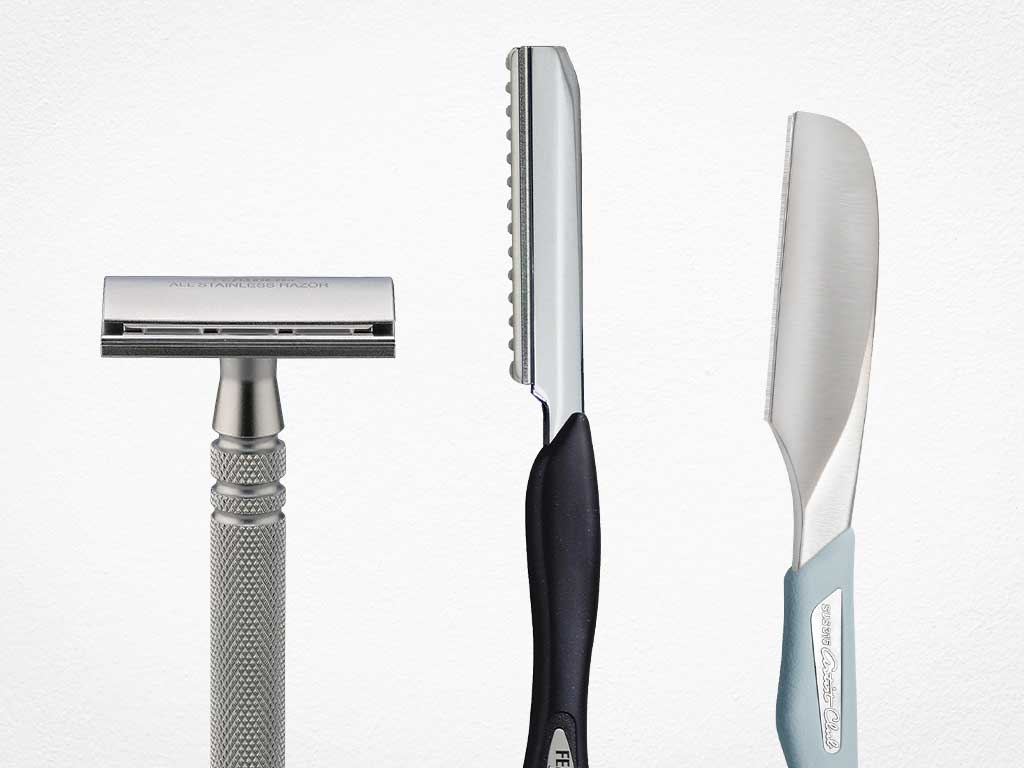
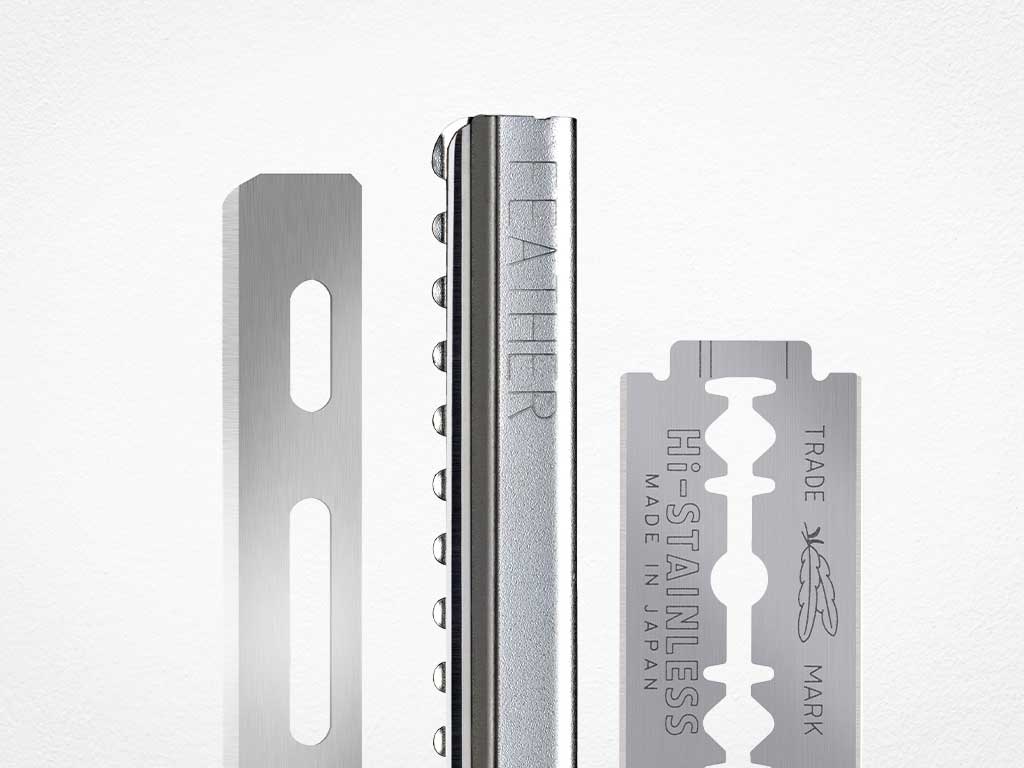
If you're new to razor haircutting and new to the Feather Styling Razor, you might find there are a number of choices to make when it comes to using one. We know learning how to razor cut is already a big task and commitment, so getting the most out of your razor shouldn't be. In this article, we will be covering the unique benefits of the Feather Styling Razor, the different components to the system and which blades you should be using. HISTORY OF THE FEATHER STYLING RAZOR But first, a little bit of interesting history. Prior to the 1990's there was no haircutting razor available that had a guard. While that's difficult to imagine today, at the time, if you wanted to do razor haircutting you had to use a bare blade razor. This was a problem for many hairdressers because they didn't want to cut themselves or their clients. To say the least, the fear was real.  As a consequence, razor haircutting was not popular. Seeing the need in the industry, JATAI and Feather created a new kind of razor in 1992. You guessed it, the Feather Styling Razor was born. A unique and innovative haircutting razor that not only had a guard, but used replaceable blades. It was a never-before-seen product that hairdressers fell in love with. Today, the Feather Styling Razor is the number one haircutting razor in the world. With 30 years of dependability and quality control, the Feather Styling Razor is used all over the world by stylists and even barbers.   FEATURES OF THE FEATHER STYLING RAZOR   It's a System There are several unique features of the Feather Styling Razor. First off, it's a system. You can't just have the handle to make it work. You need the blades and the disposal case too.  The brilliant no-touch system allows you to easily insert, remove and replace blades without ever touching the blade! For sanitation and safety purposes, it doesn't get much better than this. You can watch this video on how to use the no-touch system. Safe Disposal of Blades Let's talk about that disposal case for a moment. The Feather Disposal Case is a container with a slot at the top used for removing and disposing used blades. Once a blade becomes dull, you remove the blades with the case. When the case fills up, you can dispose of it properly to keep wildlife safe. Blades are still sharp once they hit the landfill, so it's important to make sure they stay out of harms way. You can dispose the case at your local pharmacy or sharps recycling center. The Handle Design The handle itself has an ergonomic design. It's easy to hold and maneuver. The hole at the end is not necessarily to put your finger in. While you can do this, it can be restrictive. So use it or don't use it, it's up to you based on your preferences. The head of the razor is made of Japanese stainless steel. It's designed in a way that holds the blade snug in place. There is no chatter or movement of the blade in the razor head, making it very easy to use the razor. You may notice there are two types of handles. There is the standard handle and then the detail handle. The detail handle is 1" shorter and designed for detailed work such as razor cutting the fringe or small areas that need attention.   The Blades Finally, the biggest feature of all is the blades. The blades are what do most of the work. Made in Japan, there is an enormous amount of quality control that goes into making the blades in order to ensure the blades are made properly. It's due to the commitment and attention to detail that Feather has some of the most dependable and consistent blades on the market. They are made of 100% Japanese stainless steel. The blades are extremely sharp so they don't snag the hair and they last a long time so one blade goes a long way! The Feather Styling Razor Standard Blades are the most popular and the first blade to be produced. It has a built-in guard and comes in a pack of 10 blades. It's the most versatile blade and used for everyday razor haircutting. For most, this will be the go-to blade.  The Feather Styling Razor Texturizing Blades was the second blade to be produced. It has a unique guard pattern that allows you to cut 25% less hair than the Standard Blades. This blade is useful for razor cutting thin hair or if you want texture but don't want to take off too much hair. It's often associated with the red handle but the Texturizing Blade can be used in any Styling Razor handles. The Feather Styling Razor Standard R-Type Blades is the newest of the three. This blade looks similar to the Standard Blades but it has less guard. With 40% more blade exposure, you will cut off a lot more hair so be careful! This blade is best for a razor haircutter who is quite proficient in razor haircutting, wants to razor cut more quickly and wants less resistance in the hair. The more guard there is on the blade, the more resistance there will be. So, the R-Type Blades can be viewed as a stepping stone between a guarded blade and an unguarded blade, giving the most freedom when it comes to razor haircutting.  The Feather Styling Razor and blade system works. Throughout the years, competitors have tried to come up with their own version of a haircutting razor with a guard. But many blades and handles end up being produced in China. The quality and standards are not as high. They wear out faster and don't hold up as well. We believe the razor is an extension of your hand. Razors are a tool, that if properly made and handled, you can create beautiful art with them. Like a paintbrush, if your brushes are of quality, your strokes are nice and smooth. Your experience as a painter is more satisfying and fun. And your final artwork becomes a masterpiece. You are going to love razor haircutting. It brings creativity and art to haircutting. Please be sure to check out our JATAI Academy's Education CONNECT for tons of educational videos on how to use our various razors including the Feather Styling Razor.   Product, Haircutting Razors
Subscribe and Save on Feather Blades with JATAI

Subscribe and Save on Feather Blades with JATAI

by JATAI, 26 Jul 2021
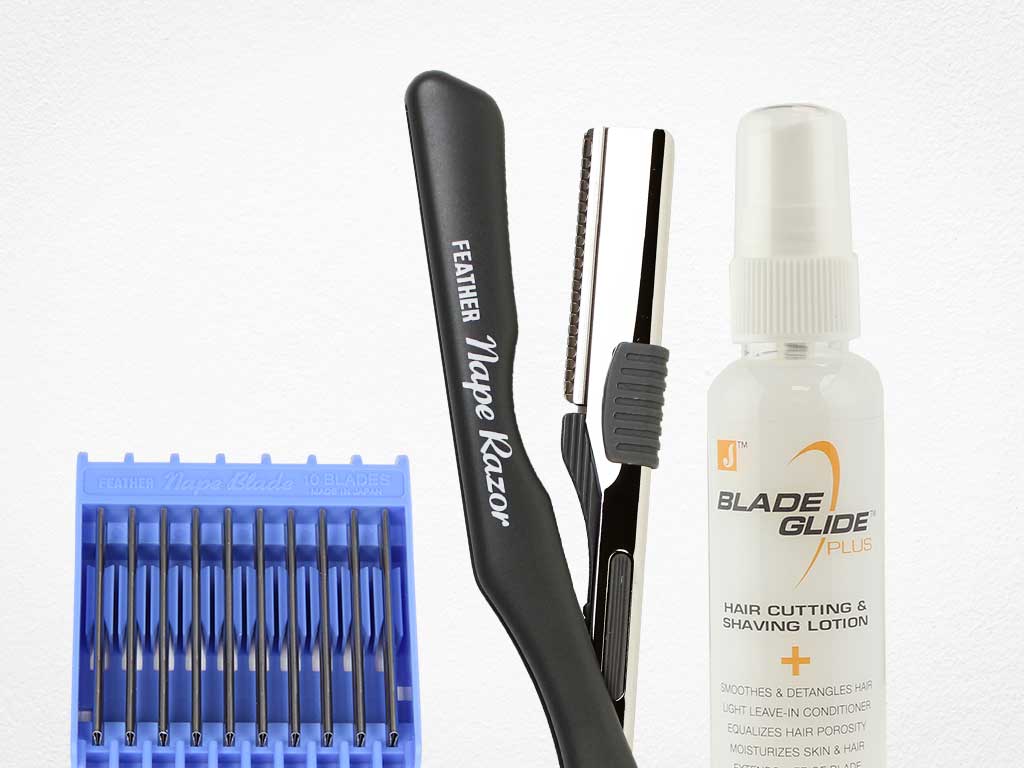
Blades. They are a necessity for barbers and hairstylists on a daily basis. Whether you're a barber offering shaving services with a Feather Artist Club Razor, or a busy stylist who turns to your Feather Styling Razor or Plier Razor for today's textured cuts, nothing is worse than running out of blades. Avoid those last-minute dashes to the beauty supply store with JATAI's Subscribe & Save Service! Now you can save time AND money by subscribing to JATAI's blade replenishment service on a variety of Feather Blades. Automatically save up to 35% on Feather's top shaving and haircutting blades and never worry about running out of blades again. Choose between a reoccurring subscription of 3, 6 or 10 packs of blades and the frequency of shipping that best suits your needs: monthly, every 2 months, every 3 months, every 4 months, every 5 months or every 6 months. You are guaranteed to receive authentic Feather product and can cancel at any time. Plus, every order ships free! Subscription is available for both Feather haircutting and shaving blades including: Styling Razor Standard, Standard R Type, and Texturizing Blades Plier Blades Nape Blades Artist Club Professional, Pro Guard, Pro Super, Pro Light, and Pro Soft Blades   We also provide subscriptions for JATAI Blade Glide Plus Haircutting and Shaving Lotion as well as Fuji Paper end papers. Need help choosing the best type of blade for your shave? Check out this video detailing the four top selling Artist Club Blades:   Learn the difference between the three Feather Styling Razor Blades:   Product, Haircutting Razors, Artist Club Razors
Your Top Five Razor Cutting Questions - and Answers!

Your Top Five Razor Cutting Questions - and Answers!

by JATAI, 22 Mar 2021
Over many years as a stylist, owner and educator, I, Russell Mayes, have gotten a lot of questions about razors and razor cutting from stylists on all levels of experience. I would like to share the top five current questions I am asked most often - and the answers. For more information, check out the new Razor Fundamentals educational video course now offered on Jatai Academy's Education Connect. It's your direct access to the most extensive free online video library currently available to stylists and barbers. TOP 5 QUESTIONS AND ANSWERS ABOUT RAZOR CUTTING: 1. Can you use a razor on curly hair? Yes and no. What type of hair you can use a razor on depends on the cuticle, more than if it's curly. Some hair textures respond well while others do not. Some cuticle types tend to bristle when cut at an angle and perform better when blunt cut.   2. Does it matter if I use a guard vs. no guard? The less of a guard you use, the more control you have when cutting. You can be more precise with your shape and texture as well. But a guarded razor will get you 90 percent there versus a guardless razor. Once you master cutting with a guard, you may find that you want more control, so move to a razor with either less of a guard or no guard at all.  The point here is that you don't have to use one. Insider Tips: For the most guarded, I work with the Feather Styling Razor with Standard Blade. For less guard, I recommend the Feather Styling Razor R-Type Blade. For no guard, I reach for my Feather Plier Razor.   3. How can I prevent losing my shape while razor cutting? The solidity and bluntness of the shape you cut is determined by the stroke of the blade as you are cutting your sections. The larger the stroke of the blade, the more airy and softer the shape. The tighter or smaller the stroke of the blade, the more solid your final haircut shape will be. Insider Tip: While learning how to control your razor, I suggest beginning with the Feather Styling Razor with Standard Blade. This will help you to prevent over-cutting or cutting too much when you are just getting started since it's a safer option.   4. Does the razor damage the hair? This depends on the cuticle texture and the sharpness of your blade, as well as your cutting action. Drier textures of hair don't respond as well to being cut with a razor. If the blade is dull, this will only cause cuticle damage that could easily have been prevented by using a fresh blade. Also, if your cutting action isn't positive or determined, you will partially cut strands without cutting them all the way through, which results in a less-than-solid shape.   5. Do I have to do the entire haircut with a razor? No, you can do as much or as little as needed, determined by your desired results. You can cut the hair blunt with scissors and then soften up the shape afterward with your razor. You can cut the entire shape with a razor, and then make the perimeter shape more blunt with scissors. Insider Tip: To soften up the shape after scissor cutting, the Feather Texturizing Blade (fits all Feather Styling Razors) works well. It's designed to cut hair in small sections to blend and texture hair. Blade changing is easy and safe.   Product, Haircutting Razors
Long Layers Razor Cut Tutorial

Long Layers Razor Cut Tutorial

by JATAI, 03 Apr 2025
In this long layers razor cut tutorial, you'll learn how to cut layers with a Feather Plier Razor, an unguarded razor. Razored haircuts for long hair are popular styles that give volume, dimension and a lived-in look. Razored long hairstyles can be created with a guarded razor as well, but here we take a look at using the premium Plier! A razor haircut for long hair is perfect for women who like movement in their hair, feel their hair is too heavy and need weight removal. Razored layers tend to grow out nicely and you can go for long periods of time before needing to get another haircut. Follow along with this tutorial and the transcript below.   Long Layers Razor Cut Tutorial:   Welcome to Jatai Academy. You have fear of using a razor. You have a fear of using it on long hair. Are you afraid you're going to just take out too much and it's just going to be a stringy mess? I'm going to solve all those problems today. We're going to show you how to control how much weight you're taking out. We're going to show you how deep that you want to go through and add your texture and also how to add detail and make it the perfect amount of texture internally without layering. So let's get started. Starting off razoring long hair, there's a couple of key points that you really need to pay attention to to make it to where you're not fighting yourself and causing more harm and damage than good. We want a soft wispy separated shape and there's a key technique that we're going to show you on how to get that, but first thing let's cover how to hold the razor.   The Feather Plier Razor We're going to use the Feather Plier Razor. This is a razor that does not have a guard. The reason it doesn't have a guard is so it allows me to fine-tune my shape a lot more and also I can be much more precise with where I take weight out. Alright, so I'm going to take my razor where the black handle is. I'm going to put between my forefinger and my middle finger like this. Now I'm going to push the blade away from my palm, clasp my thumb around, rotate my fingers around like this and then I can use just my finger to create motion. I can also use my wrist. And if I'm taking broad strokes I'll use my elbow. When I go and take a section, it can't be too thick. If the section's too thick, the razor can't handle that much hair and it's going to end up pushing it out of the blade and you're going to end up with a really inconsistent cut. I think that's one of the biggest mistakes people make is they take too much hair and a blade that's not sharp enough.   Establishing the Perimeter & Creating Separation So now I'm going to comb everything straight down. The third thing I want to pay attention to is the length of the hair. I don't want to razor it more than about halfway. That's going to be a lot on long hair. So I'm going to keep my razoring to the bottom third. Now if I want I can go through and start razoring my length off or I can start channeling it or I can do both at the same time. I can channel and cut length at the same time. Comb everything straight down, put the blade in about a third of the way down through and then cut my length off. Keeping in mind that I want to create a lot of softness and a lot of separation in the texture. I'm not worried about the line being perfectly blunt cut. I'm not worried about that precision. I want texture. So pay attention to the texture more so than the overall length sure. I want to make sure it's even on both sides, but I'm not going to be real fine-tuned and OCD about making sure the line's perfect. Move on to the other side. Cut my channel through. There's my length. Cut the length off at the same time. There we go. Now I'm going to go through on the other side, cut my channel, cut my channel, cut my channel and then cut my length. Now when I first start using the razor especially a guardless razor, if I'm using one with a guard it's no problem. But a guardless razor as I go through and take sections, I will close the blade so I don't risk cutting myself as I go through and start pulling down other sections of hair. Then, when I'm ready, reopen the blade back in and we're ready to go. Next section. I'm holding everything straight down, following through, getting my channel and then if there's anything on the length, cut that length off. This can move pretty rapidly once you get a good rhythm going and you get a good methodology and you get a good approach. There's a little bit right there. We're going to take just that off a little bit and we're looking good. This is what I'm looking for is this separation on the bottom. Moving Up the Head Now as I move up the head and I move into the next section I'm going to be mindful to not pick up the hair that I've already cut underneath. I don't want to go through and continue to razor the underneath hair. It's already perfect like it is. So I'm only going to go through and razor the hair above it so I don't end up cutting more off than I want to. So I'll separate that completely and visually guess where that overall length is. It's pretty easy to see we're about right there. Now we'll go through put our channels into it very very deep and pretty strong and then guesstimate at where that overall length is going to be. It does not have to be perfect, but I do want to make sure that I keep my next section out of the underneath section when I comb that down. There's my overall length. Let's go through channel some of that hair out. Now this works really well on hair that's overly thick and doesn't have a whole lot of movement to it. If she had very very fine hair I would not go through and channel as deep as I am on this particular head of hair. There's my length. Cut that down and through. And then cut my length off. That's looking pretty good. Now what I find is if I go through and don't separate the hair underneath, what ends up happening is the hair on top feels overly thick compared to the hair underneath. I feel like I start missing the weight of this perimeter weight line underneath. So this is just a safety net to prevent me from over thinning that. An easy way to make sure I don't pick up the hair underneath I can just take a clip and then another clip and then when this hair lays on top of it I don't have to worry about it. It's not so easy to pick up. My next section. And I'm going to continue on with this methodology until I've cut the entire perimeter shape.   Follow us on your favorite social media @jataifeather I'm coming into my last section here. And another variation of this technique that I'm going to show you is if the hair already has enough separation on the bottom and I just want to remove thickness, then what I'll do is I will thin it just like I was doing before. But instead of running all the way through to the tip, I'm only going to do a little bit about halfway. So that way I can remove the weight without removing so much weight on the ends as if I was to go all the way down the section. If I already feel that I have enough separation, then that's fine. Just doing a little bit right in the middle of the section is enough to remove the weight and balance out the weight throughout the rest of the haircut without making the ends way too wispy. Cutting the Front of the Long Layers Razor Cut When I come around the front it's quite a balancing act between putting enough texturizing in to soften it and keep the edges real wispy and piecey but not so much so that you have a bunch of little baby wisps of layers happening underneath when I start to blow this back I end up with these little sprouts that stick out. So what I'll do there is I'll take my center section. I will go through and do the same sort of thing. But on the right side since I want the movement to go to the right and I want to layer underneath a little bit less, I'm going to focus more on the surface of the section as opposed to going just straight in and channeling it. So instead of just going straight in and channeling I'm focusing more on the surface layer with steps in between. That way I can start to remove the weight without any little stubs sticking straight up in the air. And then to make sure I get the length going I'll start shorter in the center and build up some texture and length going to the right and then going to the left. If I feel like I need to take a little more weight out, I'm going to do the same thing. I'm going to fillet this off so I hit the surface of the section not the underneath of the section. That is most important just around the bang area. The rest of it you can go through and do whatever you' like. Either way works just fine. Give us a thumbs up, click subscribe and the notification bell to be notified of future Jatai Academy content. My next section here and this should be pretty much it just a formality to make sure nothing really hangs over the sides. Again roll down. There's a little weight right through there so we're going to filet that off. After I finish on both sides I'm going to go through and blow her dry so we can see the results. The End Result of the Long Layers Razor Cut Here's our end result of this razor cut for long hair and I think we're looking pretty good. And the whole point of this video of using a razor on long hair was to demonstrate that it's not just for short hair. I mean some people are scared of the razor you know. They're afraid to cut any kind of long hair with it and you can use it on long hair to great effect in the right way. So we don't go more than half the depth of the hair. We pay attention to how much of the ends that we're taking out to get our pieciness. And we don't cut the underneath hair as our guide in each section as we go up. And that all gives you a much better result like this. And I think she looks pretty good. I think we got a nice texture to it and this is without any kind of layering at all. You get all of this separation and this faux layering just by doing that deep channeling and by going through and putting that invisible kind of layer through it. I hope you learned something about how to razor cut long hair. So anyway check out the Jatai Academy. There's all kinds of fantastic information on there that will make you better hairstylist and barber. Also let us know what you'd like to see in the future. Thank you so much for watching. We'll see you next time. Final Thoughts on Long Razored Hair Haircuts with razored layers are versatile and work best on thick hair. When you razor cut long hair, it's important to use techniques that are applicable to the client's hair density and thickness. This long razor cut hair is perfect for many women that's timeless and classic.   Tutorial

Product compari­­son

View more