Jatai Academy Trend Connect Desktop Banner
Jatai Academy Trend Connect Mobile Banner

TREND CONNECT

Trend CONNECT puts 'what's new' together for you when it comes to the season's most current trend updates in fashion, hair design, make-up, skin care, nails and grooming products. From the runway to the red carpet, Trend CONNECT puts you in touch with what really impacts your world as a stylist, barber, nail artist or consumer.

SIGN UP FOR UPDATES
Filter

Tutorial

How to do a Medium Crew Cut with Clippers and Scissors

Tutorial

How to do a Medium Crew Cut with Clippers and Scissors

The medium crew cut is a very classic crew look that many men sport. You might also compare it to an ivy league crew or short crew cut. Crew cuts are very versatile and are generally short on the sides and back with a slightly longer top. The style is a popular men's haircut and it's easy to see why! Crew cut hairstyles generally don't have a very short taper fade and definitely not a skin fade. The hair is slightly longer than that. And because it's more of a rounded look, it doesn't have a flat top. It's not a buzz cut either. You can do this type of cut on curly hair but you will have to pay a little more attention to details. Watch this tutorial taught by Russell Mayes and learn how to do a crew cut. Also, follow along with the transcript.   Medium Crew Cut Tutorial:   Welcome back to the JATAI Academy! Today we're going to be doing a study on how to do a crew cut. So let's get started. So today we're going to talk about doing a crew cut. Before we get started it's good to know the differences between a typical crew cut and then just most masculine shortcuts. A crew cut is basically a short back and sides and a little longer on top which is very common. But most short masculine cuts have a squarish shape, where a crew cut tends to have a rounder shape and tends to be a little shorter on top. Now it gives you a lot of versatility. You can either go longer in the front and then blend that through or you can take everything kind of short on top. Or it can be equal to the sides so you have a lot of versatility and a lot of variation. So what we're going to cover today is we're going to take everything short in the sides and back and we're going to leave the top a little longer, a little longer here in the front as well. And then we're going to comb everything forward and see what we got.   Classic Crew Cut Clipper Over Comb So starting I'm going to start in the back and I can take a clipper and I can put a guard on it and I can run it up the back normally like I would taper most haircuts but today what I'm going to do is I'm going to work on my clipper over comb. So doing some clipper over comb work, I'm going to make sure I comb everything straight down. And clipper over comb is about getting a rhythm of the clipper motion across the comb. When I put the comb in, I angle it at whatever angle that I want my graduation to be, my taper to be, and then I just follow that up the top. Now when I first start there's no guide so I'm basically just using the force to guess where I want my tapering to be and then I can use that as my guide for going to the left and my guide for going to the right. So what that looks like is I'll turn the clipper on, put the comb in, angle that out from the scalp at whatever angle that I think I need. And then that's the angle I'm going to go up and then run the clipper across the comb. And here I'm basically just guessing at what length I want this to be. I'm not being very discerning about how perfect it is. I'm just looking for the overall lengths and I think we can go a little shorter there. So we're going to take that a little shorter through there as well. And now as I start to go up the back of the head I want to fight the urge that I have of up and out because that's most of my training is always short and up and out. But a crew cut is up and over so it keeps that shape kind of round. So once I get my basic taper in like this then I can start to work one side or the other. Now I've got my guide in the middle. I use that as my guide and then just cut this side off here. Now as I press the clipper against the comb I'm not using a lot of force. Right? It's just very lightly tracing the comb.   Give us a thumbs up, click subscribe and the notification bell to be notified of future JATAI videos.   And I'm just going to follow that up and through. I want to make sure that I'm not holding my breath because if I hold my breath, I tend to make my hand shake. And when you're using clipper over comb like this you want to keep as steady a hand as possible. Working that up and through. Now once I reach the mastoid which is this bump right behind the ear, I've got everything cut through here like I want. I'm not too worried about my blend right here. We'll get to that when I start using my scissors. I'm just working on tapering everything down nice and smooth. Once I get to the mastoid I'm now going to skip and go right to the sides. Now on my side I'm going to start here at the ear and I'm going to go short and work that straight up, work everything straight up. I am tapering it in two dimensions here. I'm tapering it going from ear up and I'm tapering it from the front going back. Now once I've gotten everything cut to the top of the ear I will then go through and blend at this angle and that angle is usually going to be parallel to my front hairline. It's going to be parallel to this hairline from the mastoid down to the corner of the hairline. So I'm trying to keep everything even and smooth because most head shapes arc down a little bit. So if I continue that all the way through the back I'm going to end up cutting the crown too short and it's going to make his head shape look funky. So this ensures that I don't cut my crown completely out of it. Check that out, see how we're looking. I'm going to take a little tighter right down here in the nape. Now once I've got the sides and the back done and I got my transition from the front to the back I'm going to go through and do the same thing to the other side.   Crew Hair Cut Scissor Cutting So now we've gone through and we've shampooed our model. Gloriously I might say. Now let's work on cutting the length on the top and blending that into the sides. If you've seen previous videos, you've seen me do a walking guide. I'll take the first section here on the side and I'll cut that length. I'll add the second section into the first and combine them and make one section. So I have section one and two combined. Cut that into the center. I'll remove section one. I have section two and three combined. Section three and four and four and five and so on and I'll walk that guide length all the way around the back of the head. I'm going to do the same thing here on the top, but I'm not going to take any sections. I'm going to do a very classic barber approach where I'm going to start in the front. I'm going to pull the front back to maintain length and then I'm going to walk my guide all the way through in the back. And as long as I'm consistent about how much I'm moving each time going back I'll end up with a nice clean line. So I've got my section. I'm going to comb everything forward. I'm going to comb everything back to where I think the recession is or maybe a little bit further back. I'm going to pull that up and then I'm going to go through and cut whatever length that I want. So now I've got my whole guide linked on the top. I'm going to go to the left, cut that through and I'm rounding the shape out. Usually I keep that shape pretty square and I am using my Osaka Scissors from Jatai because I have a little bit more blade length and it's got a little bit more weight to it so I can cut a thicker section of hair. I don't need to be real precise with it. Now I'm going to go back a finger length back, and I'm going to cut using my guide length from the front. I'll go a finger length back, cut using that guide length from the front. A finger length back, same thing and I'm going to keep going until I run out of hair in the crown. As long as I'm methodical with how far back I'm moving each time, I'll end up with a nice clean line. Comb forward again and now I'm going to start working on the left side. I have two guides. I have a guide in the front and a guide in the center. And I'm cutting that following both of those two guides from the front and working that all the way into the back. This is a very very quick fast way of going through and motoring through a lot of hair. I'm not worried about being real precise with everything. I just want to be very very methodical in my approach. As I work that around, go through, we'll check this out from the other angle. Now I'm going to go through and do the same thing on the other side. So now after I've got all the top done, I'm not worried about blending on the sides right now. We'll get that last. But after I've cut the whole top I want to go through and cross cut it the same way. I'm going to pull everything into the center and any little bits that may hang out I'm just going to go through and trim. And there's not a whole lot because I was very very consistent with moving my fingers back at an equal distance every time. So just go through just cross check anything that hangs out. There's a little nibble there. I'm just going to go through and clean that up. This is just to make sure everything grows out nice and smooth.   Men Crew Cut - Blending Okay so now that we've got everything cut on the top and blend that into the back, I want to make sure everything blends in my transitions from the top to the bottom. So I'll just take vertical sections. You can see where my tapering was and I'm just going to go through and make sure everything blends from the bottom to the top. And I'm going to work that line up and over and blend in. Now if you feel more comfortable starting in the front and then working to the back that's perfectly fine. There's no correct method of where you start versus where you finish. What ultimately matters is that everything blends and is proper and fits the head shape.   Follow us on all your favorite social media such as Instagram @jataifeather   And everything's looking pretty smooth through there. If I find I got a little bit too much taper through there, I can go through and this works really well with my Osaka Scissors because they're so much longer than the other scissors that I have. I've got that extra blade length that makes it easy for me to go through and scissor over comb.   Mens Crew Cut Fringe Looking pretty good. Same thing on the other side. So all that leaves us now is to deal with our fringe in the front, our bangs in the front. So depending upon if I want this brushed up and back. Right? Very very collegiate that way. Or I can have it much shorter and kind of combed over. There's a lot of things that I can do to this. So it just depends upon how short you want this and what look you're going for and how their hair reacts. If they have a lot of cowlicks then probably longer is better so you can control it a little bit easier. So let's go through and just keep it fairly long but I'm going to even it up so it doesn't come to a point in the front. So when I do that I'm going to take and I'm going to pull it out at that angle and then we're going to go through and point cut this through. A point cut soft line is going to be much more pliable and movable than if I was to cut that blunt. Blunt lines tend to not move as easy as soft textured cut lines. Just go through take a little bit of that corner off right there. Looking pretty good. See that little corner right there. It's very subtle but that subtlety will make a big difference. The only other thing I might add is if the person has wavy hair or has a lot of cowlicks or they have a bunch of indentations in their head and their heads not smooth you may get some darkness and some lightness through there you can't blend out very easily.   Tracing this Crew Cut for Men Then I'm going to go through with my Tokyo Thinning Scissors. I'm going to put the cutting blade on the bottom and then I'm going to go through and just trace what was already cut. I'm not trying to go back in and re-cut anything. I'm just tracing that previously cut taper that I put in through there and that will make everything mesh together and blend a lot smoother. And this will also help with any kind of waviness that's starting to stick out or kick out it will soften that line and like I said in the bangs it will make it much more pliable and much easier to move. With my Tokyo Thinning Scissors take that little nibble off right there, that doesn't want to act right. There we go. Much better. Looks pretty good. We got a nice even smooth clipper over comb around the bottom. We got a nice round shape on top, a little longer in the front. You can puff that up. You can bring it down. You got a lot of variety there that you'd like. You can comb it and make him look very very Wall Street or you can crop the whole thing up make him look very edgy. Yes you need to look... well no maybe not that edgy. Well only on the weekend okay. Only on the weekend. Anyway, kind of looks like Kyle McLaughlin to me. Check out the Jatai Academy. There's all kinds of great information on there that'll make you a better hairdresser, make you better barber. You can also check links below to find the scissors that I use. They're fantastic and for the price it's hard to beat. Let us know what you'd like to see in the future and until then I shall see you next time. Thank you so much for watching!   Final Look of the Crew Cut Haircut   A crew cut can complement any face shape and can pair with facial hair. The modern crew cut is worn by many boys and men for it's versatile look. We hope this crew cut style haircut tutorial was easy to follow along and understand.   Tutorial
Disconnected Layers Haircut Razor Tutorial

Tutorial

Disconnected Layers Haircut Razor Tutorial

Creating a disconnected layers haircut can be a little scary sometimes. When hairdressing you want to make sure you take care of your client in the salon and give them what they want. Sometimes clients don't really understand the implications of their requests and what that can do to the outcome of the haircut. A disconnected haircut is sometimes one of those haircuts where you have to be careful of how you approach it. Hair cutting to create disconnection is ok as long as it's not over the top (for most clients). Long disconnected layers can look really nice, but it should be done in a way that doesn't give a mushroom look to the hair or give too much disconnection. Disconnected layers hairstyles can bring more life to the hair and all volume. But when doing a disconnected long layers haircut, perhaps the technique below will give the results you're looking for. Here's how to cut disconnected layers with seamless ease! Follow along with this video tutorial or the transcript below.   Disconnected Layers Haircut:   Welcome to Jatai Academy! I'm Russell Mayes, Director of Content. Today we're going to be doing some layering but the layering is going to be disconnected. In the end it's all going to blend seamlessly. It's a really good way to go from really short layering to really long in length very easily. You curious? Let's get started.   Sectioning the Disconnected Layers Haircut Okay so let's get started here. We're taking a natural or center part right down the center of the head to the crown, from the crown (the drop crown actually) I'm going to go to the top of the ear using my Feather Styling Razor that gives me a good sharp edge to cut with, but it has a little bit of guard to keep me protected from cutting my fingers.   Setting the Perimeter Length So with my Feather Styling Razor I'm combing everything straight down at zero elevation and going through and taking a pretty deep channel and purposefully trying to cut a point into the hair. So I want the perimeter length to have a lot of separation. So by going through and holding this down at zero elevation and taking a channel cut all the way until I cut the section off I can end up with pieces that really separate and flick apart on the bottom. We've cut the bottom part. Now we're going to move up to the top of the head and it's the same pattern that I was using before, combing everything down, finding my guide underneath going through channel cutting and cutting my length off so that I can get that nice soft pieciness on the bottom. Now if I go through and do this with the scissor it's not going to have the same kind of flow and here you can see we got a nice separation on the bottom and it's still got a nice blunt shape.   Addressing the Front From there we're going to move around to the front and I'm going to take the first bump of the head from the parting over to the high point of the hairline over the ear. Then we're going to go back right in the center, take a triangular section, comb that down to where I want my length, cut that, comb everything else forward using that front as my guide. I'm now going to cut my short piece in the center of the front and angle that line down into my perimeter length. I still want to keep a nice smooth razor stroke on both sides so that I can get it to match. Now going back into the center you'll notice I'm cutting from the center of the face down as opposed to cutting from my fingertip into to the palm of my hand. This way the hair is going to flow the same way on both sides. I want to match both sides with my razor action so that I can get that same kind of movement and flow. Here I'm just going to comb everything else from the back of the head down and forward and anything that would hang off my perimeter line that I cut around my face framing. Anything that hangs over I'll cut that off. So here I'm keeping a solid perimeter shape by keeping my elevation low, but I'm keeping the perimeter texture soft by using a razor.   Check out @jataifeather on your favorite social media platform. We've got all of them. We'd love to hear from you.   Step Layering for a Disconnected Layers Haircut So now we're going to continue on. I'm sectioning off the head and the four quadrants. Center and then from the high point of the head to the high point of the ear. Here I'll take one quarter and I'll hold that down and where I want my shortest layering to hit I'm going to pull that section straight up in the air hair and cut that really short. Now with someone as long as her hair is this is going to give you a little pause for concern because you're going to think 'Oh my gosh! That's going to be too short.' But what we're going to go through and do is we're going to disconnect each step of our layering. So there's my first section right there. You can see it underneath and I'm going to go about an inch longer than that. I'm not going to blend it through. It's about an inch longer but the razor stroke will give me on, comb that straight up into my previously cut sections and you'll get a nice soft line that will easily allow everything to blend through. I'm going to take my next section, see my guides drop out.   There's the first one. There's the second one. Now I'm going to go about an inch longer going through with my razor keeping the same methodology that I was doing before and going through and using a broad razor stroke cutting that length off. So by going through and doing this kind of step layering it's going to allow you to build up a lot of length really really quickly. So I can keep the crown very very short and easily blend through my layering down through the bottom without having to over direct in some really steep angle that I'm trying to blend it through. This will go through and create a tremendous amount of length very quickly and since I'm using a razor. It's going to keep everything nice and soft and it's going to blend through. Here's our last section. Just a last little piece there. Everything blends. Now look at that. That's layered very very short but I still have a solid perimeter shape. Now we're going to take our guide from the first section on the left side. Now I'm going to take my section on the right side. Now this part here on the right side (you can see my triangular section right there) this part here I'm going to cut the same length as my parting on the opposite side because this is the new guide for the right side. So I want to start with the same length on the top and then I will completely ignore all the guides on the left side of the head and comb up and cut this about an inch longer than my previously cut section.   Please give us a thumbs up, click subscribe and the notification bell to be notified of future Jatai Academy content.   Now here we've gone through and done both sides. You can see we got a nice smooth layering with lots of separation and lots of pieciness in the back.   Back to the Front Now we're going to go through and do the front. We're going to take the same kind of triangular sections that we were working on. There's my guide from the back. It just dropped out and then I'm going to go through and razor that off with the same methodology that I was doing in the back. But around the front I want to be very very conscientious that I'm going to build this up pretty quickly and you can see my guides drop out from the back so it will blend front to back and top to bottom. But I want to pay attention to make sure I don't get my layering not stepped enough to where I end up giving mullet layers, where I cut my layering so short around the front that I lose all that length right around the front. Combing this up, the very last piece. There's very little right there. Oh and we just dropped the comb and she's laughing at me. It's that kind of day and here we go through and check out everything.   Blow Drying and Styling a Disconnected Layers Haircut We see our layering blends front to back side to side and now we're going to blow it dry and see how we look. On this I start blowing the roots dry first and then I'll go through with a round brush just to get a little bit of a set so I can have a nice amount of volume and a nice little bit of curl pattern to it. Around the front just curling it to one side to kind of get some flow, get it out of her face. Now we're going to hit it with some cold air to kind of set that movement into it. When the hair gets hot it becomes pliable. I can pull the natural shape out of it. When it cools down it will re-harden in whatever shape that I want and that's how I go through and style the hair to have body and some fullness to it. And I think this looks pretty good. We got the layering really short, but we still have a good solid perimeter shape. We got a lot of movement to it. The texture is there and I think that this works really well with her hair. I like it. Thanks for watching. Check out the Jatai Academy for more information and more content to make you a better hairstylist and barber. Also let us know what you'd like to see in the future and we'll see you next time.   Final Disconnected Layers Haircut Look   Now you know what is a disconnected haircut and how to create it. Disconnected haircuts are a beautiful way to add some life to long hair. We hope you gained some knowledge here and incorporate it in the salon!   Tutorial
Male or Female Bowl Cut - Razor vs. Scissor Technical Deep Dive

Tutorial

Male or Female Bowl Cut - Razor vs. Scissor Technical Deep Dive

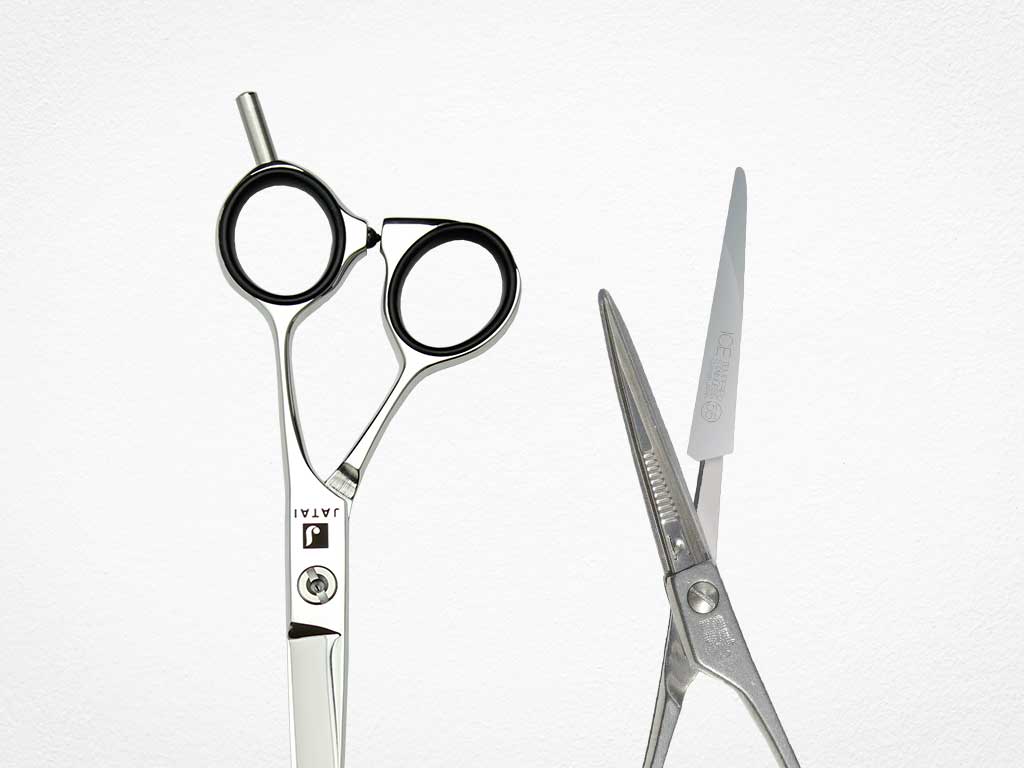
A male or female bowl cut is a unisex and versatile short hairstyle. A bowl haircut can be made to be a more modern bowl or a vintage classic mod bowl. The variety in styles that bowl cuts come in make it a fun hairstyle to work with. The bowl cut hairstyle can be made dramatically different based on the type of tool used, the techniques used and of course the desired outcome. When you use a scissor vs. a razor to cut a bowl hair cut, you can see how the differences are uncanny. This pixie bowl hairstyle compares the use of these 2 different tools and shows you how they give different effects and final outcomes. To do this, Russell Mayes, Director of Content for Jatai, does one half of the pixie bowl style haircut with a Jatai Tokyo Scissor and the other with a Feather Plier Razor. Follow along in this video tutorial and transcript.   Male or Female Bowl Cut Tutorial:   Welcome back to Jatai Academy! Today we're going to be doing a comparison between a razor and a straight scissor when doing a pixie bowl haircut. So let's get started.   Scissor Bowl Pixie - Part 1 Alright so the first section we're going to take is going to be right here on the side of the head at an angle. I'm going to pull that forward, angle my fingers to where this is going to be kind of longer in the front and a little shorter over the ear. Then we're going to take a parallel section to that and I'm going to continue to walk my guide all the way to the back of the head. There's my guide underneath, work that through. Next section I'm working that back pulling it to the previously cut section straight out from the head. There's my angle. I'm going to follow that through. And I am using my Jatai Tokyo Scissor. It's a five and a half inch which I think is perfect for when you're trying to deal with short little pieces of hair and it will force you to deal with smaller sections so you can work cleaner. Pull that through. There's my guide. Continuing to work that through and down into the nape. And I'm just going to keep doing this until I get all the way to the center or the back of the head. After I've gone through and cut this whole side I want to go back in and cross check it. Now to cross check, since I cut everything on the angle vertical I'm going to go through horizontally and just make sure everything blends. I'm not trying to re-cut it. I'm just trying to make sure that there's no long pieces or any kind of major dips from me going through and cutting that vertically and walking my guide back.   Razor Haircut Bowl Pixie with a Feather Plier Razor - Part 1 Okay so we've gone through and tried to take the exact same parting on the opposite side of the head and I'm going to work it the same way. I'm going to take the same sections which is going to be a small section at an angle right in the front. I'm going to pull this out from the head, longer at the top shorter underneath and I'm going to try to make sure I get it the same length. So I'm going to take kind of a tight razor stroke, but then I'm going to go through and put some internal texture to it. So it's going to give me a solid shape with separation as opposed to taking a really broad stroke and feathering the whole thing out. Start with my length in the front, work that back. After I do that section, I'm going to go through and channel each stroke as I go back to kind of make that separate into pieces.   Follow us on your favorite social media @jataifeather   Nice tight stroke after I cut my length. I'm going to go through and put some internal texture to force that to separate into pieces and work that back. Now to try to match the sides when I'm using two different techniques it's going to be difficult so I'm not really too worried about it. I'm just going to go through it, cut this side as if I was to cut it with a razor. I'll cut the other side as if I was to cut it with a scissor because that's what I'm doing and then we'll just compare the results. This is not trying to make both sides look the same. Pull out forward, there's my length in the front. Work that down and through. Put me some internal texture into it. Take this next section all the way down to the nape. Pin that hair out of the way. Take my previously cut section as a guide. Work that down and through and then a little bit of texture in each section. Now my last section as I start to cross over the other side should be very little hair here to reach and I'm just going to make sure all of that blends through. A little bit of texture.   Scissor Bowl Pixie - Part 2 Alright, I'm going to start right here in the crown, take a vertical section, hold this out from the head, find my length from my graduation underneath. Cut this up and out and through. Check my length. I want to make sure that this shape kind of bevels but I still build up some volume through there so by continuing the graduated line up and then just rounding it out I'll build up some fullness in the back. I'll pivot using the center and the underneath length as my guide. Continue that up and out. I'm going to follow the same line up and out. Now this bevels the shape in the back and I have a nice smooth kind of shape. Now we're going to start to pivot and work that into the front. There's the length from underneath as my guide. Pivot again. Hold this out. There is my length...oh watch out. Now here once I hit the mastoid, I will start to disconnect the underneath and build up a little bit of length towards the front so this is more of just a guesstimate at where I want that length to go because I know on their front I'm getting this kind of length. So I want to keep that somewhere around the eyeball. There's my guide underneath. Now you see our little fringe dropping out there so let's go ahead and start to bevel that shape a little bit through there. And that's not looking too bad, not looking too shabby.   Razor Pixie Bowl Cut Haircut with a Feather Plier Razor - Part 2 Now let's go through and pivot on the other side and I'm going to use a razor on this side. When I'm using a razor and I'm trying to get this kind of beveled shape I don't have to be so conscious about beveling the shape because the application of the razor will naturally bevel it anyway. I have a little bit of my guide from my scissor side to give me kind of the pathway to cut on the razor side. After I go and cut each section I will then go through and put a little bit of a deep channel into each section that I'm going through and cutting. Remove the previously cut hair. Move into my next section. Comb that up and out. Now let's go through put a little bit of texture in there. Here we go. Continue this until I run out of hair and clean up my line here a wee bit.   Click subscribe, give us a thumbs up and click the notification bell to be notified of future to JATAI videos!   Well, we can certainly see a difference between the two sides even though they were cut in the same pattern and following the same guides. So let's blow it dry take a look at it and analyze our end result.   Finished Pixie Bowl Cut with Bangs Look Here's our finished look. It looks very mod to me kind of a mod 60s kind of thing, that kind of pixie bowl cut from the 60s. So right side all done with the scissors, blunt cut, no texturizing to it at all. And you can really see the shape is very solid. It builds out a lot of weight and solidity around the sides as it's working towards the front. And then if we look at the razor side I went through and tried to do it exactly the same. You can certainly see there's a lot more softness to it, a lot less weight and a lot more texture to it. Oh come here. How can you handle all that hair in your eyes? Well, that's amazing. Anyway, uh things to remember. The stronger deeper the stroke the more weight you're going to remove and the shorter it's going to feel. When you're working blunt with the straight scissor with the Tokyo scissor you got to be really diligent to maintain exactly on top of your guide so you don't create any kind of lumpiness and waviness especially when you're transitioning from back into the front and building up this graduation that we put in horizontally. Let me know which side you like better. You like the 60s blunt mob or you like the texture all kinds of wildness over here which is more a little punk rock. Let me know which one you like better. Leave a comment below and check out the JATAI Academy. There's all kinds of great information on there that make you a better hairdresser and make you a better barber. Let us know what you'd like to see in the future, and we will catch you next time. Thank you so much!   Final Thoughts on Bowl Haircuts for Women or Men Bowl cut hairstyles can cut with different tools to create different effects which will influence the final outcome. Additionally, there can be other nuances to the cut that can make it look very different from other versions. The beauty of this cut is that it's a low maintenance, versatile style that can work as a unisex short style.   Tutorial
Clean Razor Cutting Technique

Tutorial

Clean Razor Cutting Technique

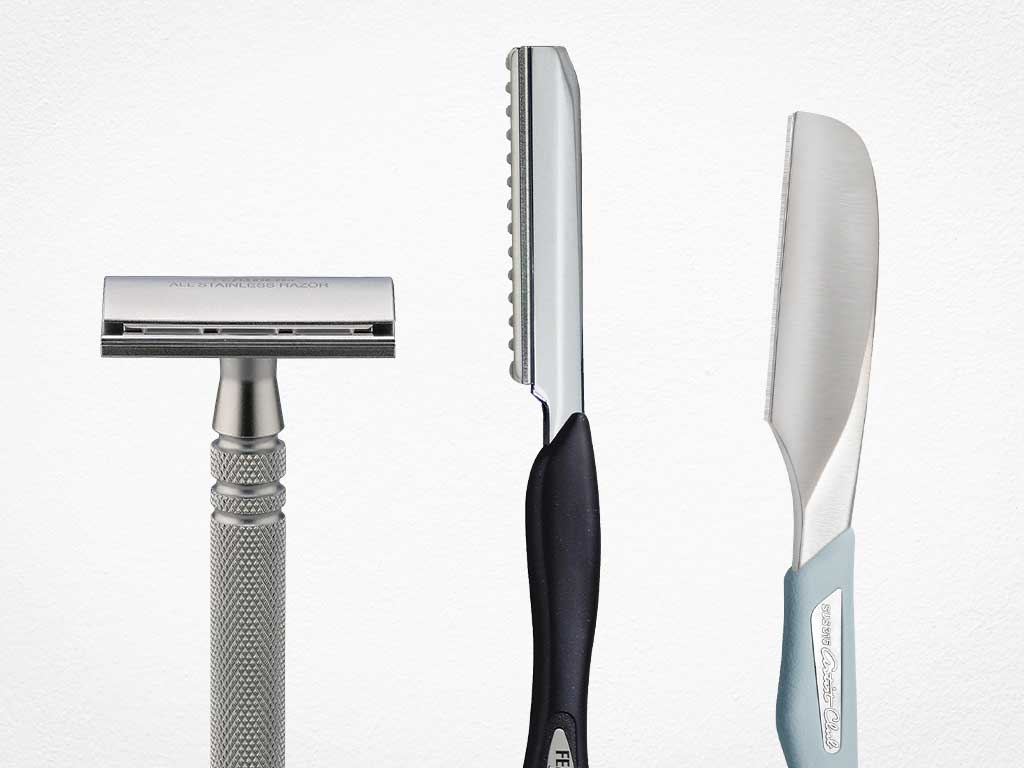
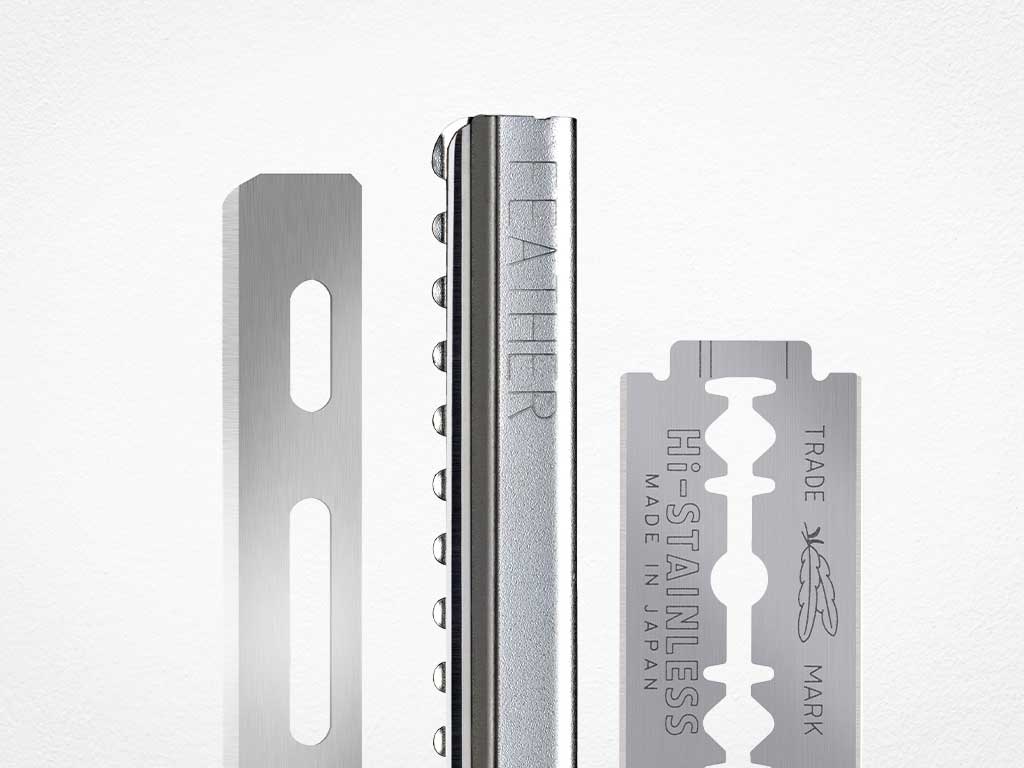
If you're new to razor cutting or even if you're an advanced user, learning proper razor cutting techniques can take your razor skills to a new level. By using the best razor tools and products and getting professional education you can live your best life in the salon and give beautiful razor hair cuts to all your clients. If you're looking to learn how to cut hair with a razor these cutting hair tips will get you on the path understanding precision hair cutting techniques that are clean and sound. In this video you will learn a razor cutting technique for clean cutting using 2 different razors. Follow along with this technical deep dive on clean razor cutting techniques and the transcript below.   Razor Cutting Technique Tutorial:   Welcome back to Jatai Academy! Today we're going to be doing a technical deep dive on how to get a clean cut with a razor. So let's get started.   How to Hold a Feather Styling Razor (Guarded Blades) First thing is how you're going to hold the razor. You can hold the Feather Styling Razor a lot of different ways. Now the benefit of using the Feather Styling Razor is it has a built-in guard so you don't have to worry so much about cutting yourself and also it's a completely rigid unit. So you don't have any flex points in the middle to worry about if you don't have a good dexterity and control of your hand. A single unit like this will be a lot easier to control. Now a lot of people will tend to hold it with their pinky or ring finger into the ring and the blade facing them when they're holding it. I tend to hold it the opposite way where I have the blade facing away from me and then I bend my fingers so that my knuckles make a right angle. Now the blade is facing down. This allows me to keep my wrist straight and my elbow out from my body so I have a lot more dexterity. I find when I hold it this way I tend to drop my elbow and drop my wrist and it's harder for me to control when I'm dealing with small tight areas like in the nape. So I hold it facing away from me. If you hold it facing towards you that's fine. The main thing is just make sure you have a solid grip on it. If you don't want to put your finger in the ring, you can put one pinky on one side, thumb on the other, three fingers and do the claw method where I still bend my fingers over. And now I have my pinky and my thumb on the inside and my three fingers on the outside. The next thing is I want to make sure that my blade is very very sharp so with each haircut I'm going to use a new blade.   How to Remove and Replace Blades Sometimes if they have finer hair I can use one blade on two haircuts. Sometimes if the hair is very thick and coarse I might need to use two blades on the same haircut. So I'm going to remove this, get the blade out. I have the cartridge right here. I'll slide it right in. Easy to replace, brand new fresh sharp blade. The sharper the blade is, the less pressure I have to use to apply the razor to the hair to cut a clean line. If I want to cut a real clean one length type of shape, I'll comb everything clean from the root all the way through to my fingers.   How to Angle the Razor in the Hair I get a nice tight grip on my fingers, lay that as close to the head as I can. I'll lay the blade flat and I will tilt the blade at a 45 ° angle. Actually, it's a little less than 45. I just want a nice pitch of the blade to where the blade is hitting the hair at an angle. It doesn't have to be 45. 45 is probably too much so maybe we're going to do 28, 28 to 30 somewhere around there. I just want a nice pitch of the angle. Brush down and you'll start to feel when you have the right angle for cutting with razor. It will be effortless to move that blade up and down and go through and cut that section all the way through. You notice I did not move my left hand. It stayed stationary. I only moved the razoring hand. Get that out of the way. If I pushed any hair out I'll go through clean that up. So that's the first method for how to cut hair using a razor and cutting a nice clean line is just to lay the blade against the head, tilt it at a slight angle and a very very small razor stroke. The smaller the razor stroke the more blunt that your section is going to be.   The Unguarded Feather Plier Razor Now if I wanted to move up and move to the Feather Plier which is a guardless razor. It has no guard on it. It's just a straight blade. I want to keep the same things in mind. First thing I want to replace the blade so that I know that it's sharp. This comes in a little cartridge like this. On the bottom you can store the blade. Be careful when you pull that out, goes in the bottom, closes up, no problem. The top pushes out. I have a new blade revealed. Line that into the ridges into the blade holder. And now I have a nice sharp fresh blade. The best way to hold this is to actually pivot to where it's at a 90 ° angle. I'll place that really really deep in my forefinger and my middle finger and then I'll push out towards my finger tip.   Cutting with an Unguarded Blade Curling these three fingers in, my thumb rests here to keep that tight and my forefinger goes towards the tip of the blade. This way I can control how much of the blade moves with just my forefinger. Now we're going to go through and cut this blunt again. Comb everything nice and clean and smooth. There's my line underneath, put the blade in, get a nice pitch. Real gently just move that across. Now I'm moving my whole arm because I don't want to arc the movement of the blade. I want the blade moving parallel to the hair. Now I'm being very very careful and very mindful of the blade touching my skin. One thing that will help with that is I don't chase the hair. I comb everything into my finger. One thing you want to do when cutting hair with razor is to create a death grip with my finger so that the hair does not move. The next step is to gently apply pressure. If I have to apply a lot of pressure, my blade's dull and I need to change it and I need to make sure that the hair is an optimal wetness. If the hair is too dry it's going to scrape and it's going to shatter the cuticle. If it's too wet I'm not going to be able to see how clean my underneath guide is. Does that make sense? I'm not going to be able to see my guide from underneath because it's all going to stick together. I think that's probably a better explanation. When I go to section I close my blade so I don't want any sort of mishap from me going through and sectioning each section. I close the blade every time.   Follow us on your favorite social media platform @jataifeather   Razoring Technique for Movement Now if I want to razor cut hair introduce movement, then I will use a different technique. I'll take my section, I'll hold it down. There's my guide from underneath. Now from here I will put the blade at the inside of my finger or at the tip of my finger depending upon which side that I'm going to cut and then I only move straight up and down as I cut from the inside of my finger to the outside of my finger. Now there's a little trick here for how to razor cut hair that I want to bring to your attention and that is if I only use the tip of my blade every time I go through and cut, it's going to dull the tip of the blade very very quickly. So what I want to do is I want to be conscientious of that and use the entire length of the blade. So what I'll do is when I come in here to cut this section, I'll cut at the back of the blade right here at the very root of it and as I move the blade up and down I'm also moving to the tip. So I start at the back and as I move I go towards the tip of the blade. The best thing to do for cutting hair with a razor is to start at the back of the cutting razor and move towards the tip. That way I can keep a nice clean straight line by cutting interior going towards the front which is going to create movement but also it's going to keep my blade evenly sharp and it's going to dull at the same time. I'm not going to over dull the tip and the rest of the blade is super sharp. And so by being mindful of my blade usage I won't go through blade so quickly. Now the benefit of using the Feather Plier Razor over using the Feather Styling Razor to cut hair is that the Plier I have much more fine control and dexterity and I can end up with a cleaner cut line. This Feather Styling Razor is much safer and will give me a nice clean line but because it has the softening effect of the guard I can't get as clean of a line. So ultimately this Feather Plier Razor will give me a cleaner line. Alright so we're going to comb everything down. I'll come in. Now here I don't go from the tip into the very root of the blade. I keep the tip to the middle of the blade when I'm working from the interior to the front on the right side of the head. Come in, there's my angle and I slowly move about halfway through. I don't try to go all the way to the root of the blade because then it gets a little bit close to my finger and I don't have as much control. So the way that I compensate for that is when I cut the left side instead of starting at the tip I will start at the base of the blade the root of the blade and go towards the middle.   Give us a thumbs up, click subscribe and click the notification bell to be notified of future Jatai content.   Now say that I come through and I cut something and it's a little longer, I can go through and clean that up by rolling my fingers over to create tension on the hair and being very gentle as I run the blade across the hair on top of my finger. I have to be very very mindful to not use a lot of pressure and cut all the way through and then to cut my finger. It's a very very small stroke but it will allow me to clean up my line as much as I need to so those are the two fundamental ways of doing a razor cut where you get a clean line. It's not always about just filleting the hair until it becomes string. Sometimes you want a nice solid shape but you want the softness of a razor. The razor give you a softness you can't get any other way. This is where the nuances of how to razor hair come into play. So let's finish this up and see how she looks when we're all done.   The End Results I think we're looking pretty good this is our end result. Our whole goal was to try to get as clean a cut as possible using the razor. So I showed you how to do it on two different razors, the guard and the guardless. And I think it looks pretty good. We got a nice clean line. We got a nice little bit of texture in the bottom of it. It's got a nice amount of movement to it and swing. I think I got her a little longer on the left side but I'm just going to have her walk around like that from now on so we're not going to pay attention to that. But same thing on the bangs. I just held straight down and just cut straight across. These different cutting techniques for hair will hopefully help with your razor techniques in the future. Please check out the Jatai Academy. There's all kinds of great information on there that will make you a better hairdresser and a better barber. And let us know what you'd like to see in the future and until then thank you so much for watching and we will see you next time. This video is all about razor cutting. If you would like to learn more about scissor cutting such as point cutting and texturizing with scissors, go to Education Connect and in the filter for 'Select Tool,' choose 'Shears and Scissors.' If you want to learn how to remove bulk from hair and how to cut with a razor building fundamental razor skills, check out the Razor Fundamentals Course. For general videos on how to do different razored hairstyles such as razor cut shags, how to razor cut short hair or razor haircuts for fine hair, go to Education Connect and in the filter for 'Select Tool,' choose 'Haircutting Razors.'   Tutorial
Men's Short Textured Quiff Tutorial

Tutorial

Men's Short Textured Quiff Tutorial

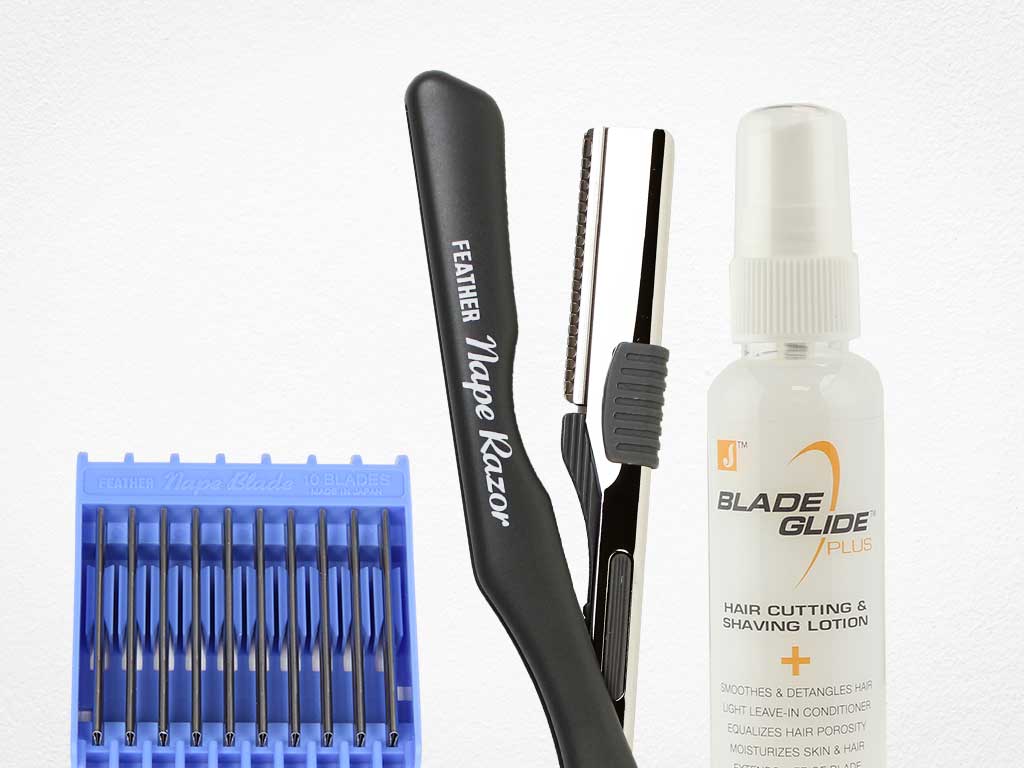
Watch this textured quiff tutorial and gain the knowledge to create this style! The quiff short hair style is a popular men's haircut that is versatile, classic yet trendy at the same time. A texturized mens quiff is what gives this hairstyle it's unique ability to be styled in multiple ways.  If you know how to style a quiff you can make it look more casual and rugged or make it more sleek and formal. If you know how to do a good quiff with lots of texture, it will give a man a lot of options for wearing his hair. Follow along with the video and transcript below.   Textured Quiff Tutorial:   Hello champion! I'm Russell Mayes. Welcome to Jatai Academy. Today we're going to be doing a textured quiff haircut, very fundamental, very basic. Short back and sides, lot of texture on the top. And uh I think it works on a lot of different types of hair, a lot of different types of texture, a lot of different face shapes. It's a good one to have in your arsenal. So let's get started. on how to make quiff hairstyle. We've got our haircut sectioned off. We're going to separate the top from the bottom and we're going to go right to the center of the recession to the quarter part, quarter part down to the drop crown. Same thing on both sides.   The Sides and Back This separates the top of the head from the bottom of the head. So I'm going to go through and cut the sides and the back using my Feather Styling Razor. I have the special chrome edition which I think makes me look very fancy. And since I'm going to go through and use this I'm going to start with a little bit of Jatai Blade Glide just to make the razor slide through the hair easier. My first section is going to be parallel to the front hairline at an angle. I'm going to go through and comb that clean, angle my fingers out a little bit longer, keep my knuckles planted next to the head. And then I'm going to take a nice tight razor stroke. As I go all the way down and through. Now here because it's sticking out I'm not going to freak out instantly. I'm going to go through and build the basic shape and then I can fine tune that and clean that up but I'm not looking for perfection. The first section or the second section I want to build that perfection as I go. I'm going to comb this into the previously cut section following my previously cut guide, take that all the way down and through. Take my third section comb it into the second section. There's my guide. The same razor stroke, go through and cut that down. Now here when I get to the ear I'm taking that section all the way down. And you can see from here that this angle is parallel to this hairline right behind the ear and it makes it easier for me to transition from the side into the back. Comb this into my previously cut section. There's my guide. Comb that down and through. Here I'm going to maintain the same length that I got there and as I get to the bottom I'm going to make that a little bit longer because I want kind of a ratchet little shape. I want him to have a little bit of something going on here in the bottom. So I'm going to take that. Now I'm going to go through and texturize that as we go but that's going to give me enough length that I can play with later on. Now I'm just going to continue this same methodology of taking parallel sections until I get to the center of the back.   Give us a thumbs up, click subscribe and the notification bell to be notified of future Jatai Academy content.   My last section, repeating the same thing. Comb to the previously cut section. Use that as my guide. Follow that length until I get to the very bottom and then bring that out for a little more length and his little mud flap down through here. This looks a lot better once I'm finished going through and doing the whole thing than it looked with my initial cut. My initial cut made me think 'oh my god I chose the wrong tool. Oh my gosh! What have I done? This is going to look terrible.' But I have to trust myself that I can clean that up as I go and now once I finish this whole side it looks pretty smooth and it doesn't look like it needs as much cleaning up as I initially would think it would because of that first section. So you have to trust yourself and you have to trust the methodology as you start to go through and build your shape. Now I'm going to do the same thing on the other side. Okay so now we've got our underneath section done. We got it the same on both sides but what I want to go through and do now is to taper this in a little bit tighter underneath and to texturize my mud flap here in the back.   Blending and Removing Weight So I'm going to go through and use my Jatai Tokyo Thinning Scissor. This is the perfect thinning scissor for taking a medium amount of hair out. It's not going to be real ultra fine. It's not going to be real chunky and thick. It's perfect for blending and perfect for removing weight. So I'm going to go through scissor over comb and I'm going to start underneath here. The reason that I'm using my thinning scissors as opposed to a clipper or regular scissor is so that I can maintain that razor texture that we've gone through and put through.   Follow us on your favorite social media platform @jataifeather   And I think that that's looking pretty good. Now here in the back I want to get some separation through here so I'm going to go through and deep point cut this with my thinning scissor. That way it gives me that razor kind of texture and that separation but it removes some of the weight so it doesn't feel so dense back here because I just want these to be you know little flicks of a mud flap not a full-blown you know straight hardcore across the back flap.   Back and Top of the Head Now we're going to go through and section out the back top of the head. So I took our quarter part which goes from the top of the ear to the crown to the top of the ear on the other side. Now I'm going to go through and fit all of this in the back so that it all blends back here but it doesn't get too short in the crown and make my head look flat. There's my length from underneath and slowly start to build length as I go to the top. Pivot from the center. Now I have two guides. I have the guide from this length underneath and I have the previously cut guide. Pull those into the center of both of those sections. Continue to hold this out 90 ° from the head as I slowly increase my length towards the crown. Next section I'll pivot again. Take the center section out. Now I have my section two and section three. There's my length. Pull that up and out and gradually increase my length as I go to the top of the head. We'll take this whole section here. Hold that straight out. There's my length. Come on there we go. Perfect. Now moving on to the top, I'm going to go through and take a horizontal section parallel to the previous section that I did to separate the top from the bottom using my guide underneath and cut this all the way through. I am going to leave this a little bit longer here in the front. So because I'm leaving it longer in the front I'm going to start my cutting in the back. So I'll pull that up. There's my length and start to work from the back going forward leaving a little bit of length and a little bit of disconnection right there in the very front. And now I'm just going to continue parallel sections, not too thick, not too thin as I continue all the way up to the top of the head and my last section. When I get to the center of the head. Hold this out. Follow my guide from underneath. Now we've got that blended on the sides and in the back and we're going to do the same thing on the other side. We've got both sides finished now. So I'm going to go through and take a center section about the size of the nose right from the front all the way through to the back. Now from here remember I cut this part back here pretty short so I'm going to use this and gradually increase my length as I go forward. Gradually increasing my length as I go from the back to the front. Now this is totally your creative choice of however short you want the top to be, how much increase of length that you want, how much you don't. I'll take a parallel section going to my client's left side. Both of those in the middle of both of those sections. Not to the center but the center of both of those two sections. Now as I don't have enough hair to hold I'll go through and use my thumb to push the hair against the blade but making sure that I'm not pushing into the blade. I'm just holding the hair and allowing the blade to go through and cut everything off that I want. Alright so now let's look at that. That's looking nice and textured through there. So let's do the same thing on the other side.   Texturing the Top for Separation So now from here I want to go through and methodically as possible texturize the top. This is what's going to give me my separation. It's also what's going to give me you know my pieciness so going through deep but gently channel cutting each and every section on the top. Now by going through and doing this it's going to make the hair feel and look a little bit shorter. So maybe I should leave it a little bit longer before I go through and texturize it so I don't end up cutting everything off and making it too short. Just continuing on to go through and each and every section as methodically as I can apply a lot of texture, deep channel cutting into the entire top of the head. I think we're looking pretty good. I think the shape's there. We may need to do some fine tuning once we blow it dry to get the textures right and get everything just to where it pops but let's go ahead and blow it dry and check it out.   Finishing Textured Quiff Hairstyle Here's our end result. I think it looks pretty good. It's a little more of a modern version of an 80s quiff than you know than the real short back and sides of it being overly tapered. I think the interesting part of it in today's masculine hair shapes is it's got more texture to it other than it just being super clean cut. I think the texture is what keeps it a little bit more edgy and a little bit more interesting visually for our eye. It works on a lot of different types of hair, a lot of different types of hair textures and you have a lot of variety with it whether you want to go really short and longer or shorter all over. It works well on a lot of different things a lot of different textures and types of hair. Please check out the Jatai Academy. There's all kinds of great information on there that will make you a better hairstylist and barber. And also please let us know what you'd like to see in the future. And until next time thank you so much for watching. We'll see you soon.   Final Look of the Mens Short Quiff Haircut The male quiff style can be made to have even shorter sides or longer sides. Same with the top. But the overall concept is the same. The front quiff hairstyle is a defining feature of this look so styling the front can completely change the overall look of the haircut.  A long quiff hairstyle will be less clean cut and have a more lived-in look and a messy quiff hairstyle will have a more grungy rugged look. The versatility of the hair quiff makes this a fantastic style to learn. And learning how to style a quiff takes some practice and experimenting. A boys quiff haircut works just the same. It looks great on boys, teenagers as well as adults. Even some women can rock a quiff. How to do a High Quiff and Style for Pieciness For men's coiffed hair you need to learn how to put your hair in a quiff. You can use a clay based pomade to get the pieces to separate. This will give that added textured look.     Tutorial
Short vs. Long Razor Stroke: Razor Cutting Hair Techniques for Different Results

Tutorial

Short vs. Long Razor Stroke: Razor Cutting Hair Techniques for Different Results

When learning different razor cutting hair techniques, it's fundamental to understand razor stroke, razor angle and hair tension. Razor cutting hair techniques for beginners include understanding the difference between a short and long razor stroke. In this video you will learn how to cut hair with a razor and how a short and long razor stroke give different results. In the salon, these razor cutting techniques will help you create the desired look and styling effects you're going for so take these cutting tips and precision hair cutting techniques and incorporate your learnings into your haircuts. Watch this tutorial video and follow along with the transcript in this article on how to razor hair.   Short vs. Long Razor Stroke: Razor Cutting Hair Techniques   Welcome back to the Jatai Academy. Today we're going to be doing a razor cut where we compare the differences between how to razor cut hair using a long broad razor stroke versus a very tight short razor stroke. So we're going to start here on one side of the head. The razor used in this tutorial is our Feather Plier Razor which is a professional razor for hair cutting. And I'm going to show you how to hold it. We're going to put it deep between my forefinger and middle finger push the blade out towards my fingertip and use just my fingertip to give it some movement.   Short Tight Razor Stroke I'm going to take my first section, determine my length overall and then start cutting from the center of the hairline all the way down towards the perimeter. And I'm going to take a very very tight razor stroke here. I'm pulling everything forward and cutting straight up and down perpendicular so this is going to give me kind of a feathered look and that's what we're going to go for. And you'll be able to see the differences between a long stroke and a short stroke. So I'm pulling everything forward using my center guide that I chose where it would fall on the face, pulling everything forward and just follow through with the cutting razor. Now the thing is when you're using a short stroke like this I want to maintain some consistency with my stroke. And if you'll notice as I'm cutting I'm starting at the base of the blade, the part that's back towards my palm and slowly moving the blade towards the tips so that way I dull the blade evenly. Now in between every section that I take I'm going to close the blade and hide it so that I don't risk cutting myself or risk cutting the hair. These are great cutting hair tips to maximize the longevity of the blade and the razor. So this is the elevation that I'm holding out for each section that I take. I'm going to pull it forward, get the right elevation, find my guide underneath, open up my blade. There's my guide and I'm just going to follow cutting directly on top of the guide. Now here you'll be able to see as I start at the base of the blade cutting with razor and then move towards the tip of the blade so that it evenly wears out the blade. Because if I only use the tip it's going to dull the tip pretty quick and then I have the rest of the blade that's sharp and then I end up throwing it away. I'm going to check the result and make sure that we're looking good. Now I'm going to continue to work back towards the head and I take a flat section of head that's going to determine my size of the section and you also see the elevation. So as I work back my elevation gets higher and higher and I'm pulling everything thing forward even right on top of the previously cut guide. The only thing that changes is the elevation and the head shape is going to show me the elevation, combing everything clean from the root all the way out continuing a nice short stroke all the way through. Continuing to pivot around the ear taking little flat sections to determine the size of my section and then I'm showing you the elevation. Now as I start to work towards the back you'll notice I tilt the model's head down so it makes it easier for me to get into that correct elevation. There's my guide underneath. Start at the base of the blade then work out towards the tip as I work through my sections. A tight razor stroke is going to give me a much more solid shape. So if someone has finer hair I may want to use a really tight stroke versus a really broad stroke and this type of method of me elevating as I work towards the back is actually going to cut a curved line shorter in the front gradually curving to longer length in the back. And just continuing to work all the way through.   Click subscribe, give us a thumbs up and the notification bell to be notified of future Jatai Academy content.   Continuing all the way back, just following the same methodology working my guides back, I'm going to pin some of this hair underneath out of the way so it doesn't get in the way, gives me less hair to work with and it makes it easier to control. There's my elevation. Hold that up, take my razor, go through and cut that as smoothly and as consistently as I could all the way from the beginning to the end. That's not the smoothest razor action that I've ever seen myself do but you know we try to keep it as consistent as possible. One thing as I'm watching this that would help is if I kept a consistent tension on it. Sometimes I notice I was allowing the tension to sag and that will make it a little bit harder to cut. Continuing to pull everything up at elevation to continue this curved layering line from the front all the way to the back. Now this next section I don't think I'm going to have a whole lot of hair and I didn't. So here's our end result on the left side which is the short razor stroke.   Broad Long Razor Stroke And now we're going to take a little piece right in the middle as our guide and I'm going to go through and follow the same sectioning patterns that I had on the left side on the right side. The only thing that's going to change is the broadness of my razor stroke. So you can certainly see here how much broader that razor stroke is and how much softer of a line that I'm going to get. Now one thing that I have to really pay attention to when cutting hair with razor is that this side is going to have a lot more texture to it. It's going to feel shorter. Even though the lengths will match up in the end, it's going to feel shorter because it has a more airy texture to it. So maybe take that into consideration as I'm cutting that I might leave it a little longer if I'm using a lot of texturizing and a broad razor stroke like this. And also another thing is when I'm working through a broad razor stroke like this, the guide is a little harder to see. So I need to be particularly mindful to pay attention to where my guide is so I can stay on top of my guide. Keep a broad razor stroke as consistent as possible. I don't want to have one part a little tighter stroke and the other part a little looser. I want to keep it as even as possible. And now you'll see that I start to elevate the same as I did on the other side, just following whatever the head shape is. Broad razor stroke all the way through. Consistency is key.   Follow us on your favorite social media platform @jataifeather We got Facebook, Instagram, Twitter, Pinterest, TikTok. We've got it all.   Continuing to pivot my partings as I go back using the flat parts of the head to determine the section width and then using the head shape to determine my elevation. Continuing to pull everything forward and up parallel to my parting and then following my guide from underneath. And I'll keep going until I run out of hair. Checking my guide here, checking the side lengths to make sure that they're even. So that's how I would determine if both sides are the same. As I cut one section, I can compare it to the exact same section on the opposite side of the head. And if it's the same, then I just keep moving on, keep working towards the back until I run out of hair. Now since I'm using the Plier it doesn't have a guard so I have to be a little respectful of the blade and exercise care as I'm taking these real broad razor strokes. On the tight razor stroke, I think it's easier to control but a broad razor stroke sometimes I get a little too excited. So I have to be really mindful so I don't cut myself. And here we've run out of hair and nothing's uh reaching up to my guide so now we've got our end result. I'm going to check both sides to make sure it's even and I got a little whisper there on the right right side but not looking too bad.   Final Results As we go through and blow dry and polish everything off we can certainly tell the difference between the broad razor stroke side versus the tight razor stroke side. The tight side is going to be heavier and more solid. The broad side is going to be much more airy and flicky and you can really see the difference. Both look good but really quite a difference between the two even though it's the same haircut. Check out the Jatai Academy for all kinds of fantastic information including how to cut hair using a razor that'll make you a better hair stylist and barber. You can learn how to do different types of razor hair cuts as well as scissor cuts. We hope you enjoyed this class and that we can continue to be your source for haircutting education. Let us know what you'd like to see in the future thanks so much we'll see you next time! A short stroke vs. long stroke when cutting hair with a razor can make a difference in your haircutting results. And using a razor to cut hair vs. scissors also makes a huge difference. This means there are many ways to cut hair just based on the tool used and the technique used. Learning how to cut with a razor is a useful skill that every hairstylist should know. Learning different cutting techniques for hair such as how to remove bulk from hair, how to texturize and create volume using a razor for cutting hair will give you the confidence you need to take your razor cutting to the next level.   Tutorial
How to Cut Face Framing Layers with a Razor and Scissor

Tutorial

How to Cut Face Framing Layers with a Razor and Scissor

Do you want to learn how to cut face framing layers with a razor and scissor? Knowing how to use both tools allow you to create the desired look and effect you're going for. In this video, Russell Mayes teaches you how to create face framing layers, a popular request among long haired clients. Watch this video and follow along with the transcript.   How to Cut Face Framing Layers with a Razor and Scissor:   Welcome back to the Jatai Academy. I'm Russell Mayes, Director of Content for JATAI and we're going to cover two different types of face framing layering, one that's going to be heavy and solid and the other one's going to be light and airy. We're going to prep the hair with some Blade Glide from Jatai and we're going to go through take a natural or center part and then we're going to section off of that part from the first bump of the head where the bangs are to the high point of the ear.   Establishing the Guide We're going to take our Jatai Tokyo Scissor. It's a 5 - 1/2 inch scissor. And I like the 5 - 1/2 inch because it gives me more control and more dexterity and forces me to work with smaller sections. So we're going to take a first center section. Here I'm going to pull that out, determine my length and then point cut that. That's going to be my guide for both sides. So after I get that I'll check the length. We're looking pretty good. I'll split that in half. Now the right half of the head I'm going to keep this section and this side very very solid and heavy. And in order to do that I'm going to take all the hair comb down towards the face. I'm not elevating it. I'm keeping it very very low.   Face Framing I'm going to angle my fingers, determine where my length is, and then from my short guide length in the center by the nose I'm going to choose an angle that will blend all these layers around the face from the short part to the long part. And then I'm just going to slowly go through and start at the inner part of my finger and point cut that down to determine my length and my line. And I'm just continuing to comb everything as smooth as possible trying to avoid dragging the section. I just want to comb straight down as evenly as possible. I'm going to use a little bit more Blade Glide where the hair is starting to dry out so I can keep an even amount of moisture throughout all my sections and continue that all the way down to my guide length on my perimeter. Now we're going to continue to go through and clean that up. Now I want you to pay attention to how I'm holding my fingers and then I drag that section straight down to cut. What I'm not doing is I'm not putting my fingers in horizontally and then dragging the section to the angle that I want to cut. Because whenever I drag the section to the angle what it does is it unevenly compresses that section and I end up with it shorter where my uh where my fingers have gaps. So you can see my fingers have gaps there and there. So when I drag that section it's not going to be even and consistent whereas if I comb straight down put my fingers in and then pull without dragging the section on my fingers I'll end up with a much cleaner line. So after I get this cleaned up like I'd like and I get that as smooth and as even as possible then I'll start to move on to the last sections on this side of the head. Blade Glide is a good thing to use. It helps keep the hair an even amount of moisture and also makes it easier to cut so I can get a cleaner line. Now we're going to take from the mastoid to the high point of the head. This is going to be my next section working to the back side of the left side of the head and this is the most important transition part and I'll really explain this on the other side of the head. But this right here can make or break your layering especially when it comes to framing around the face. You'll notice I'm still pulling it straight down towards the face like I was doing the first section. I'm not pulling it to the front. I'm pulling it down and its natural fall as if it was to fall in front of the shoulder. And anything that hangs over underneath of my guideline I'll just gently point cut off. If you haven't already follow us on your favorite social media platform Facebook, Instagram, Twitter, Pinterest and even TikTok. Now once I got everything on this side I'm going to comb everything down just to double check and make sure everything's blended. If I need anything trimmed up I'll do that right here but this side is looking pretty good.   Face Framing with a Different Elevation Now let's move on to the other side of the head. Now this side of the head the elevation is going to be completely different. Now you'll see the hairline right there and that's going to cause me problems if I point cut it like I did the other side. So I'm going to elevate and pull it forward and then I'm going to go through and use my guide length in the center and point cut this down to my overall length on the side of the head. So the short in the middle I'm point cutting down. The only thing that's changed on this side versus the other side is my elevation. So by elevating it it's going to release more weight. It's not going to change anything else other than the weight but because I'm elevating it and the hairline is going to get exposed it's going to throw my line off. So now if I comb this down and I start looking at my line it's going to be inconsistent and it's going to mirror what the hairlines showing because you see right through there I get a heavy spot. And then it gets weaker and goes to a point which is exactly what happens right around the temple and then the angle changes as it goes towards the end and then I get a little heavy spot right there at the bottom.   Removing Inconsistencies So because I have inconsistencies of my hairline I'll have inconsistencies of my result. So to fix that I'm going to go through and use my Feather Styling Razor. I got the fancy silver one which I really like. It makes me feel cool. So I'm going to put a little Blade Glide on and I'm going to go through and elevate this exactly the same way but because I'm going to go through and use a razor on this what it's going to do is it's going to completely lighten the edges up. It's going to remove weight from the edges so that I won't have that inconsistency of weight. And it will make this whole side much smoother and it will blend much easier and can be a lot lighter not so much because of the blade of the razor but because of my elevation. Now this section I'm pulling straight forward. I'm still following my guides from short to long and I'm just going to go through and lighten up the edges.   Give this video a thumbs up, click the subscribe and the notification bell to be notified of future Jatai Academy content.   Now after I've gone through and I've cleaned everything up like I want, I want to make sure I have a smooth blend from my short piece to my angle that's creating my length on this side and I want to try to match it as close to the other side as possible.   Matching the Angles That's really the hard part when you're doing this face framing is matching the angles especially if they have an off center part. So after I've gone through and done that you'll see that this is going to flow a lot better around the face. Make sure my lengths are the same there and then we're going to move on to the next section which is the high point of the head right to the mastoid. Using my guide before. Now as I was saying on the other side this is the key point with your face framing. Now you'll notice I'm pulling it down and I'm not pulling it forward. So by pulling it down that's going to now give me a structure of the face framing so that it keeps that layering around the face and it makes it solid but it's still going to be softer because that first section I elevated, this section will stop it and keep it from flowing to the back. Now here I'm going to show you if I was to pull it forward like I did before you'll see how much shorter that length would be on the top. If I cut it like that then it's going to force it to flow back and I'm not going to have face framing. I'm going to have feathers. So as I continue to pull the sections forward, if I do that I end up with hair that gets feathered back and has that 70s look. But if I want to keep a face frame then I have to elevate the front to keep it light. The next section I stop that movement by holding it straight down but because I'm cutting it with a razor it's still going to give me that same texture and blend. A little bit of Blade Glide when I need it on the ends where it starts to get dry and this will keep that from splitting. By using the Blade Glide on drier hair like that it keeps it from splitting and forcing the cuticle to fray open. Now we're going to check both sides, make sure everything's looking pretty good, make sure it's even and it looks good to me. So now let's go through and blow it dry. I'm just going to round brush everything very very easy, very straightforward not getting a whole lot of curl to it but just getting some body and control.   Final Result And here's our end result. Now if you start to look at this you can really see how the left side is a lot lighter but not only because of the razor but because that first section was elevated. Please check out the Jatai Academy. There's all kinds of great information on there and let us know what you'd like to see in the future. If you have any questions post them below and we'll see you next time. Tutorial
Channel Cutting Hair for Internal Texture

Tutorial

Channel Cutting Hair for Internal Texture

If you're looking for hair thinning techniques cutting hair to remove weight or giving added texture, channel cutting is a good option. Channel cutting hair is great for cutting thick hair to remove weight and give movement. In this tutorial we will do a technical deep dive in to channel cutting. You will see the channel cut before and after to compare.   Channel Cutting Hair Tutorial:   Welcome back to Jatai Academy! Today we're going to be doing a study on internal texture. There's two different ways of texture: external, internal. Today we're going to study internal. So let's get started. So we're going to start out with our one length bob. We got a little bit of graduation in the back but it's all pretty solid. The edges are nice and solid. It might have a little texture in the tips but very very little. So this is going to be our solid shape. So by going through and comparing how to internally texture and what effects that that's going to have on the shape, we're going to go through and break this down into different sections.   Creating Internal Texture Underneath So we're going to start by going with some internal texturing underneath. Then we're going to compare what the shape looks like. Then we're going to go with some internal texture on our in between layer. And then we're going to go with some texture all over so we can see how the shape changes, how the movement changes and if that makes any kind of difference in the overall aesthetic of the shape and the silhouette. I'm going to go through on damp hair because a razor slides better through damp hair and you have less risk of damaging it. I'm going to go through with my Plier, my Feather Plier. And this is a no guard razor. So I'm going to hold it real deep, get good control over it. Now I'm going to tilt my head. Come on baby. Tilt for me. If I want to create some internal texture there's a couple of different ways I can do it. One way is I can just comb the section out and with my razor just lay it broad stroke across the entire section and fillet like I'm filleting a fish so that I can remove some weight. But that doesn't create any kind of movement. I specifically want to work and see how channeling the hair affects the shape not just filleting it because all filleting is going to do is bevel the shape. So I'm going to start right in the middle, put my razor in angle it at whatever angle I think and then I'll wiggle it so I make sure I am cutting and then I'll just channel all the way down to my tips of my fingers and I start to curl my fingers out of the way as I go through and do each section. And that's going to create as you can see channel, channel, channel, channel. So that's going to force the hair to separate into pieces. I usually don't want to do this more than about half the length so from where it's about halfway down to the tip.   Follow @jataifeather on your favorite social media platform.   If I go shorter I run the risk of it getting really pokey. So about halfway to the tip, curl my fingers out of the way and I've started to create my internal texture. Put my blade out of the way and then let's move on to the next section. I'm going to go through and spray this so I keep all the hair nice and damp. Now as I go to razor my second section I want to section out my second section and keep it separated from my original section from my beginning section. That way I can only texturize the hair that's in my hand. If I pick up the entire section and I'm using a guide so to speak, I'll run the chance of texturizing this again. So I'll go through open my razor, elbow up out of the way about halfway, channel that all the way down and through. The closer the gaps are the more hair that I'm going to remove. The further away the gaps are the less hair I'm going to remove and the more solid my shape is going to be. Okay here's the third part of my last section. I'm going to separate that from the underneath sections that I already texturized. Keep this very organized and clean. Separate. Go right and through down to my fingertips pull my fingers out of the way and channel that through. Now I can tell already um that my blade is getting a little dull. So the way I'm going to change my blade is I have my Plier Blades.  My razor right here on this little lip I'm going to use that to force the blade up and out so that I can grab it. Now on the bottom I have a little flap. Slide the blade in, close the flap. Now here I'll push this out grab that and this will go right in here. Boom. New blade easy. So now we've texturized section number one, the flat and the nape. So let's blow it dry and compare it to our previous which had no texture to it at all. So we've got everything blown dry. We've got um our first level of texturizing of channeling and it doesn't make a huge difference in the overall shape but it certainly changes how much movement that we're having from the nape area alone because usually the nape area tends to be the stiffest area. So even just doing that one section you can already see how much more movement that that channeling is going to give us just from doing underneath.   Channel Cutting Internal Sections Okay now we've taken our next section which is from the recession center of the recession straight back to the drop crown which is the bump between where the crown and the occipital bone lies. I took half of that so I don't work with too much hair at one time. Then I'll go through and do the same thing. I'm going to take section out, the section that I'm cutting only not including previous hair that I've cut. Go through channel that down to my fingertips. Pull that down. Take that out. You can see gap, gap, gap. Then I'll just continue that on until I run out of hair. Just following this around the front. Now I want to be mindful of how thick the hair is. The thicker the hair is the more channeling that I can get away with. The thinner the hair is, obviously, I want to be more judicious in my application of my channeling and also I want to be mindful of when I get around the front I want to make sure I still have a solid piece around the front for this particular haircut. I'll take my next section as I split that in half and pin that out of the way, comb this clean from the root out, take my razor about halfway all the way down to the very tips.   Give us a thumbs up, click subscribe and hit the notification bell to be notified of future Jatai content.   Okay so now we've finished our second tier of channel texturizing so let's blow this dry and compare it to the previous two. Second level is done. You can see certainly the texture now is starting to pop through but we still have a nice solid shape through here. And it hasn't really changed the overall shape. It's probably beveled the line and give it a little bit more of an appearance of graduation. The biggest difference that I can see is that when I run my fingers through it now you start to see separation internally whereas before you only saw separation on the very tips.   Channel Cutting the Top Sections Now we're going to go through and do our last two sections which is the entire top third of the head and I'm going to do the same methodology I was doing before. Go through channel that down through as evenly and as consistently as I can trying not to take too large of a section to overload my razor with hair. I want to be able to control it and then that way I can evenly remove the same amount of hair with every section and create the same amount of texture. Alright, so now we finished that. Let's go through and blow it dry and compare all of our results.   Final Results Let's brush through. Oh now you can really see the texture in it and the shape really coming to life and having quite a bit more movement to it than it had before. Even though the shape is the same, the internal texture of it is greatly increased. So let's compare the photos of each step of the way. So the first was tier one with just texturizing in the nape. Also let's look at that compared to tier two which was internally and then three where it covers the entirety of the head. We got texture in the whole head and you can certainly see that the more texture that we add to it, the more separation that we're getting throughout the more movement that we're going to have but also the less solid the shape is going to be. So for someone that has thinner finer hair maybe you don't want to do every tier maybe you just want to do underneath and a little bit of the second. For someone with a lot of hair maybe you want to do all of it. I think that was a pretty good study on how internal texture and tiers can really change your shape and create more movement. Let us know what you'd like to see in the future. Also check out the Jatai Academy. There's all kinds of great information on there to make you better hair stylist and barber and we will see you next time. Thank you so much for checking it out!   Tutorial
HOW TO Lob Haircut Tutorial: Pleated Long Bob Hairstyle

Tutorial

HOW TO Lob Haircut Tutorial: Pleated Long Bob Hairstyle

Looking for a how to lob haircut tutorial? Look no further. This will give you all the details and instruction on how to create a pleated lob haircut which is basically a blunt lob but with a little texture for movement. The tutorial uses scissors as the tool of choice. Creating pleats in the lob is a great technique for thick hair to create little bit of movement but still give a blunt look. The end result is a beautiful long bob hairstyle. You can follow along in this how to lob haircut tutorial video taught by Russell Mayes, Director of Content for Jatai, as well as find finer details in the transcript below.   How to Lob Haircut: Welcome back to Jatai Academy! Today we're going to be doing a long bob, the lob haircut. And we're going to add some pleats or some corrugation to it to help control thickness and to give it a little bit more interest. So let's get started. So what really differentiates a bob from a lob is obviously the length so a lob technically is going to hit right at the collar bone. If it's above the collar bone but not quite to the top of the ears that's really no man's land. Because of the way that the shoulders curve, it forces it to flip so it has to be at least to the collar bone so it can kind of cup under. And what will help cup it under especially if you have really thick hair is to add what I'll call pleating to it where we'll take one section and cut it blunt. The next section we're going to point cut it and get some texture to it. The next section we'll cut blunt and then we'll make each other layer have some texture and have some pleating to it. And that's going to give you a little bit more control when you're trying to make that hair cup under to keep it from flipping out.   Baseline Blunt Cut So I've sectioned everything off, natural center part to the crown, crown to the occipital bone, occipital bone to the mastoid right behind the ear. This gives me my foundation line, my base line that everything else is going to be built off of. I'm going to start with my Jatai Kyoto Scissors by BMAC. It's the sharpest scissor that I have in my Arsenal it's got a nice uh fat blade on it so it has some weight when I close down and cut so I can cut a thicker section. And even on smaller sections it'll give me a cleaner line because it's got that weight to really chop that hair off in a nice clean blunt line. So I'm going to start right in the center. I'm going to comb everything straight down in natural fall. Now since my mannequin head obviously doesn't have any shoulders, I want to pay attention to where I think the shoulders would be and the collar bone would be and I'm going to go about an inch past where my head ends thinking that that's going to be about where a collar bone is going to be on most people. And I want to hit it right at the collar bone as close as I can. So I'll comb everything down, straight down not flip my fingers, use my ring finger for support, take my scissors, as I close the scissor I'll pull back on the blade and cut that as blunt as possible. If I feel I need to, I'll go back in, clean that up. Now if I have a human, then what I can do is at this point I can comb it down on the skin and go through and clean up any slight graduation that I have from holding it in my fingers. Since I don't have that I'm just going to move on. The next section, I'm going to comb back within the boundaries of this hairline so it's going to leave it a little bit longer in the front, but since her head is tilted down that's going to compensate for that. Comb everything clean nice and through, there's my guide, ring finger to support, cut on the back stroke all the way through. Now I have my lob line starting to go through where I think the collar bone is going to be. Do the same thing on the other side.   Pleating Round 1 That's looking pretty good, pretty even to me. Now I'll take my next section in which I'm going to start my pleating. I'll measure where that head is flat so where I lay the comb against the head, where it touches the head, that's going to determine the width of my section. And I'm going to follow the same angle of my original parting. Now this brings me to one of the problem areas that I have when I'm trying to pleat or trying to add some texture to inner layers. If I take my section like I normally would and I comb this down, there's my guide, and I start texturizing it or point cutting it, I'm basically going to point cut my original line and the new section. So what I want to do is I want to go through and remove the original parting or at least the majority of it, comb this down where I think the other line is. I'm going to guess at my length and by adding some texture and guessing at my length I will go through and add some deep texture to that section and not worry if it's exactly on top of my previously cut section. I just want to go through and make sure I get some deep texture to it. After I cut that I can comb the entire section down, see what hangs off and then go through and cut that length off. Let's go again here on this side. I want to remove my original section, at least the majority of it. I'll take my next section comb that down where I think I ought to be cutting. And then I'll go through, deep cut and pleat that section. Take my next section, comb that through within the boundaries of my hairline, pleat that through some deep point cuts. What I'm basically trying to do is remove weight and create some movement to it. After I finish the entire section, I'll comb everything down. Anything that hangs over I'll cut off. If it tends to be a little shorter on those pleated sections that's okay as long as it's not a big gap of being short. If it's a little longer I can clean that up by going through and cutting my blunt length. So let's do the same on the other side. We're going to...there's my original. My next section hold this straight down in natural fall, there's my previously cut pleated line.   Click subscribe, give us a thumbs up and the notification bell to be notified of future Jatai Academy content.   Cut that down and through. My last piece here, comb within the boundaries. There's my line. Pleat cut that at what I guesstimate the line should be. If it's a little longer when I comb that down, I'll cut those pieces off. Now we're going to comb everything down. I'll check my...come here... I'll check my length on both sides. That's still looking pretty good. Now I'll move on to my third section.   Blunt Cutting Third section is going to be the same. I'll lay the comb against the head where it's flat and then I'll use that as my section depth and then bring that all the way around to the side of the head, pin this cleanly out of the way...if I can... if I can get a pin in there. Clip that up there. We go same thing on the other side now since I pleated the last section. This section is going to be cut blunt so I'm going to follow the same methodology that I have for when I cut everything one length. I take my section. It's going to be a flat width of section. I'll comb that straight down in natural fall. There's my guide from underneath. I'll use my ring finger to support and cut on the back stroke to make that as blunt as I can. I will follow that section all the way around cutting everything as blunt as possible. Then just double checking, combing everything as clean as consistent as possible and making sure my line is nice and blunt and even not too much longer in the front not too much shorter in the front. Just kind of even all the way around. A little longer in the front is okay but not shorter. So now I'm going to do the same thing on the other side. All right, so now we've got that. Let's check and see how off we are. And that's actually not bad that is actually not bad at all. I got...wow I might actually charge you for this haircut. It looks pretty even, looks pretty even.   Pleating Round 2 So now let's move on to our next section which will be another pleated section. Okay we've got our next section and we're beginning to run out of hair but the methodology is going to be exactly the same. Comb this through where I think the length should be, take my Jatai Kyoto Scissors by BMAC and then go through and deep point cut that whole section to create some pleating through there which will remove some weight and make it easier to move the hair left and right and cup it under. Remove the previously cut section, comb everything down in its natural fall. I think we're going to be about right there go, through point cut that through, small piece of that as my guide.   Follow us on your favorite social media platform @jataifeather   Comb this down natural fall. There's my previously cut guide, go through point cut deep channel that, small piece as my guide. The last section here, comb through everything straight down natural fall. I see a little bit of my guide from underneath. Deep channel point cut that. Now I'll just comb everything straight down including the sections underneath and you can see I've got a little bit of length hanging over which is okay. And I will clean up any of that length that hangs over. I still have my deep channel point cut pleat through there. This is just cleaning up the ends to make sure everything matches at my one length lob length. I forgot what I was saying there. Looking pretty good. Now we're going to do the same thing on the other side. Okay so when I'm cutting a lob and I'm going to add some pleading to it.   Last Section - Blunt Cutting I want to start with a blunt line and I want to finish with the blunt line. I want the intersections to be point cut but I want to start and finish with a blunt line. So this is my last section combing everything down in its natural fall and just cutting everything one length and blunt. Now I know what you're thinking, I know what you're asking. You're going to ask me 'well why not just point cut the whole thing?' If I point cut the whole thing, I don't end up with as blunt of an overall shape and all I want to do is put some invisible pleating in it to allow it to style easier. I'm not trying to necessarily make it look textured. I want it to look blunt and solid, but I want to be able to add some movement into it by me cutting it internally adding those pleats internally so they're invisible. Comb everything in its natural fall. Anything that hangs over we will cut off. Comb through. There's my guide length make sure that I on top of my previously cut guide and not cutting it shorter and not cutting it longer but staying exactly...come here... on top of that. Do the same thing on the other side and then let's see what we got. Let's check and see how perfect it is. Yeah, not bad. I think I've got a little more length on the left side right here in the front, but I'm not going to worry about that right now I'm going to blow it dry and then I'll check it again once everything's blown dry.   Finished Pleated Lob Result Here's our finished result blown dry, smoothed out. We've got a nice really really solid one length shape but it has a little bit more movement and flexibility with how we can control whether it flips under so it will give a more refined shape to it. So it won't be quite so broom like and stiff because that pleating gives you that breathability internally without beveling the shape. If we were to go through and point cut the whole thing it would bevel this shape and make it look slightly layered and graduated on the bottom and you would see that. But now since we've done every other and we started with blunt and ended with blunt, it's still going to have that blunt un-graduated un-layered shape. So I think we did pretty good. I think the length is pretty good. Let's get some hair out of your face girl. Check out the Jatai Academy. There's all kinds of great information on there to make you a better hair stylist and barber. Let us know what you'd like to see in the future and thank you so much for watching our video. We'll see you next time.   Tutorial
Octopus Haircut vs. Wolf Cut - Octopus Hair Tutorial

Tutorial

Octopus Haircut vs. Wolf Cut - Octopus Hair Tutorial

There are so many different hair trends with various names. Two popular hairstyles are the wolf cut and octopus cut. An octopus haircut vs. wolf cut have several differences. A wolf cut is layered more around the face while an octopus has layers all around. Octopus styles have a puff of volume in the crown and less weight in the lengths whereas the wolf cut has a more solid perimeter shape. Both are easy to style and wear whether it be keeping it straight or putting in loose curls or waves. It can be done on curly hair, medium to longer hair and the styling requires little product. They also look good with any hair color. These are 2 beauty trend styles that are classic and timeless. In this article we will discuss how to do an octopus haircut. You can watch the video below and follow along with the transcript. If you'd like to how to do a wolf haircut, see the very bottom of the article for a link to a wolf cut tutorial.   Octopus Haircut Tutorial: Welcome to the Jatai Academy. Today we're going to be covering how to do an octopus layered haircut which is basically a layered haircut with a little bubble on top but we're going to do it a little different than last time. This time it's going to be much more textured. It's going to have a lot more separation to it and a little bit more fullness. So let's get started.   Establishing the Perimeter and Sectioning Before I go through and section off everything for my layering I want to go through and make sure that I have the perimeter length at the length that I want. So I'm going to start by taking a center section straight down the back of the head and while I'm not worried that this line is perfectly crisp and solid and straight, I do want a crisp point cut to it. I want a real deep crisp point cut to force it to separate into pieces stronger. So I'm going to use my Kyoto Scissors from Jatai. These are the sharpest scissors that I have. It's got a nice blade so when I go through and do a deep point cut on it because it's sharp I'm going to get a really nice crisp line to it. Take everything down. Any part that hangs off that looks kind of gnarly we're going to take off and I want a real crisp point cut into this length. I'm going to show you how I've sectioned out the head. I've taken a natural or center part straight back to the quarter part, quarter part straight down to the center of the spine. From the top of the head I go to the top of the ear. That's going to be my quarter part. So I have front and back. Now in the back I'm going to separate from the drop crown which is the section between the top of the head and the occipital bone. It's right there in the middle. It's also the top of the parietal ridge on the side. So it's going to go straight across. This is going to be my shortest part and then everything else is going to blend in from that.   Top Section I'm going to go through take a center section. I'm going to pull this section straight up and I want to kind of cut this horizontally across the top. So I'm going to pull this straight up and across, figure out where my shortest length is going to be, point cut that straight across the top. So now I'm going to take my next section. It's going to be parallel to this center section. I'm going to pull this guide right into my second section. So I have the first section and the second section. I'm going to comb those two together and in the center of that section, using my center as the guide, I'm going to cut that straight across. From here I'm going to remove the center section. Now I have section number two. We're going to go through take section number three which is parallel to section number two. I'm going to comb those two into the center of both of those two sections, hold straight up towards the ceiling, follow my center guide or my previously cut guide, cut that straight across the top. After I've removed section number two at section number three I'm just going to comb everything else straight up into section number three, go through cut that across. I have the center section on the first side. Now I'm going to go through and take a parallel section to that on the second side and repeat the same steps I did on the first side where I'm combing everything into the previously cut section and cutting that straight across.   Give us a thumbs up, click subscribe and the notification bell to be notified of future Jatai Academy content.   Bottom Section Okay so we got our top done. Now let's move into the bottom. We're going to take a center section all the way down. So now what I want to do is the first section I held that straight up. Now from here I'm going to hold this straight up, but I'm also going to angle my fingers so I can go from this short piece to this long piece down here in the bottom. I've already cut this so I'm going to get that out of the way. Small piece. I'm going to pull that straight up, angle my fingers, continue my point cut as I go from short to long. Take a small piece as my guide. We're going to take the rest of this section. Again, pull straight up, angle my fingers all the way down to my length. Now from here I'm going to pivot as I go around. Before I was doing parallel. Now I'm going to pivot. Remove the top. I've already cut. Then take a small section here, comb everything clean from the root all the way straight up. There's my guide. I'm working my angle, cutting that down and through. Take the rest of the section. If I need to I'll break it down into smaller sections. Comb that up. I see my guide from underneath. Cut that down and through. Good. Now we're going to remove my center section and add my next pivot, just following the same pattern that I was doing before, combing everything straight up to the ceiling. There's my guide from underneath, follow that through, get the previously cut hair out of the way up and out. Come on there we go. Next section up and out. Now we're going to take our last section, remove the top. I've already cut that. Before I was walking the guide around but once I reach the corner of the hairline I'm going to pull everything in back to that corner the hairline into this previously cut section. Up and out. There's my guide. Cut that through. Remove the previously cut section pulling this down and through up. There's my length on the bottom. I'm going to go through. Cut that down and through. Alright let's check ourselves out here and see how we're looking. We've got a nice short amount of layering on the top. Because this was layered at a lower elevation because it was layered at 90 it's going to have more weight than the hair underneath of it which was actually held at a higher elevation going all the way up. It was probably held at about a 180. So because the top is going to have more weight it's actually going to have more volume because it's going to be more solid. The underneath because it's been over layered it's going to have a tendrilly effect. So you're going to have this weight build up here in the crown and then a tendrilly effect underneath. So now let's go through and do the same thing on the other side.   Sides Now that I finished my layering in the back I'm going to move into the sides and I want to make sure that I keep everything an even wetness. And I want to make sure that I can keep the cuticle as compact as possible. So I'm using Jatai Blade Glide. This will help keep everything crisp and compact and also an even moisture content throughout. I'm going to take a section from behind my quarter part. That's going to be the guide for the layering as I work around the front. I'm now going to go through and take a parallel section to my quarter part, my quarter part straight up and down. So I want to make sure that this section is straight up and down. So now I have my parallel section plus a guide from the back half of the head. I'm going to go through pull this up and now from here I have to go to this length on the side so we're going to extremely angle that layering around the front half of the head. We're going to blend it through at the very top. Make sure that this length right here blends with the length behind it and then from there I'm creating a completely new guide. Comb everything straight up going from short to long as I'm working that through all the way down to my perimeter length pulling everything straight up. There's my perimeter length cutting that down and through. It's more important when I'm doing extreme angles of layering like this. It's far more important that it blends top to bottom meaning from here to here then it does front to back. So we're not worrying if it blends front to back. We're only worrying if it blends top to bottom. My next section should be very little hair especially because of our receding hairline. I'm going to pull this straight back into the previously cut section. There is my guide going short to long pulling straight up towards the ceiling and making sure that blends top to bottom. Pulling this straight back to my quarter part, pulling everything back to the quarter part. There's my guide from underneath cutting that through. That's going to do very nicely. So now let's go through and do the same thing on the other side. Okay so we've got our layering done. So now let's go through and just make sure that all of our layering around the front has a nice smooth blend to it.   Blending and Weight Removal So I'm going to go through take a center section lay the comb flat against the head where it leaves the head straight down to the top of the ear. Going to do this on both sides. From here I'm going to take a little pie section right in the middle. We're going to comb it forward off peak curvature of the head and then we're going to go through deep point cut that so I have a nice crisp point cut because I'm using my sharp Kyoto Scissors. Comb that out of the way. Going to pull this forward as well and just make sure that we have some nice crispy point cuts around this front to help with separation and I'm only going to do it to this section right here. Same thing on the other side. Oh we can already see how that's starting to flick better on its own. Now let's blow it dry see how we look and see where we need to add some texture to it. So what I'm going to do is I'm going to comb out and right in the midsection I'm going to take my Tokyo Thinning Scissors and go and hit just right in the middle. Pull that out so that way I can thin some hair and create a little bit more movement just in the middle. And I'm only going to do that in the thickest areas where I feel like it's not really flowing that well. So I'll comb this out. I'll say a little there a little there. We're going to pull that out. Go up. You can see it right through there.  Boom boom boom and I think that that's going to flow a lot better once we get some of that internal thickness out of it. Comb out. We can see not much there, a little bit right there. Comb up. That's looking pretty good.   Give us a follow on your favorite social media platform @jataifeather   There we're going to pull some of that, take that, pull that out. This is purely subjective and visual where you feel like the hair needs a little extra removal and I'm just going to continue doing this throughout the rest of the head. Here's our end result and I think that uh we're looking pretty good. We got a nice little bit of movement around the front. We've got a nice solid crown with some good volume because this is nice and short but it's still a solid shape through here in the crown which ends up going really soft and tendrilly and really layered underneath. And I think that's what really gives this shape you know the the octopus you know vibe is where it's solid and full here and tendrilly and long and soft underneath. So I think it looks pretty good. I think it looks nice and you look fabulous my dear. Also check out the Jatai Academy. There's all kinds of fantastic content on there that will make you a better hair stylist and barber. Let us know what you'd like to see in the future and we will see you next time. Thank you so much for watching.   Final Look Haircut Octopus Style To see how to do a wolf cut, watch this video Soft Wolf Razor Haircut.   Tutorial
How to Cut a Long Pixie Cut Tutorial

Tutorial

How to Cut a Long Pixie Cut Tutorial

You probably know what a pixie cut is, but do you know what a long pixie is? Pixies are generally very short on the sides and around the nape. They can be short on the top as well. But a long pixie is just longer on all sides. In this video below you will learn how to cut a long pixie cut using a razor and scissors. You can follow allow with the video and the transcript. This is not a DIY pixie cut tutorial where you learn how to do a pixie cut at home. This is for professional stylists. Take this pixie cut step by step and you'll gain valuable insight on how to use the Feather Plier Razor to sculpt the hair with unparalleled precision. Russell teaches you how to balance proportions, create texture, and how to make your cut fit your clients head shape to accentuate facial features. But this isn't just about technique - it's about creativity and self-expression and the ability to customize your haircut. How to Cut a Long Pixie Cut with Fringe Welcome to the Jatai Academy. I'm Russell Mayes, Director of Content. Today we're going to be doing a pixie but we're going to be doing a long pixie. So let's get started. Pixies are short. They're short haircuts. They're usually a little feminine, shorter around the ears and around the nape. That is the main characteristic of it. Sometimes a pixie is the same length all the way around with it being really cropped on top. That would be a short pixie, a Rosemary's Baby kind of pixie. We're going to be doing something a little longer on the top so I want to keep this around the nose but I still want to keep this short over the ears and the nape. So we're going to do a little disconnection on top and give us a little moppy hair that can kind of flows back and forth.   The Sides of the Long Pixie So I've got the top sectioned out from the bottom on both sides. Now I'm going to go through and I'm going to take a vertical section that is going to be parallel to my front hairline. That section is also going to be parallel to this hairline behind the ear. The doll head is a little bit off, but it's the same on all humans. This front hairline will be parallel to the hairline behind the ear so I'm going to work on that as I go. Working on an angle as opposed to being straight up and down gives the hair a little bit better flow. So I'm going to start with my Feather Plier Razor. I'm going to pull this forward, T to my parting. I want to leave this front longer and then this back shorter. So we're going to pull that forward. We're going to start up here in the front. I'm going to leave that longer and real gently take that shorter at the ear. I'll take a parallel section. Pin that hair out of the way. Now I'm going to combine these two sections together. I'm going take the front, the first section and the second section. Combine them and pull that forward to the front section, not in the center of both of them but to the front. Elevate out. Get my razor ready. There's my guide from underneath. So a nice smooth razor stroke as I go back. We're going to go through and I'm going to continue working this guide all the way back into the center of the head, pulling each section to the previous section. Comb to the previous section. I got my length there in the front. Continuing that shorter as I get to the ear. Now as I'm going from the ear down to the nape this is going to get really short really quick because I'm going from this length at the ear continuing that angle of getting shorter as I go into the nape. So now we have a nice smooth transition from the sides into the back. Next section. Keep that parallel to my previous section combing into the previously cut section. There's my guide. Nice broad stroke as I'm working that down and through into the nape. Going to continue on. We got probably two more sections here. There's my section as a guideline. Continue that. Come here. Continue that down and through. Now just because I'm using a razor does not mean that I can be really sloppy with my technique. I still want to maintain a solid technique, a solid approach to my technique. That's looking pretty good. And then our last section on the right side. Here's my guide.   Follow us on your favorite social media platform @jataifeather   Combing into the previously cut section, shorter at the bottom longer at the top. Cleaning up this very bottom bit through here. Just pinch being respectful of the blade as I go through. Now as I'm using a razor you know I want to use something that's going to be sharp. It has to be a sharp blade. If it's a dull blade it's going to start to push the hair so I want to make sure that my blades are sharp and that I have a nice balanced handle. So the Plier is the cleanest cut and gives me the most control over any razor that I have. I have other razors like my Feather Styling Razor and this is good for starting but it's not going to be as precise a cut as my Feather Plier.   Addressing the Back of the Long Pixie We've got the right side done. Now let's go through and do the same thing on the other side. So now that I finished the underneath hair, the short part that I've got that cropped in like I want, I'm going to go through and separate the top from the front to the back. I'm going to take a center part to the crown. From the crown I'm going to go to the ear, the quarter part and separate the front from the back. And now from here I'm going to take a diagonal section. Pick up my hair from underneath and blend that through. If the hair starts to get too dry I'm going to use Jatai Blade Glide to go through and re-wet the hair. So not only does this re-wet it and keep the moisture, it also gives me a little bit of slip so when I'm cutting with the razor it gives me a cleaner cut and it doesn't catch. So now when I go through I'm going to comb this section over to the side, hold it out at the curvature of the head, peak elevation, which is that elevation right there. Follow the guide that I have cut underneath. So what I'm going to do is I'm going to start building up some weight. So as I start to build up weight that's going to build up some length on the top as well and give me more of a moppy look. Hold off the peak curvature. There's my line from underneath. Take a broad stroke and cut that through. And when I comb I'm looking for any kind of weight that doesn't seamlessly blend in with the rest of the hair. As I comb this way, I comb that way, I comb back and forth I want to see if anything pops out and then I'll recheck that section to see if I need to cut more. I'll do this until I get to the center which is going to be this last section. Oops! Same thing as before. Peak curvature. There's my line. A nice broad soft stroke. Check. Make sure there's no weight. It all blends perfectly. Now we're going to do the same thing on the other side. So now let's move on to the top, the rest of the top and we're going to do the same thing we did in the back. I'm going to take a parallel section to the section I had underneath. Comb that down. This is my short piece and I want this to kind of go about to the tip of the nose and I want to keep that fairly heavy. So I'm going to go off of the peak curvature of the head. That's going to be my elevation. I'm not really worried if this blends with the hair underneath. I'm worried more that it blends with the hair in the back and it's getting to that length of right around the tip of the nose around the front. Parallel section. Keeping this really really soft with a broad stroke. I can always go back and blunt that shape up but it's harder for me to go back and soften it after I've already cut the shape so I want to be very very conscientious of how soft I make it as my first pass. Addressing the Crown of the Long Pixie In the last section on this side again going off the peak curvature of elevation so I know exactly the angle that I'm going to hold it at for every section. And then that way it makes it easy to repeat on the opposite side. We've got this section finished here. Everything's looking pretty good. I got the length that I want around the face. I got that blended through into the back. I got it nice and cropped over the ear. So now let's go through and do the same thing on the other side. We got our basic shape done. I think we're looking pretty good. We got the length pretty good around the front where I like it. I think she's a little fluffy right here on the sides and in the nape and also I want to go through and put some texture through here in the top and right around the front here because I feel like it needs some more texture and some separation to it so it doesn't look as solid and as frumpy. So lets address this fluffy pixie cut.   Adding Texture and Removing Weight to Finish the Long Pixie Haircut So in order to put some texture into it I'm going to go through and use my Jatai Tokyo Thinning Scissors. This is a nice way to remove a lot of weight or a little weight depending upon how many times you hit it and how close to the scalp you go. So we're going to start here on the sides. I'm going to pin this hair out of the way and I just want to fit this in a little bit tighter through here. So we're going to start at the bottom and I'm going to go about halfway into the length of the hair and I'm going to hit this several times so I start to remove more of that weight internally. Also, these mannequin heads can get a little pokey on the sides so taking that down a little bit will certainly alleviate that kind of puff. Same thing here in the nape. I want to go through fit that in a little bit closer down at the nape. Soften that up. So I'm going deeper down at the bottom to remove weight and then as I get to the top I'm just blending those textures through.   If you haven't already give us a thumbs up, click the subscribe and the notification bell to be notified of future Jatai Academy content.   Now I'm going to go through and take some weight out of the crown here. Now this I'm going to completely just kind of disconnect and not worry about blending it through. I just want to go through and take this shorter through here just to get some separation, some weightlessness, some texture to it and a little softer in the crown. So if I want to spike this up a little bit I can have a little bit more movement to it and a little bit more texture. So just right there and the crown pulling everything up taking that a little shorter through there and then I want to go through and take some weight off of this very very front. I'm going to leave some weight right here in the middle so I still have that flow and that movement and that weighty kind of pixey look to it but around the edges I'm taking that a little softer, just pulling a vertical section up, taking that through if I need to. Point cut some areas where it feels a little thicker right here. The last section right there. Yes that's better. Now we can kind of see through a little bit when we go to the side. I like that better. I think that that texturizing with my Jatai Tokyo Thinning Scissors underneath really helped make the shape pop it took and instead of this being quite so thick and so voluminous it really kind of softened this whole underneath and made it much more pliable and I think more pleasing to the eye and also making it a little bit more airy around the front. I think it really added to this as well. So if you have any questions or comments about how to cut hair into a pixie please let us know. Let us know what you'd like to see in the future. Also check out the Jatai Academy. There's all kinds of fantastic content on there to make you a better hairstylist and barber as well as find some of the best tools in the business. Thank you so much for watching this long pixie haircut tutorial and we'll see you next time.   Final Long Pixie Haircut Look Pixie Cut Long Front If you want to learn how to cut a pixie that's short (not long), watch this Emma Watson inspired pixie haircut.     Tutorial
How to Cut a Long Bob Hairstyle - The Messy Lob Tutorial

Tutorial

How to Cut a Long Bob Hairstyle - The Messy Lob Tutorial

What is a lob? A lob is basically a long bob. With hair that goes just past the shoulders, the lob is a popular women's haircut. With a messy lob, this means the lob has more texture and is not just one length or a blunt haircut. It has movement, depth and dimension. The best way to achieve this is to include the use of a razor. In this tutorial, Russell Mayes, Director of Content for Jatai, will show how to cut a straight long bob in an easy to understand fashion. You can watch the video below and follow along with the transcript. So forget about the long concave bob, long angled bobs, long swing bobs or graduated long bob hairstyles. This is all about the messy lob. FYI: This is not a long bob DIY to teach you how to cut a long bob yourself. This is for hair professionals. Enjoy! How to Cut a Long Bob Hairstyle (Messy Lob Tutorial):     Welcome to the Jatai Academy. Today we're going to be doing a lob with texture otherwise known as the messy lob. So let's get started. So the difficult thing about doing a lob that's kind of messy is to make it look like it's supposed to look that way. So what we want to keep in mind is that we still want a really solid lob shape with a lot of internal texture near the end so you can get that messy shape but still have enough weight and solidity to really hold that lob look. So I'm going to start with my Jatai Osaka Scissors. So this is a little longer blade. It's a nice sharp clean edge so that when I go through and point cut the bottom I can still have a nice solid clean shape.   Sectioning the Hair First thing we're going to do is take a natural or center part to the occipital bone, occipital bone to the mastoid on both sides. This gives me enough hair that I can really start to build my lob shape. Let too little hair and I start to guess where the shape is and I don't have a good enough guide for the next sections that I start cutting. So I'm going to make sure it's directly in front of me. Tilt the head down a little bit. When I'm combing, I'm combing away from me to make sure I get everything clean at the roots all the way through.   Point Cutting for a Solid, Clean Shape About halfway I'll tilt the comb make sure that's the only texture that I'll get. I'll lay my finger right there where I want to cut. Ring finger will support. And then I'm going to go through as I point cut that line across. Clean up a little bit where I need to. That's going to be my baseline of my length for the entirety of the shape. Next piece, comb this down, there's my length. Go through point cut that. I want to try to keep my point cuts about the same level of depth throughout the whole perimeter shape meaning I don't want one area to be texturized deeper, point cut deeper than another area. It's going to take a little bit of practice, but you'll get the hang of it soon enough. Next section, comb down, tilt the comb, create the tension, put my fingers in there. I went a little bit too far. Go back. There's my guide. Point cut that through. Try to match the depth of my point cut and the length. So this is going to take a little bit of practice and a little bit of control of your scissor blade making sure you don't cut yourself as I'm going through and point cutting this the same depth all the way around. After I do that I'll come in and check and see oh that looks fairly even. I got a few long little sprigs there. We'll cut those. And now I've got my basic shape in here. That is going to be my guide for the entirety of this haircut. Now from here I want to maintain this same sectioning as I go up the head. So I'm going to take from the top of the ear. There's my center. I'm going to follow that same section all the way through. Pin this up out of the way. Make sure that that matches the same angle and then do the same thing on the other side. So I've got my guide from underneath and I'm just going to go through and work this like I would do a on length bob, the only difference being that I'm deep point cutting each section instead of cutting it blunt. Now as I go through and I cut this on top of my guide I want to be mindful that I'm not cutting it shorter than my guide. That's the hardest thing about cutting hair is staying on top of your previously cut guide. There's my guide especially when you're going through and doing something as soft and as textured as a deep point cut like this. Cutting from the center going forward on both sides. Find the next flat section. There's my parting and then I want to draw that all the way through and around. Make sure that that parting is parallel. What will happen a lot of times is as people take this parting as they're sectioning into the side they change the angle. And what happens is they end up taking an angle that's something like this where it starts becoming a more vertical angle as opposed to a more horizontal angle. So I want to make sure I can keep everything the same as I go up. It makes for a much more consistent haircut and it takes a little bit of practice. Okay it...okay it takes a lot of practice. Small piece underneath as my guide. Piece from the back as my guide. Go through point cut that through. Comb nice and smooth, even, no tension, Tension. The only tension that I put in here with my fingers is when I grab it to cut it. The only other tension that I'm getting is from the comb pulling it through and me flipping my comb. Since my parting is the same on both sides I know that if I comb that T to my parting that my angles will match on both sides because not only do I have a guide of length underneath I have a guide of where I'm combing each section from my parting. A little bit right there. I want to clean up but I'm not being real precise and anal about every little hair here on the bottom being exactly the same length. It's a messy lob so I need the softness of that texture to soften the structure but because I'm cutting it blunt with a scissor it's still going to maintain a solid shape when it falls. I comb it down. There's very little that reaches. And just comb down and cut anything that hangs over off. There we got a little bit of hair there in the front and that brings us to our lob shape being completed. Depending upon the type of hair that you're working on, the texture of it and how much separation that you really want for your end result is going to determine what type of tool I use.   Creating Texture in the Lob Haircut If I want something that's going to be flicky then I'm going to use my Feather Plier Razor because that allows me to channel it and make the hair separate into pieces more. So what we're going to do is we're going to start with hair underneath in the nape. So I'm going to go through and take a vertical section here and apply my texture. If I take a horizontal section it's going to be a more solid shape. If I take a more vertical section it can be more flicky from my separation when I go through and channel it. So that's what I'm going to do. I'm going to hold this section 90 ° from the head. There's my angle. We're going to take my Feather Plier Razor and I'm going to go through about halfway and channel that down and through. Where it's thicker I'll take a little bit more. Where it's not as thick I'll take a little bit less. That will be my first section. Now I want to go through and kind of move that and see if that's giving me the kind of flicky separation and giving me enough down there on the bottom before I move on. Because it's hard to come back to it so I want to check this out and see and I'm thinking that that's looking pretty good. I'll take the next section which will be another section right and as I start to walk back I will comb this section completely out of the way. I don't want to texturize it again. Hold that out. This is a little thinner so I'll take a little bit less through there. Pull that out of the way a little bit more right through there. Get my separation into it, check it out. And that's looking pretty good. Now I'm going to walk this all the way over to the other side of the head. Come through. A good channel through this piece here. And that's looking pretty good. Close my blade as I continue on section by section and just texturize the whole top of it exactly the same way that I'm doing around the front. This is a little thinner so it's not going to get as much texture but each channel will be more severe.   Follow us on your favorite social media platform @jataifeather   Final Look of the Long Bob Haircut with Layers Alright. Here's our finished result. We've got a nice bit of texture into it. It keeps it kind of messy but we still have a nice solid lob shape to it which I think is important when you're doing something that's going to be messy like this especially on a finer texture of hair. I think it looks pretty good. Girl you look good. You got that blondie thing going on. I like it. Check out the Jatai Academy. There's all kinds of fabulous information on there that will make you a better hair stylist and a better barber. Let us know what you'd like to see in the future and thank you so much for watching. We'll see you next time. Below is the final lob or long bob hairstyle. It's a beautiful updated style that stands the test of time. See the long bob back view as well. We hope you learned something about how to cut a long bob with layers. Leave us a comment and let us know what you think!   Tutorial

Showing 60/70