Filter
Tutorial
Tutorial
Men's 1950s Ducktail Haircut Tutorial
The ducktail haircut was a popular vintage 1950s hairstyle where the hair on the back of the head was shaped like a duck's tail. In this tutorial, it's not about any special ducktail comb or combing technique, but rather a step by step guide how to create this hairstyle with scissors.
This men's coiffed hair has continued to remained an iconic look from the 50s. Watch this ducktail hairstyle tutorial video and follow along with the transcript in this article.
Ducktail Haircut Tutorial:
Welcome back to Jatai Academy! I'm Russell Mayes, Director of Content for Jatai and today we're going to be doing a throwback to the 50s with the ducktail haircut.
Cutting the Sides
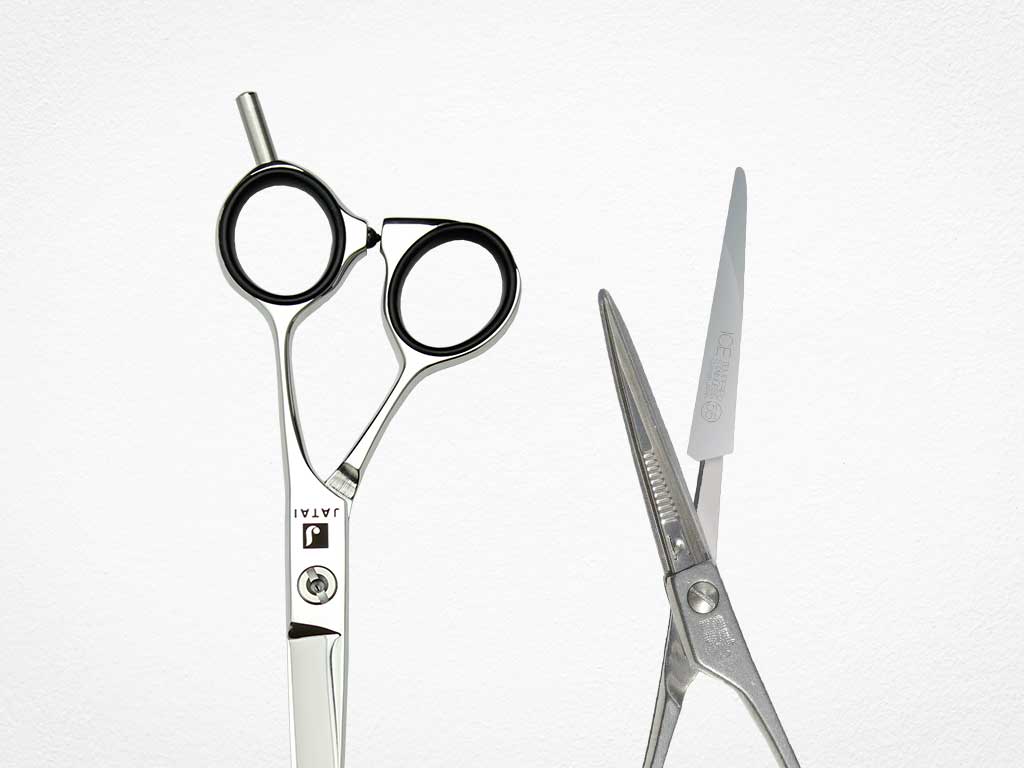
So we're going to start with a straight back section from the center of the recession that splits off the top of the head from the bottom of the head and we're going to use our Osaka Scissor because I will tend to take a larger section, so a little fatter blade and a sharper blade will make it easier to cut.
I'm going to take an angled section that's going to follow the front hairline and cut that down at whatever my desired length is. I want a little bit of length so that the hair flows back.
This haircut tends to look better with the hair that has a little bit of movement to it so. I'm walking my guide which means each section I take I'm combing into the previous section and cutting that as my guide.
So I cut the first section. I comb section one and two together to make section two. I comb section two and three together to make section three. I comb section three and four together and so on until I reach the mastoid which is that bone right behind the ear.
Now here you'll see me take the same section, the same angle and everything all the way down to the nape. And I will comb this into the previously cut section.
Now at this point I can either leave it a little longer in the nape or I can taper it in. I'm choosing to taper this in slightly so most of my ducktail is going to be a little higher up.
You're still going to get it all the way through the center which you know the ducktail is where everything is combed to the center and then right down the middle of the back of the head it's combed straight down.
So I'm taking parallel sections as I work through the back of the head and I'm combing that to the previously cut section. Now you can see here how I'm tapering that down slightly but I'm still combing everything all the way over to where that mastoid is on the right side of the head behind the ear.
I'll comb it back and check and start seeing how I build up a little bit of length and I want this length to build up as it's going towards the center of the head.
So I'm taking parallel sections at the ear combing everything to the ear all the way down to the nape, just being very very methodical with each section that I take with each section that I cut.
I want to keep it as consistent as possible you know and the Osaka Scissor tends to be nice, sharp. It's got a good blade length on it so it gives me a little bit of uh power behind each scissor stroke so I can cut more hair.
As you'll see here I'm taking everything from the center of the head pulling it over right behind the ear and cutting that on top of my previously cut guides.
Slightly tapering it a little bit as I get to the nape but still leaving that length build up in the center of the back of the head.
Now let's go through and look at it, see how we're shaping up. We can see I'm getting that length in the center of the back.
Now let's go through and cross check. I'm going to start right on top of the ear and since I cut this initially vertically I'm going to go through and cross check horizontally.
Be sure to follow us on your favorite social media@jataifeather. We got Facebook, Instagram, Twitter, Pinterest and even TikTok.
Ducktail Haircut Horizontal Sections
Now after I finish cross checking the sides there, we're going to go through and take a horizontal section to the initial parting that I had.
Now I'm going to take all the hair on top and pull over to my previously cut sections underneath. I'm holding this horizontally straight up from the head using my guide in the back as the shortest piece to make sure I blend in the back so I'm disconnecting it underneath as I get to the front of the hairline.
Whatever that front bang length is, that's the length I'm cutting it to. I could leave it longer or I could leave it shorter it's really up to your preference on how you want the top of the hair to look.
I'm going for a little bit of a pomp look so I want the front to be a little longer than it is in the crown. Now here you can really see how I'm blending the top into the back of the head and then just following my guide underneath being methodical point cutting that through so I have less worries about building up too much weight and it's going to blend a little bit easier.
I want to keep the top really soft, textured, point cutted as opposed to going through and cutting it blunt. Then it's much harder to blend that way and I have to be far more precise.
So keep following each section until I get all the way over to the center. Make sure that's cut. Now let's go through and taper it in right over the ear just a little bit more.
Cleaning up the Sides and Nape
So I'm going to go through scissor over comb shorter at the uh parting right there, shorter at the sideburn and then tapering that up and just slowly working that up until I get that blended.
Now I'm going to go through in the back. I'm just going to take a horizontal section right across the bottom and I'm going to cut that length that I built up from pulling it over to the side of the head off because I want this to be square in the back.
Some people will leave it longer and allow that ducktail to flip out. I'm going to keep it much cleaner and more tapered into the back. After I get everything done there, I'm going to go through and do exactly the same thing on the other side.
Creating the Ducktail
After I do the other side, I'm going to come back and take a center section right in the back of the head. This section I'm going to go through and create a completely new guide.
I'm going to hold it out and cut this vertically following the head shape going up the back of the head. By leaving the center in the back shorter, that allows that length build up from the sides to comb over and separate from the center of the back and gives it that really distinctive ducktail look.
I'll check it. I think it needs to be a little bit shorter so I'm going to take it a little bit shorter. But I'm just going to go through very systematically, cut the center of the back out. Now I'll start combing this down check it out see how it combs over.
I think it needs to be a little bit wider so I'm going to take and extend that a little bit to the right and a little bit to the left. So I'll start with a small section in the center about an inch wide see how the hair combs over it.
If I need a little bit more width to be undercut in the center of the back of the head, then I'll expand that section and take a little bit more. This is just purely going to be based upon visually how you want that to look from combing the hair on the sides over the center and seeing how that falls.
That's looking pretty good. I'm getting that separation right through there. So I'll do the same thing on the other side extend that a little bit to make sure I have an even amount of width in the back of the head.
Give us a thumbs up, click subscribe and click the notification bell to be notified of future Jatai video content.
Now here you can see I'm broadening the width on the left side of the head so it matches the right side of the head. Check that out. See how that's looking. That's looking pretty good.
Addressing the Top
Now let's move on to the top of the head. Now since I've already cut the top by pulling it to the left and to the right to make sure it blends with the left and the right and the undercut I'm just going to go through and hold everything up right in the center, take a center section.
From my length in the front, I'm going to cut that down so it gets a little shorter towards the crown so that the emphasis of the length is right around the front and then it starts to blend as it goes to the back.
Now because I pulled everything over to the left and to the right most of the length is going to be in the center of the top of the head. So by cutting this first section I will have very little hair that reaches on either side so it's mainly I have to cut the center of the top out so that it blends like I want it to.
I'll just check here make sure both sides are even pulling everything to the center following my center cut guide to make sure that that has a nice pleasing silhouette from the side profile.
Styling and Finishing Touches
After we do this let's blow it dry and take a look at it. I'll just use a vent brush and blow dry everything in kind of a pompadour style and make sure everything gets blown back into the center blowing each side into the center.
Now we're going to take our Jatai Tokyo Thinning Scissors and go through and just blend where I did a little scissor over comb underneath there to make sure that's nice and soft and smooth through there.
A little bit in the nape as well just to keep everything soft. I'm not going to go through and do the whole thing just right where I want it to taper a little bit more. Now we're going to go through and put a little bit of pomade on it just to get some separation right there in the front.
We're going to pleat that front kind of pompadour to make it look a little more lived in and a little less Conway Twitty which is what this haircut really reminds me of.
But this will keep it a little bit more modern and cooler and give it a little bit more of a distinctive look around the front. Overall, I think everything looks pretty good.
I think we got a nice pleasing shape. The silhouette is really important when you're doing these pompadour type styles to have a good silhouette from a profile. And we're looking pretty good through there.
Nice and tapered you can see how it's being combed into the center and then the center is being combed straight down so we got a nice little DA in the back.
Check out the Jatai Academy! There's all kinds of great information on there to make you a better hair stylist. Let us know what you'd like to see in the future and we will catch you next time. Thank you so much for watching.
Final Ducktail Haircut Look
Vintage hairstyles of the 50's often had a distinct look. When it comes to the ducktail, we have that image of a higher pompadour look from the front and the sides combed in to the middle of the back. It's generally worn on straight hair rather than curly hair so that you can really see the ducks tails in the back. It's also distinctly characterized by greased back hair.
The ducktail haircut is also known as a ducks ass haircut, duck haircut or DA duck hair. This push back hairstyle is a unique hairstyle from this time which hasn't really come back as a trendy look. However, the hair DA has remained an iconic look from this time period and will continue to do so.
Tutorial
Tutorial
How to do a Medium Crew Cut with Clippers and Scissors
The medium crew cut is a very classic crew look that many men sport. You might also compare it to an ivy league crew or short crew cut. Crew cuts are very versatile and are generally short on the sides and back with a slightly longer top. The style is a popular men's haircut and it's easy to see why!
Crew cut hairstyles generally don't have a very short taper fade and definitely not a skin fade. The hair is slightly longer than that. And because it's more of a rounded look, it doesn't have a flat top. It's not a buzz cut either. You can do this type of cut on curly hair but you will have to pay a little more attention to details. Watch this tutorial taught by Russell Mayes and learn how to do a crew cut. Also, follow along with the transcript.
Medium Crew Cut Tutorial:
Welcome back to the JATAI Academy! Today we're going to be doing a study on how to do a crew cut. So let's get started.
So today we're going to talk about doing a crew cut. Before we get started it's good to know the differences between a typical crew cut and then just most masculine shortcuts.
A crew cut is basically a short back and sides and a little longer on top which is very common. But most short masculine cuts have a squarish shape, where a crew cut tends to have a rounder shape and tends to be a little shorter on top.
Now it gives you a lot of versatility. You can either go longer in the front and then blend that through or you can take everything kind of short on top.
Or it can be equal to the sides so you have a lot of versatility and a lot of variation. So what we're going to cover today is we're going to take everything short in the sides and back and we're going to leave the top a little longer, a little longer here in the front as well. And then we're going to comb everything forward and see what we got.
Classic Crew Cut Clipper Over Comb
So starting I'm going to start in the back and I can take a clipper and I can put a guard on it and I can run it up the back normally like I would taper most haircuts but today what I'm going to do is I'm going to work on my clipper over comb.
So doing some clipper over comb work, I'm going to make sure I comb everything straight down. And clipper over comb is about getting a rhythm of the clipper motion across the comb.
When I put the comb in, I angle it at whatever angle that I want my graduation to be, my taper to be, and then I just follow that up the top. Now when I first start there's no guide so I'm basically just using the force to guess where I want my tapering to be and then I can use that as my guide for going to the left and my guide for going to the right.
So what that looks like is I'll turn the clipper on, put the comb in, angle that out from the scalp at whatever angle that I think I need. And then that's the angle I'm going to go up and then run the clipper across the comb.
And here I'm basically just guessing at what length I want this to be. I'm not being very discerning about how perfect it is. I'm just looking for the overall lengths and I think we can go a little shorter there.
So we're going to take that a little shorter through there as well. And now as I start to go up the back of the head I want to fight the urge that I have of up and out because that's most of my training is always short and up and out.
But a crew cut is up and over so it keeps that shape kind of round. So once I get my basic taper in like this then I can start to work one side or the other.
Now I've got my guide in the middle. I use that as my guide and then just cut this side off here. Now as I press the clipper against the comb I'm not using a lot of force. Right? It's just very lightly tracing the comb.
Give us a thumbs up, click subscribe and the notification bell to be notified of future JATAI videos.
And I'm just going to follow that up and through. I want to make sure that I'm not holding my breath because if I hold my breath, I tend to make my hand shake. And when you're using clipper over comb like this you want to keep as steady a hand as possible.
Working that up and through. Now once I reach the mastoid which is this bump right behind the ear, I've got everything cut through here like I want.
I'm not too worried about my blend right here. We'll get to that when I start using my scissors. I'm just working on tapering everything down nice and smooth.
Once I get to the mastoid I'm now going to skip and go right to the sides. Now on my side I'm going to start here at the ear and I'm going to go short and work that straight up, work everything straight up.
I am tapering it in two dimensions here. I'm tapering it going from ear up and I'm tapering it from the front going back.
Now once I've gotten everything cut to the top of the ear I will then go through and blend at this angle and that angle is usually going to be parallel to my front hairline.
It's going to be parallel to this hairline from the mastoid down to the corner of the hairline. So I'm trying to keep everything even and smooth because most head shapes arc down a little bit.
So if I continue that all the way through the back I'm going to end up cutting the crown too short and it's going to make his head shape look funky.
So this ensures that I don't cut my crown completely out of it. Check that out, see how we're looking. I'm going to take a little tighter right down here in the nape.
Now once I've got the sides and the back done and I got my transition from the front to the back I'm going to go through and do the same thing to the other side.
Crew Hair Cut Scissor Cutting
So now we've gone through and we've shampooed our model. Gloriously I might say. Now let's work on cutting the length on the top and blending that into the sides. If you've seen previous videos, you've seen me do a walking guide.
I'll take the first section here on the side and I'll cut that length. I'll add the second section into the first and combine them and make one section.
So I have section one and two combined. Cut that into the center. I'll remove section one. I have section two and three combined. Section three and four and four and five and so on and I'll walk that guide length all the way around the back of the head.
I'm going to do the same thing here on the top, but I'm not going to take any sections. I'm going to do a very classic barber approach where I'm going to start in the front.
I'm going to pull the front back to maintain length and then I'm going to walk my guide all the way through in the back. And as long as I'm consistent about how much I'm moving each time going back I'll end up with a nice clean line.
So I've got my section. I'm going to comb everything forward. I'm going to comb everything back to where I think the recession is or maybe a little bit further back.
I'm going to pull that up and then I'm going to go through and cut whatever length that I want. So now I've got my whole guide linked on the top.
I'm going to go to the left, cut that through and I'm rounding the shape out. Usually I keep that shape pretty square and I am using my Osaka Scissors from Jatai because I have a little bit more blade length and it's got a little bit more weight to it so I can cut a thicker section of hair.
I don't need to be real precise with it. Now I'm going to go back a finger length back, and I'm going to cut using my guide length from the front.
I'll go a finger length back, cut using that guide length from the front. A finger length back, same thing and I'm going to keep going until I run out of hair in the crown.
As long as I'm methodical with how far back I'm moving each time, I'll end up with a nice clean line. Comb forward again and now I'm going to start working on the left side.
I have two guides. I have a guide in the front and a guide in the center. And I'm cutting that following both of those two guides from the front and working that all the way into the back.
This is a very very quick fast way of going through and motoring through a lot of hair. I'm not worried about being real precise with everything. I just want to be very very methodical in my approach.
As I work that around, go through, we'll check this out from the other angle.
Now I'm going to go through and do the same thing on the other side. So now after I've got all the top done, I'm not worried about blending on the sides right now. We'll get that last.
But after I've cut the whole top I want to go through and cross cut it the same way. I'm going to pull everything into the center and any little bits that may hang out I'm just going to go through and trim.
And there's not a whole lot because I was very very consistent with moving my fingers back at an equal distance every time. So just go through just cross check anything that hangs out.
There's a little nibble there. I'm just going to go through and clean that up. This is just to make sure everything grows out nice and smooth.
Men Crew Cut - Blending
Okay so now that we've got everything cut on the top and blend that into the back, I want to make sure everything blends in my transitions from the top to the bottom.
So I'll just take vertical sections. You can see where my tapering was and I'm just going to go through and make sure everything blends from the bottom to the top.
And I'm going to work that line up and over and blend in. Now if you feel more comfortable starting in the front and then working to the back that's perfectly fine.
There's no correct method of where you start versus where you finish. What ultimately matters is that everything blends and is proper and fits the head shape.
Follow us on all your favorite social media such as Instagram @jataifeather
And everything's looking pretty smooth through there. If I find I got a little bit too much taper through there, I can go through and this works really well with my Osaka Scissors because they're so much longer than the other scissors that I have. I've got that extra blade length that makes it easy for me to go through and scissor over comb.
Mens Crew Cut Fringe
Looking pretty good. Same thing on the other side. So all that leaves us now is to deal with our fringe in the front, our bangs in the front. So depending upon if I want this brushed up and back. Right? Very very collegiate that way.
Or I can have it much shorter and kind of combed over. There's a lot of things that I can do to this. So it just depends upon how short you want this and what look you're going for and how their hair reacts.
If they have a lot of cowlicks then probably longer is better so you can control it a little bit easier. So let's go through and just keep it fairly long but I'm going to even it up so it doesn't come to a point in the front.
So when I do that I'm going to take and I'm going to pull it out at that angle and then we're going to go through and point cut this through. A point cut soft line is going to be much more pliable and movable than if I was to cut that blunt.
Blunt lines tend to not move as easy as soft textured cut lines. Just go through take a little bit of that corner off right there. Looking pretty good.
See that little corner right there. It's very subtle but that subtlety will make a big difference.
The only other thing I might add is if the person has wavy hair or has a lot of cowlicks or they have a bunch of indentations in their head and their heads not smooth you may get some darkness and some lightness through there you can't blend out very easily.
Tracing this Crew Cut for Men
Then I'm going to go through with my Tokyo Thinning Scissors. I'm going to put the cutting blade on the bottom and then I'm going to go through and just trace what was already cut.
I'm not trying to go back in and re-cut anything. I'm just tracing that previously cut taper that I put in through there and that will make everything mesh together and blend a lot smoother.
And this will also help with any kind of waviness that's starting to stick out or kick out it will soften that line and like I said in the bangs it will make it much more pliable and much easier to move.
With my Tokyo Thinning Scissors take that little nibble off right there, that doesn't want to act right. There we go. Much better. Looks pretty good.
We got a nice even smooth clipper over comb around the bottom. We got a nice round shape on top, a little longer in the front. You can puff that up. You can bring it down.
You got a lot of variety there that you'd like. You can comb it and make him look very very Wall Street or you can crop the whole thing up make him look very edgy.
Yes you need to look... well no maybe not that edgy. Well only on the weekend okay. Only on the weekend. Anyway, kind of looks like Kyle McLaughlin to me.
Check out the Jatai Academy. There's all kinds of great information on there that'll make you a better hairdresser, make you better barber. You can also check links below to find the scissors that I use. They're fantastic and for the price it's hard to beat.
Let us know what you'd like to see in the future and until then I shall see you next time. Thank you so much for watching!
Final Look of the Crew Cut Haircut
A crew cut can complement any face shape and can pair with facial hair. The modern crew cut is worn by many boys and men for it's versatile look. We hope this crew cut style haircut tutorial was easy to follow along and understand.
Tutorial
Tutorial
Men's Short Textured Quiff Tutorial
Watch this textured quiff tutorial and gain the knowledge to create this style! The quiff short hair style is a popular men's haircut that is versatile, classic yet trendy at the same time. A texturized mens quiff is what gives this hairstyle it's unique ability to be styled in multiple ways.
If you know how to style a quiff you can make it look more casual and rugged or make it more sleek and formal. If you know how to do a good quiff with lots of texture, it will give a man a lot of options for wearing his hair.
Follow along with the video and transcript below.
Textured Quiff Tutorial:
Hello champion! I'm Russell Mayes. Welcome to Jatai Academy. Today we're going to be doing a textured quiff haircut, very fundamental, very basic. Short back and sides, lot of texture on the top.
And uh I think it works on a lot of different types of hair, a lot of different types of texture, a lot of different face shapes. It's a good one to have in your arsenal. So let's get started. on how to make quiff hairstyle.
We've got our haircut sectioned off. We're going to separate the top from the bottom and we're going to go right to the center of the recession to the quarter part, quarter part down to the drop crown. Same thing on both sides.
The Sides and Back
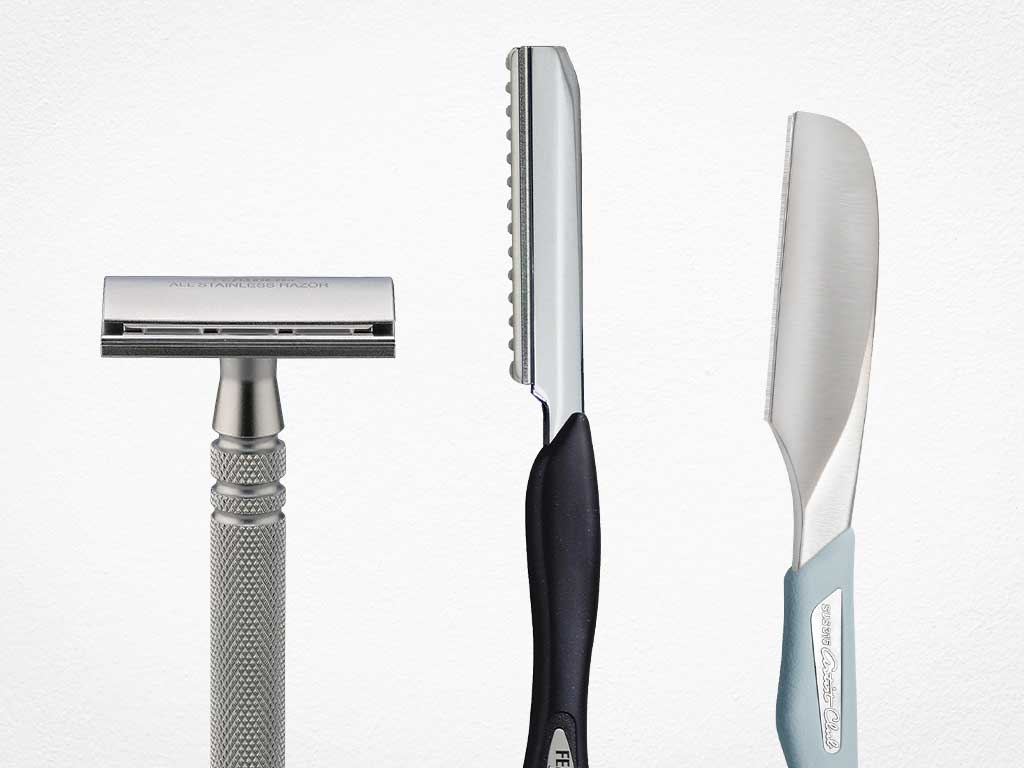
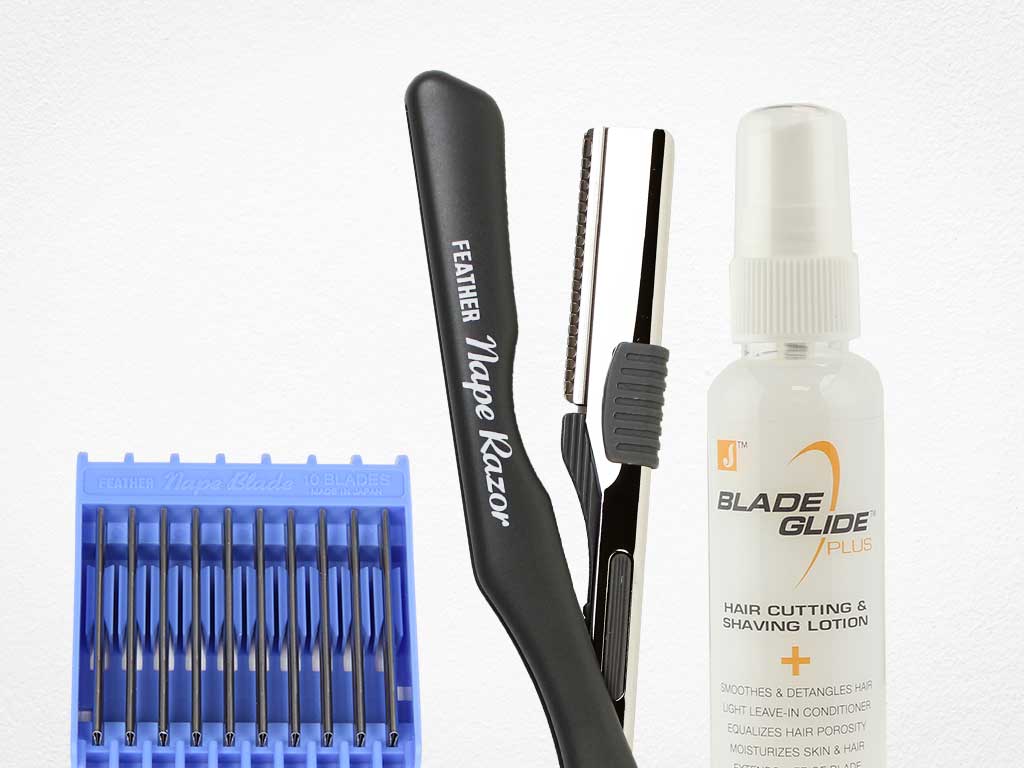
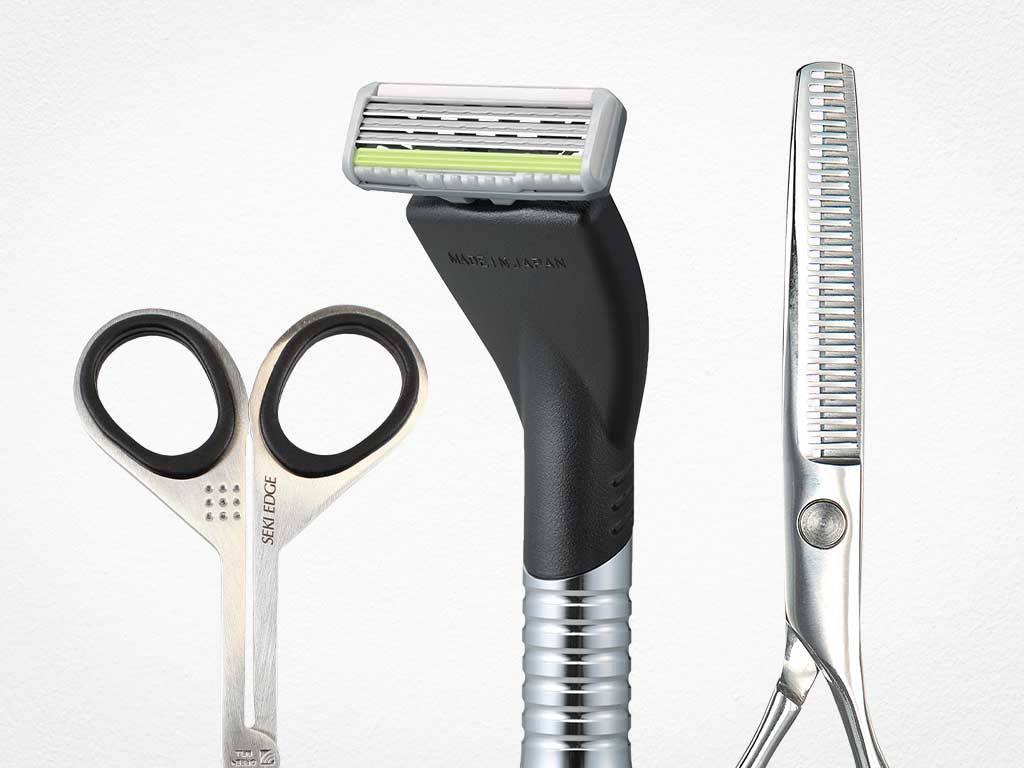
This separates the top of the head from the bottom of the head. So I'm going to go through and cut the sides and the back using my Feather Styling Razor. I have the special chrome edition which I think makes me look very fancy.
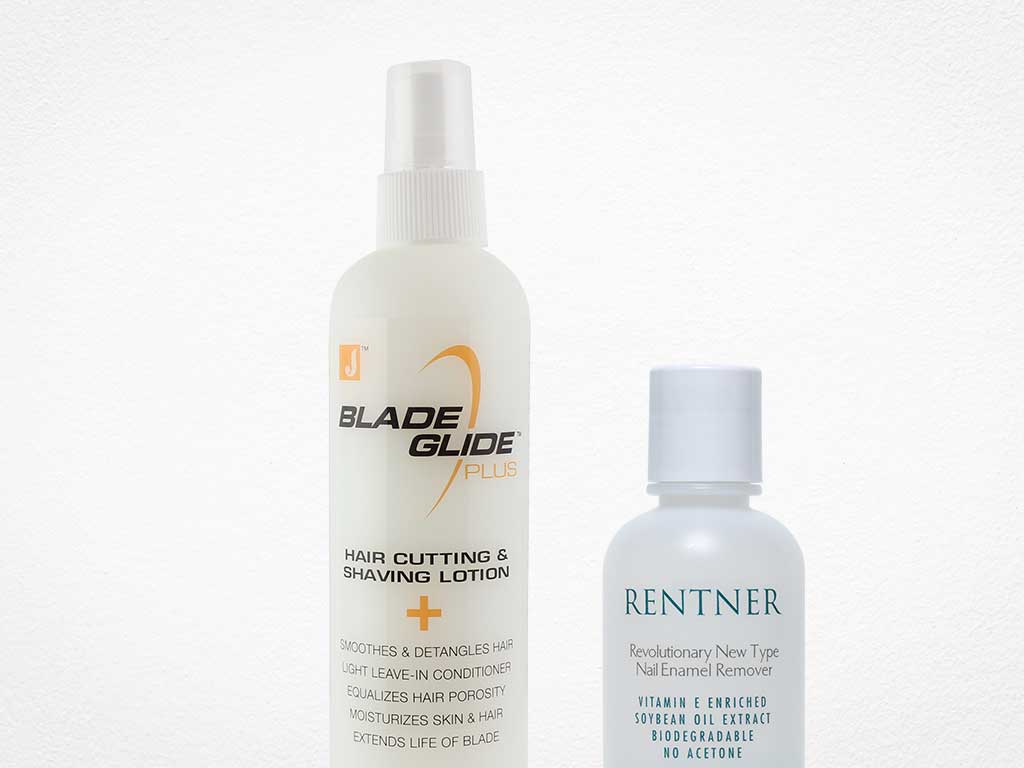
And since I'm going to go through and use this I'm going to start with a little bit of Jatai Blade Glide just to make the razor slide through the hair easier. My first section is going to be parallel to the front hairline at an angle.
I'm going to go through and comb that clean, angle my fingers out a little bit longer, keep my knuckles planted next to the head. And then I'm going to take a nice tight razor stroke. As I go all the way down and through.
Now here because it's sticking out I'm not going to freak out instantly. I'm going to go through and build the basic shape and then I can fine tune that and clean that up but I'm not looking for perfection.
The first section or the second section I want to build that perfection as I go. I'm going to comb this into the previously cut section following my previously cut guide, take that all the way down and through.
Take my third section comb it into the second section. There's my guide. The same razor stroke, go through and cut that down. Now here when I get to the ear I'm taking that section all the way down. And you can see from here that this angle is parallel to this hairline right behind the ear and it makes it easier for me to transition from the side into the back.
Comb this into my previously cut section. There's my guide. Comb that down and through. Here I'm going to maintain the same length that I got there and as I get to the bottom I'm going to make that a little bit longer because I want kind of a ratchet little shape. I want him to have a little bit of something going on here in the bottom.
So I'm going to take that. Now I'm going to go through and texturize that as we go but that's going to give me enough length that I can play with later on. Now I'm just going to continue this same methodology of taking parallel sections until I get to the center of the back.
Give us a thumbs up, click subscribe and the notification bell to be notified of future Jatai Academy content.
My last section, repeating the same thing. Comb to the previously cut section. Use that as my guide. Follow that length until I get to the very bottom and then bring that out for a little more length and his little mud flap down through here.
This looks a lot better once I'm finished going through and doing the whole thing than it looked with my initial cut. My initial cut made me think 'oh my god I chose the wrong tool. Oh my gosh! What have I done? This is going to look terrible.'
But I have to trust myself that I can clean that up as I go and now once I finish this whole side it looks pretty smooth and it doesn't look like it needs as much cleaning up as I initially would think it would because of that first section. So you have to trust yourself and you have to trust the methodology as you start to go through and build your shape.
Now I'm going to do the same thing on the other side. Okay so now we've got our underneath section done. We got it the same on both sides but what I want to go through and do now is to taper this in a little bit tighter underneath and to texturize my mud flap here in the back.
Blending and Removing Weight
So I'm going to go through and use my Jatai Tokyo Thinning Scissor. This is the perfect thinning scissor for taking a medium amount of hair out. It's not going to be real ultra fine. It's not going to be real chunky and thick.
It's perfect for blending and perfect for removing weight. So I'm going to go through scissor over comb and I'm going to start underneath here. The reason that I'm using my thinning scissors as opposed to a clipper or regular scissor is so that I can maintain that razor texture that we've gone through and put through.
Follow us on your favorite social media platform @jataifeather
And I think that that's looking pretty good. Now here in the back I want to get some separation through here so I'm going to go through and deep point cut this with my thinning scissor.
That way it gives me that razor kind of texture and that separation but it removes some of the weight so it doesn't feel so dense back here because I just want these to be you know little flicks of a mud flap not a full-blown you know straight hardcore across the back flap.
Back and Top of the Head
Now we're going to go through and section out the back top of the head. So I took our quarter part which goes from the top of the ear to the crown to the top of the ear on the other side.
Now I'm going to go through and fit all of this in the back so that it all blends back here but it doesn't get too short in the crown and make my head look flat. There's my length from underneath and slowly start to build length as I go to the top. Pivot from the center.
Now I have two guides. I have the guide from this length underneath and I have the previously cut guide. Pull those into the center of both of those sections.
Continue to hold this out 90 ° from the head as I slowly increase my length towards the crown. Next section I'll pivot again.
Take the center section out. Now I have my section two and section three. There's my length.
Pull that up and out and gradually increase my length as I go to the top of the head. We'll take this whole section here. Hold that straight out. There's my length.
Come on there we go. Perfect. Now moving on to the top, I'm going to go through and take a horizontal section parallel to the previous section that I did to separate the top from the bottom using my guide underneath and cut this all the way through.
I am going to leave this a little bit longer here in the front. So because I'm leaving it longer in the front I'm going to start my cutting in the back. So I'll pull that up. There's my length and start to work from the back going forward leaving a little bit of length and a little bit of disconnection right there in the very front.
And now I'm just going to continue parallel sections, not too thick, not too thin as I continue all the way up to the top of the head and my last section. When I get to the center of the head. Hold this out. Follow my guide from underneath.
Now we've got that blended on the sides and in the back and we're going to do the same thing on the other side. We've got both sides finished now. So I'm going to go through and take a center section about the size of the nose right from the front all the way through to the back.
Now from here remember I cut this part back here pretty short so I'm going to use this and gradually increase my length as I go forward. Gradually increasing my length as I go from the back to the front.
Now this is totally your creative choice of however short you want the top to be, how much increase of length that you want, how much you don't. I'll take a parallel section going to my client's left side.
Both of those in the middle of both of those sections. Not to the center but the center of both of those two sections.
Now as I don't have enough hair to hold I'll go through and use my thumb to push the hair against the blade but making sure that I'm not pushing into the blade. I'm just holding the hair and allowing the blade to go through and cut everything off that I want.
Alright so now let's look at that. That's looking nice and textured through there. So let's do the same thing on the other side.
Texturing the Top for Separation
So now from here I want to go through and methodically as possible texturize the top. This is what's going to give me my separation. It's also what's going to give me you know my pieciness so going through deep but gently channel cutting each and every section on the top.
Now by going through and doing this it's going to make the hair feel and look a little bit shorter. So maybe I should leave it a little bit longer before I go through and texturize it so I don't end up cutting everything off and making it too short.
Just continuing on to go through and each and every section as methodically as I can apply a lot of texture, deep channel cutting into the entire top of the head. I think we're looking pretty good.
I think the shape's there. We may need to do some fine tuning once we blow it dry to get the textures right and get everything just to where it pops but let's go ahead and blow it dry and check it out.
Finishing Textured Quiff Hairstyle
Here's our end result. I think it looks pretty good. It's a little more of a modern version of an 80s quiff than you know than the real short back and sides of it being overly tapered. I think the interesting part of it in today's masculine hair shapes is it's got more texture to it other than it just being super clean cut.
I think the texture is what keeps it a little bit more edgy and a little bit more interesting visually for our eye. It works on a lot of different types of hair, a lot of different types of hair textures and you have a lot of variety with it whether you want to go really short and longer or shorter all over. It works well on a lot of different things a lot of different textures and types of hair.
Please check out the Jatai Academy. There's all kinds of great information on there that will make you a better hairstylist and barber. And also please let us know what you'd like to see in the future. And until next time thank you so much for watching. We'll see you soon.
Final Look of the Mens Short Quiff Haircut
The male quiff style can be made to have even shorter sides or longer sides. Same with the top. But the overall concept is the same. The front quiff hairstyle is a defining feature of this look so styling the front can completely change the overall look of the haircut.
A long quiff hairstyle will be less clean cut and have a more lived-in look and a messy quiff hairstyle will have a more grungy rugged look. The versatility of the hair quiff makes this a fantastic style to learn. And learning how to style a quiff takes some practice and experimenting.
A boys quiff haircut works just the same. It looks great on boys, teenagers as well as adults. Even some women can rock a quiff.
How to do a High Quiff and Style for Pieciness
For men's coiffed hair you need to learn how to put your hair in a quiff. You can use a clay based pomade to get the pieces to separate. This will give that added textured look.
Tutorial
Tutorial
Step-by-Step Curly Mop Top Razor Haircut Tutorial
It's 2023, the age of TikTok and Instagram where social media is a driving factor in hairstyle trends. Before social media, influential people like the Beatles were the inspiration for hairstyles, but today TikTok influencers like Josh Richards set the trends.
And the trending haircut for teenage boys is the curly mop top haircut. This top hairstyle is characterized by longer hair that's low maintenance but with a textured appearance, also known as a wet mop.
In this article we will go through the steps to creating this style using a Feather Plier Razor. Russell Mayes, the Director Content for JATAI, is an excellent educator who explains step-by step how to give this popular haircut.
Curly Mop Top Razor Haircut Tutorial:
Sectioning
Start your sectioning with a center section to the occipital bone and then from the occipital bone to the mastoid to separate the bottom out of the back.
Graduation
Taking the center section, comb everything straight down and with long broad stroke, go back and forth across the section with the Feather Plier Razor. Slowly, gently, methodically try to graduate the section so you get a little bit of stack. But you don't want a lot of weight.
Repeat on the right and left section. Bevel the sides a bit but leave the hair a little longer towards the middle. Check the lengths on both sides to make sure it's even.
Channel Cutting
Take the next flat section from the occipital bone to the top of the ear. Now go through and channel cut the section. By channel cutting one direction and then cutting the length off the opposite direction, it will give more separation of curl and removal of weight. The goal is to have light airy texture on the ends with a lived-in look. The only way to achieve this is to channel cut with the razor.
Now separate the front of the head from the back of the head which is the high point of the head straight down to the high point of the ear. Elevate the hair off the peak curvature of the head. Continue to channel cut the sections in one direction and then cutting across the other direction.
Front Sections
For the front, take the first flat section around the hairline to the section right behind the top of the ear. This allows you to have a little guide from the back. Come the front section down to the length that you want. In this case, it's the tip of the nose.
Channel cut the section and cut across the section as before but be very diligent and methodical with your approach. You don't want to just go in and shred the hair. Continue to work the remaining sections in the same way until you run out of hair to cut.
Final Look
When finished, use some curl cream and ribbon out the curls to force the hair to curl together to have a nice soft texture. Take your time and get the curls to clump together. It goes a long way to fight the frizz. Use a diffuser to dry the hair or let it air dry.
And there you have it! This curly mop top haircut is versatile and can work on straighter hair textures as well. No need to login or sign-up. Watch it instantly!
About the Feather Plier Razor
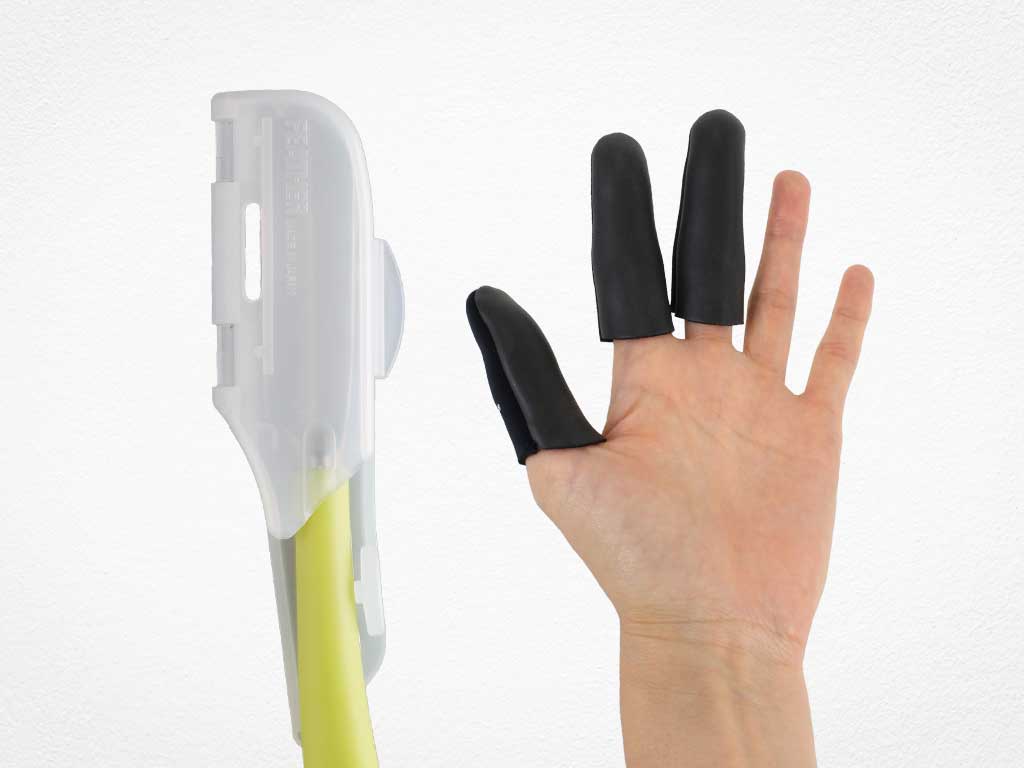
The Feather Plier Razor is an advanced haircutting razor that should be used with caution. Since the handle uses bare blades you can easily cut yourself if you're not careful. Be sure to practice and get adequate training before attempting to use it on a real client.
You can also, use a Feather Styling Razor which uses guarded blades to achieve similar results. Since the blades have a guard, they will not cut you.
Tutorial
Showing 16/16