Looking for a how to lob haircut tutorial? Look no further. This will give you all the details and instruction on how to create a pleated lob haircut which is basically a blunt lob but with a little texture for movement. The tutorial uses scissors as the tool of choice.
Creating pleats in the lob is a great technique for thick hair to create little bit of movement but still give a blunt look. The end result is a beautiful long bob hairstyle.
You can follow along in this how to lob haircut tutorial video taught by Russell Mayes, Director of Content for Jatai, as well as find finer details in the transcript below.
How to Lob Haircut:
Welcome back to Jatai Academy! Today we're going to be doing a long bob, the lob haircut. And we're going to add some pleats or some corrugation to it to help control thickness and to give it a little bit more interest. So let's get started.
So what really differentiates a bob from a lob is obviously the length so a lob technically is going to hit right at the collar bone. If it's above the collar bone but not quite to the top of the ears that's really no man's land.
Because of the way that the shoulders curve, it forces it to flip so it has to be at least to the collar bone so it can kind of cup under. And what will help cup it under especially if you have really thick hair is to add what I'll call pleating to it where we'll take one section and cut it blunt.
The next section we're going to point cut it and get some texture to it. The next section we'll cut blunt and then we'll make each other layer have some texture and have some pleating to it.
And that's going to give you a little bit more control when you're trying to make that hair cup under to keep it from flipping out.
Baseline Blunt Cut
So I've sectioned everything off, natural center part to the crown, crown to the occipital bone, occipital bone to the mastoid right behind the ear. This gives me my foundation line, my base line that everything else is going to be built off of.
I'm going to start with my Jatai Kyoto Scissors by BMAC. It's the sharpest scissor that I have in my Arsenal it's got a nice uh fat blade on it so it has some weight when I close down and cut so I can cut a thicker section.
And even on smaller sections it'll give me a cleaner line because it's got that weight to really chop that hair off in a nice clean blunt line.
So I'm going to start right in the center. I'm going to comb everything straight down in natural fall. Now since my mannequin head obviously doesn't have any shoulders, I want to pay attention to where I think the shoulders would be and the collar bone would be and I'm going to go about an inch past where my head ends thinking that that's going to be about where a collar bone is going to be on most people.
And I want to hit it right at the collar bone as close as I can. So I'll comb everything down, straight down not flip my fingers, use my ring finger for support, take my scissors, as I close the scissor I'll pull back on the blade and cut that as blunt as possible.
If I feel I need to, I'll go back in, clean that up. Now if I have a human, then what I can do is at this point I can comb it down on the skin and go through and clean up any slight graduation that I have from holding it in my fingers.
Since I don't have that I'm just going to move on. The next section, I'm going to comb back within the boundaries of this hairline so it's going to leave it a little bit longer in the front, but since her head is tilted down that's going to compensate for that.
Comb everything clean nice and through, there's my guide, ring finger to support, cut on the back stroke all the way through. Now I have my lob line starting to go through where I think the collar bone is going to be. Do the same thing on the other side.
Pleating Round 1
That's looking pretty good, pretty even to me. Now I'll take my next section in which I'm going to start my pleating. I'll measure where that head is flat so where I lay the comb against the head, where it touches the head, that's going to determine the width of my section.
And I'm going to follow the same angle of my original parting. Now this brings me to one of the problem areas that I have when I'm trying to pleat or trying to add some texture to inner layers.
If I take my section like I normally would and I comb this down, there's my guide, and I start texturizing it or point cutting it, I'm basically going to point cut my original line and the new section.
So what I want to do is I want to go through and remove the original parting or at least the majority of it, comb this down where I think the other line is.
I'm going to guess at my length and by adding some texture and guessing at my length I will go through and add some deep texture to that section and not worry if it's exactly on top of my previously cut section.
I just want to go through and make sure I get some deep texture to it. After I cut that I can comb the entire section down, see what hangs off and then go through and cut that length off.
Let's go again here on this side. I want to remove my original section, at least the majority of it. I'll take my next section comb that down where I think I ought to be cutting. And then I'll go through, deep cut and pleat that section.
Take my next section, comb that through within the boundaries of my hairline, pleat that through some deep point cuts. What I'm basically trying to do is remove weight and create some movement to it.
After I finish the entire section, I'll comb everything down. Anything that hangs over I'll cut off. If it tends to be a little shorter on those pleated sections that's okay as long as it's not a big gap of being short.
If it's a little longer I can clean that up by going through and cutting my blunt length. So let's do the same on the other side. We're going to...there's my original. My next section hold this straight down in natural fall, there's my previously cut pleated line.
Click subscribe, give us a thumbs up and the notification bell to be notified of future Jatai Academy content.
Cut that down and through. My last piece here, comb within the boundaries. There's my line. Pleat cut that at what I guesstimate the line should be. If it's a little longer when I comb that down, I'll cut those pieces off.
Now we're going to comb everything down. I'll check my...come here... I'll check my length on both sides. That's still looking pretty good. Now I'll move on to my third section.
Blunt Cutting
Third section is going to be the same. I'll lay the comb against the head where it's flat and then I'll use that as my section depth and then bring that all the way around to the side of the head, pin this cleanly out of the way...if I can... if I can get a pin in there. Clip that up there.
We go same thing on the other side now since I pleated the last section. This section is going to be cut blunt so I'm going to follow the same methodology that I have for when I cut everything one length.
I take my section. It's going to be a flat width of section. I'll comb that straight down in natural fall. There's my guide from underneath. I'll use my ring finger to support and cut on the back stroke to make that as blunt as I can.
I will follow that section all the way around cutting everything as blunt as possible. Then just double checking, combing everything as clean as consistent as possible and making sure my line is nice and blunt and even not too much longer in the front not too much shorter in the front. Just kind of even all the way around.
A little longer in the front is okay but not shorter. So now I'm going to do the same thing on the other side. All right, so now we've got that. Let's check and see how off we are. And that's actually not bad that is actually not bad at all. I got...wow I might actually charge you for this haircut. It looks pretty even, looks pretty even.
Pleating Round 2
So now let's move on to our next section which will be another pleated section. Okay we've got our next section and we're beginning to run out of hair but the methodology is going to be exactly the same.
Comb this through where I think the length should be, take my Jatai Kyoto Scissors by BMAC and then go through and deep point cut that whole section to create some pleating through there which will remove some weight and make it easier to move the hair left and right and cup it under.
Remove the previously cut section, comb everything down in its natural fall. I think we're going to be about right there go, through point cut that through, small piece of that as my guide.
Follow us on your favorite social media platform @jataifeather
Comb this down natural fall. There's my previously cut guide, go through point cut deep channel that, small piece as my guide. The last section here, comb through everything straight down natural fall. I see a little bit of my guide from underneath.
Deep channel point cut that. Now I'll just comb everything straight down including the sections underneath and you can see I've got a little bit of length hanging over which is okay.
And I will clean up any of that length that hangs over. I still have my deep channel point cut pleat through there. This is just cleaning up the ends to make sure everything matches at my one length lob length.
I forgot what I was saying there. Looking pretty good. Now we're going to do the same thing on the other side. Okay so when I'm cutting a lob and I'm going to add some pleading to it.
Last Section - Blunt Cutting
I want to start with a blunt line and I want to finish with the blunt line. I want the intersections to be point cut but I want to start and finish with a blunt line. So this is my last section combing everything down in its natural fall and just cutting everything one length and blunt.
Now I know what you're thinking, I know what you're asking. You're going to ask me 'well why not just point cut the whole thing?' If I point cut the whole thing, I don't end up with as blunt of an overall shape and all I want to do is put some invisible pleating in it to allow it to style easier.
I'm not trying to necessarily make it look textured. I want it to look blunt and solid, but I want to be able to add some movement into it by me cutting it internally adding those pleats internally so they're invisible.
Comb everything in its natural fall. Anything that hangs over we will cut off. Comb through. There's my guide length make sure that I on top of my previously cut guide and not cutting it shorter and not cutting it longer but staying exactly...come here... on top of that.
Do the same thing on the other side and then let's see what we got. Let's check and see how perfect it is. Yeah, not bad. I think I've got a little more length on the left side right here in the front, but I'm not going to worry about that right now I'm going to blow it dry and then I'll check it again once everything's blown dry.
Finished Pleated Lob Result
Here's our finished result blown dry, smoothed out. We've got a nice really really solid one length shape but it has a little bit more movement and flexibility with how we can control whether it flips under so it will give a more refined shape to it.
So it won't be quite so broom like and stiff because that pleating gives you that breathability internally without beveling the shape.
If we were to go through and point cut the whole thing it would bevel this shape and make it look slightly layered and graduated on the bottom and you would see that. But now since we've done every other and we started with blunt and ended with blunt, it's still going to have that blunt un-graduated un-layered shape.
So I think we did pretty good. I think the length is pretty good. Let's get some hair out of your face girl.
Check out the Jatai Academy. There's all kinds of great information on there to make you a better hair stylist and barber. Let us know what you'd like to see in the future and thank you so much for watching our video. We'll see you next time.
Tutorial

 HAIRSTYLIST
 BARBER
 NAIL TECH
 ESTHETICIAN
 CONSUMER
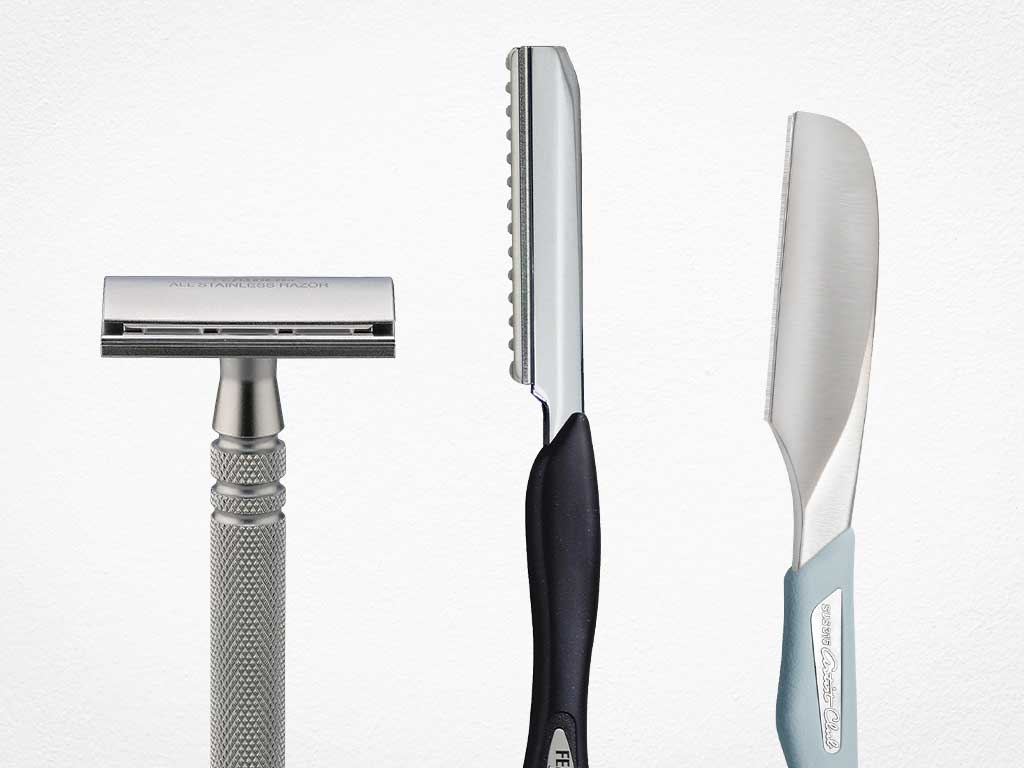 RAZOR HANDLES
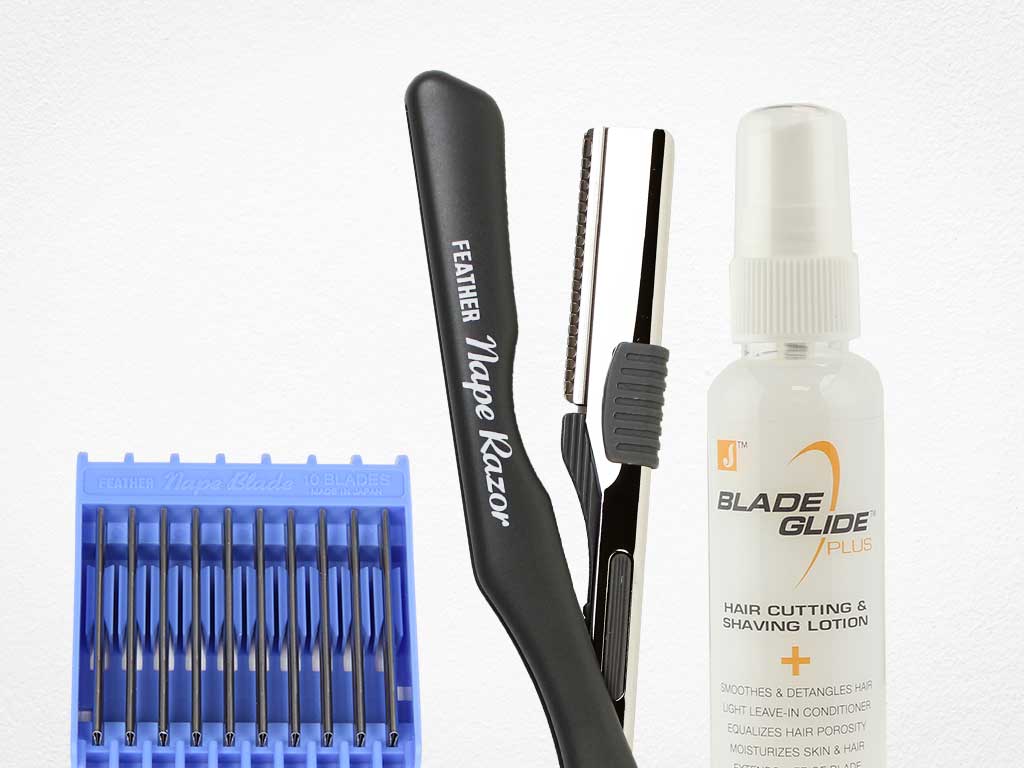 RAZOR KITS
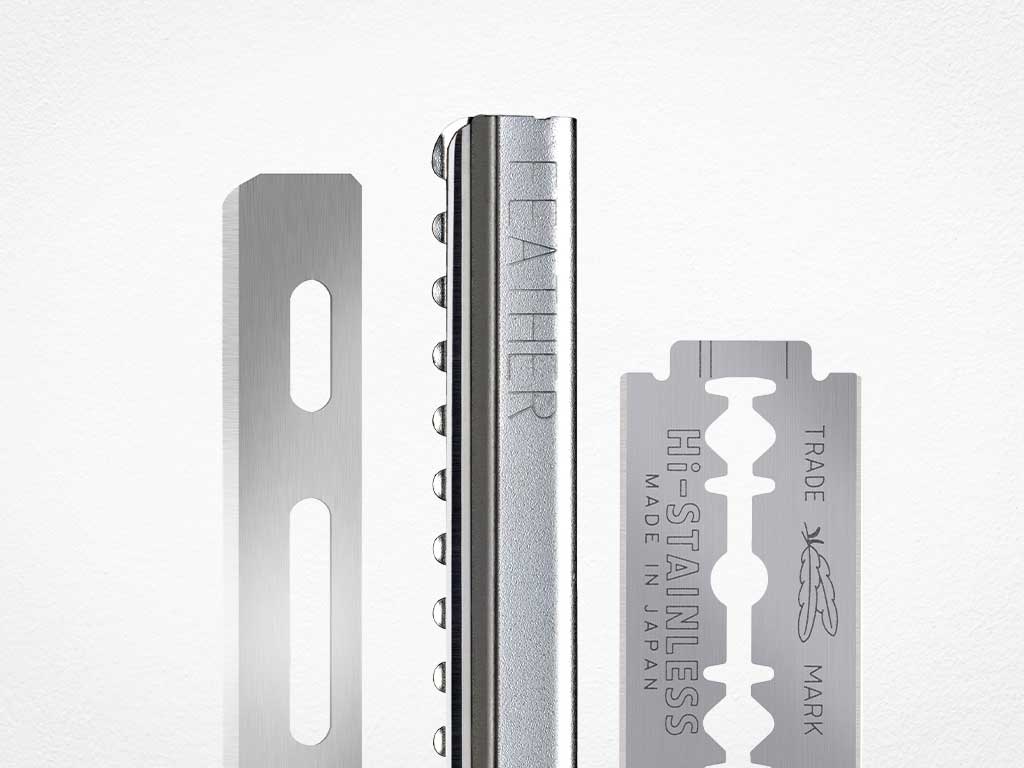 RAZOR BLADES
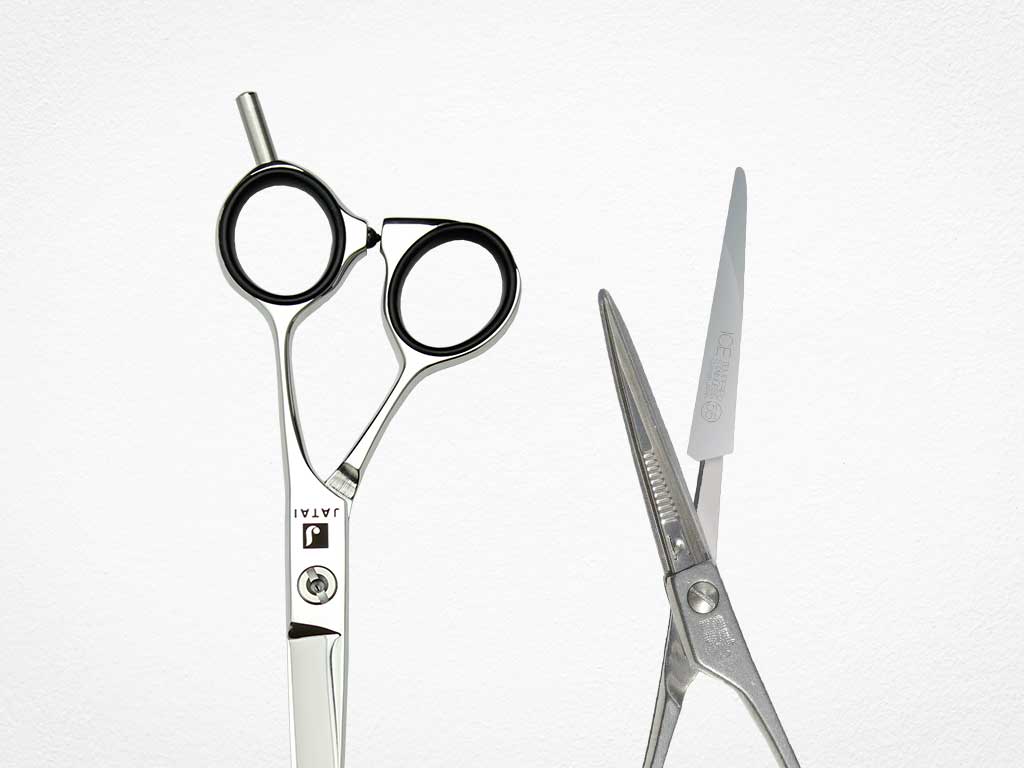 SHEARS & SCISSORS
 END PAPER
 COMBS & BRUSHES
 LOTIONS & CREAMS
 ACCESSORIES

 NAIL CARE
 TWEEZERS
 EYELASH
 HAIRCARE & SHAVING
 SKINCARE
 KITS & SETS
 SPECIALTY


 Filter


