
Shirley Partridge Modern Pixie Mullet Hair Tutorial
by JATAI Academy,
23 Jan 2026
Shirley Partridge of the Partridge family in the 1970s rocked a modern pixie mullet style. Who knew it could come full circle and make it's way back into a more modern edgy hairstyle? Using scissors and a razor, this short hair pixie cut has layers and hair texture and a fun look. Mixie haircuts have become popular in modern times. Watch this short modern pixie mullet tutorial and follow along with the transcript.
Shirley Partridge Modern Pixie Mullet Tutorial:
Welcome back to Jatai Academy. I'm Russell Mayes, Director of Content. Today we're going to be doing a modern version of the Shirley Partridge from the Partridge family. She had this really cool pixie kind of cut and I think that's where the little pixie wolf bang came from was from her.
So, we're going to show you how to do that haircut. But she also had a little modern a little rock and roll version of it with it being a little longer in the back, a little mullety in the back. So, we're going to show you how to do a pixie cut mullet on our mannequin head here.
It's very cool, very iconic, something you might see walking around the streets of Silver Lake. Silver Lake, if you don't know, is the coolest part of LA. It's where all the cool people are. So, we're going to show you how to do that haircut and make all your clients super cool. So, let's get started.
Point Cut Mohawk Sections

So, let's just jump right on in here. I'm going to take a mohawk section and I'm going to hold each section at 90° straight out from the head and I'm going to point cut that across. Take a small piece as my guide and move on back and just cut my entire mohawk section the same-ish length all the way from front to back.
And I'm determining my length by where it falls on the face. I want it to fall a little bit above the tip of the nose, but not quite up to the eyebrow. You can obviously take this shorter, you know, or longer depending upon your client and their thickness and density of their hair.
And I think that Shirley wore her hair quite a bit shorter than I'm cutting it. But since I'm trying to modernize it, I'm going to leave myself a little bit more length to get a little bit more movement to it so it has a little bit more versatility in the styling of it.
So, we're just continuing that straight back. I'll take a small piece as my guide from the previously cut section. Hold everything out at 90ish° and just go through and cut everything the head shape all the way down to the occipital bone which is that bump right in the middle of the back of the head.
Now, once I hit the mastoid, I'm going to go anti- head shape. So, instead of going all the way in, I'm going all the way down and out. And you can see how that's not following the curvature of the head right through there.
That's going to leave me a little bit more length at the very perimeter of the back, which is going to start to build up my kind of mullety shape. And also, when I go inverted like that, it helps the hair collapse a little bit more. The more of the head shape that it is, the more volume you get, the more anti- head shape, the less volume and the more the shape collapses.
Now I'm going to take a parallel section to my first section and I'm going to hold those two pieces of hair together in the center of both of those sections. So I combine the first and the second section together. In the center of those two sections I hold it straight up 90° from the head.
Following my previously cut guide, cutting all the way head shape from the front all the way into the back and just following that guide. Now, by point cutting, that's going to allow the individual pieces of hair at the tip to kind of clump together and make a little bit more of a point. Whereas, if I was to cut this completely blunt straight across, it's going to be a smoother texture.
But by point cutting, it's going to force that texture to kind of separate and pop. And it's going to visually give me a little bit more interest when the hair falls. And I don't have to be as precise as if I was to cut this blunt. Blunt demands perfection when you're cutting it.
When I'm point cutting it or I'm using the razor, I lighten up how perfect that it has to be. And by lightening it up, it gives me more opportunity for movement.
Now, we're continuing to work this all the way back into the nape. Just following the previously cut guide, trying to not cut myself. There we go. Perfect. Work that all the way through. Leaving a little bit more length at the very perimeter in the nape.
Continuing that all the way through and down. And just being patient as I'm going through and working my line. You know, when you're working on a mannequin head, they tend to be overly thick. So, sometimes I find myself getting impatient. And I have to force myself to slow down to follow the guide and not just kind of power through it. And that's easier to do on a mannequin head than it is on a client because the mannequins not going to complain. Right.
So, now we're going to move on. I'm going to remove the center section, the very first guide that I had, and I'm going to add my third section that I'm cutting. So, I remove section number one, which was my original mohawk section. I have section number two and section number three, holding everything up into the center of both of those sections.
So, I'm walking my guide. My guide started in the center of the head. And as I progress over towards the ears, it's going to change. I'm going to walk the guide. So, I'm not pulling everything into the center. I pull it to the center of the sections, but not the center of the head. So, that allows me to not build up such an increase of length as I work towards the perimeter on the sides.
Continuing to follow that all the way down and through. There we go. Pretty good. Now, after I finish this section, I'm going to go in to take the rest of the hair on the side of the head. So, I'm going to take the entire side section, hold that up into my third section.
So, I remove section two just like I removed the original mohawk section number one. And I'm going to pull everything up radially out around the ears and just cut anything that hangs over.
Now I'm going to go back in and cut the sides, but I just want to make sure that none of the hair on the sides is going to overhang any of the hair on the top. So this is more or less me just making sure everything blends and I don't have anything hanging over if I go back and cut the sides and leave something a little bit longer.
This is a good habit to get into to make sure everything fits. All these puzzle pieces that you're putting together, you want to make sure that they all fit together. And you don't want to leave anything that sticks out. Just continuing that all the way through radially around the ear until I run out of hair.
Addressing the Sides

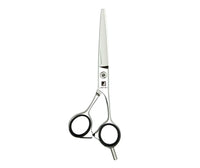
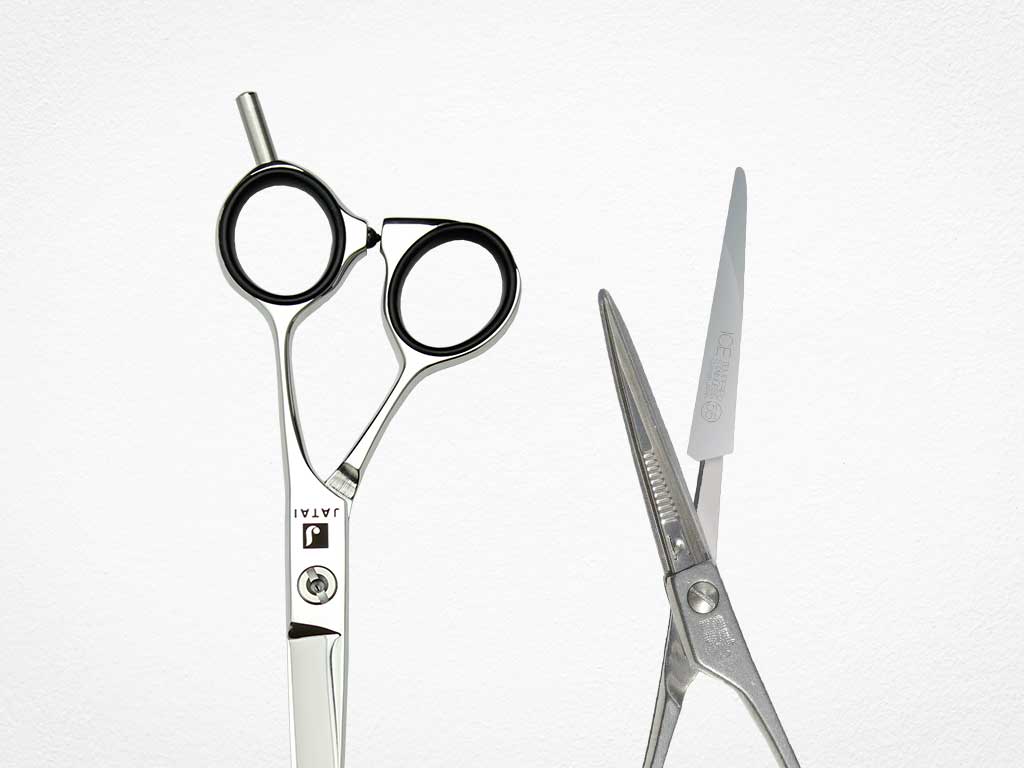
Once everything's finished on both sides, we're going to go through and separate the side of the head from the top. I'm using my Jatai Tokyo Scissor. This is a 6-in scissor, and I like a longer blade when I'm going through and one working on thicker sections of hair and also point cutting.
Now, I'm going to take a diagonal section on the side. I'm going to use my bang section, which was the shortest piece that I used as the guide for the layering, and I'm going to pull that forward and cut parallel to my parting to make sure that everything blends through. I want to keep these sides kind of shorter, and I want to keep the back a little bit longer.
So, I'm going through and cutting that and seeing how it fits in. I think originally holding it straight down was probably a little too heavy. So, I want to lighten it up a little bit by elevating it a little bit. That's going to soften that line. And once I feel like I have that line fit in right around the jaw and a little longer than the ear, once I feel I got that fit in, I'll continue walking that guide back.
So, just like I did on the top where I walk the guide from the center to the sides, now I'm going to walk my guide from the front to the back. So, I'll hold this out 90ish degrees, hold everything straight out, and then cut according to my initial guide and then I'll look at it. So, a lot of times when I'm working these shapes, I'm trying to determine the length that I want. And I don't know the exact length I want until I cut it and look at it.
So I'll cut, I'll comb, look at it, see if it fits in. If I like the length or I think that that's a pretty good length or enough to start to build my shape from, then I'll move on. And as I finish each subsection, I'll pay attention to the end result and see if that's fitting in like I want.
Now, I know I'm going to go back and texturize these sections of hair. So, when I texturize, it's going to feel a little bit shorter. So keeping that in mind as I go through and determine my lengths, the more I texturize it, the shorter it's going to feel from what it's already cut.
Even though I don't cut any more of the length off, but just by applying that texture, it makes it feel airier, which is going to make it feel softer. Seeing how that fits in and blending that all the way through into the back center of the head or until I run out of hair.
And here I've started to run out of hair from my layering that was happening on top. And I've got all that fit in. And I think that's looking fairly good. I may need to take a little bit more off when I texturize it, but we'll see when we get there.
Rounding and Blending

So now I'm going to take the top section and the side section and where that little corner was created from me holding the top straight up and the side straight out. I'm going to go through and round that corner out. So this is a very round shape, but I want to break it down into sections.
So I'm going to cut the top first. I'm going to cut the sides. And then I'm going to blend the two together by rounding the shape out. So I'll take my same diagonal section I was working with in the beginning. Hold that up. And here's a real good view. You can see that little corner popping out there. And I'm just going to blend everything through.
I could go through and start my layering and round the layering through and out. But I don't know if that's going to be the right length on the side. So that's why I broke the top and the side into two pieces as opposed to just going through and doing a completely round layer because I don't know if I'm going to get the right length on the sides. That's more important to me than the length on the top.
And I'll just continue to work this back as I take that corner out all the way from the front of the head into the back of the head. And just be diligent. Just practice and and be patient and apply the cut line as cleanly as you can. So even though I'm point cutting it, I still want to maintain a solid strong shape. There we go.
After I finish that and I make sure it's done on the other side and I get both sides like I want, I'm going to go through and separate the top of the head from the bottom of the head and section it out like I did before just to keep everything nice and clean so I don't over texturize one area more than another.
Razor Texturizing

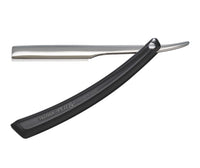
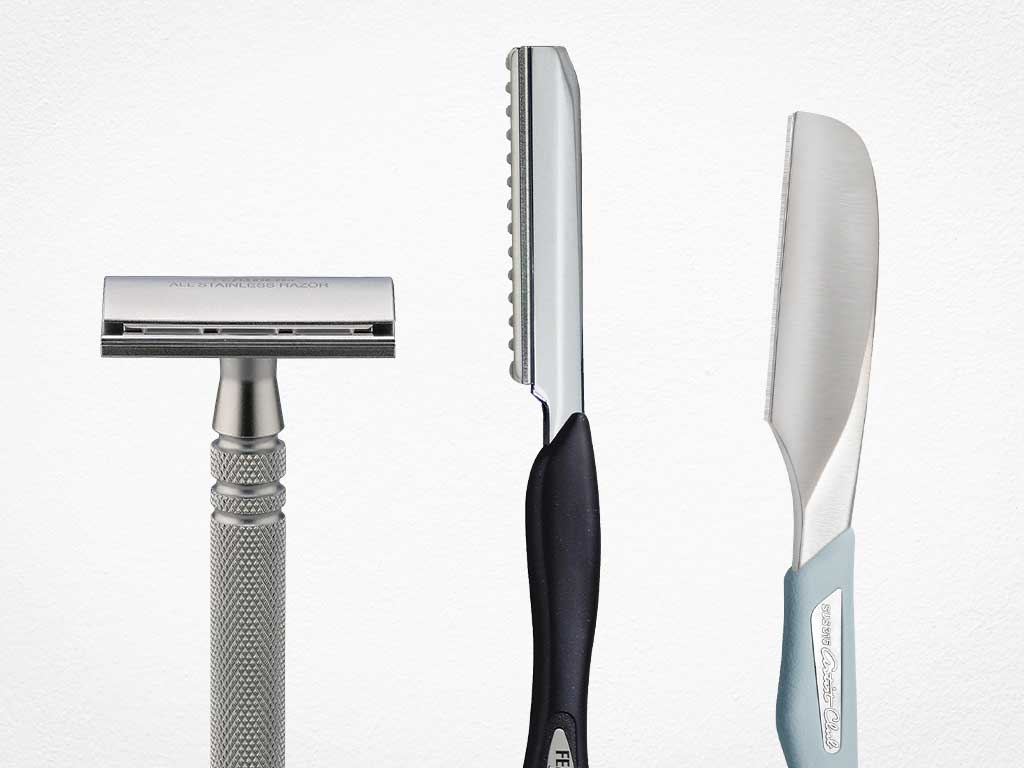
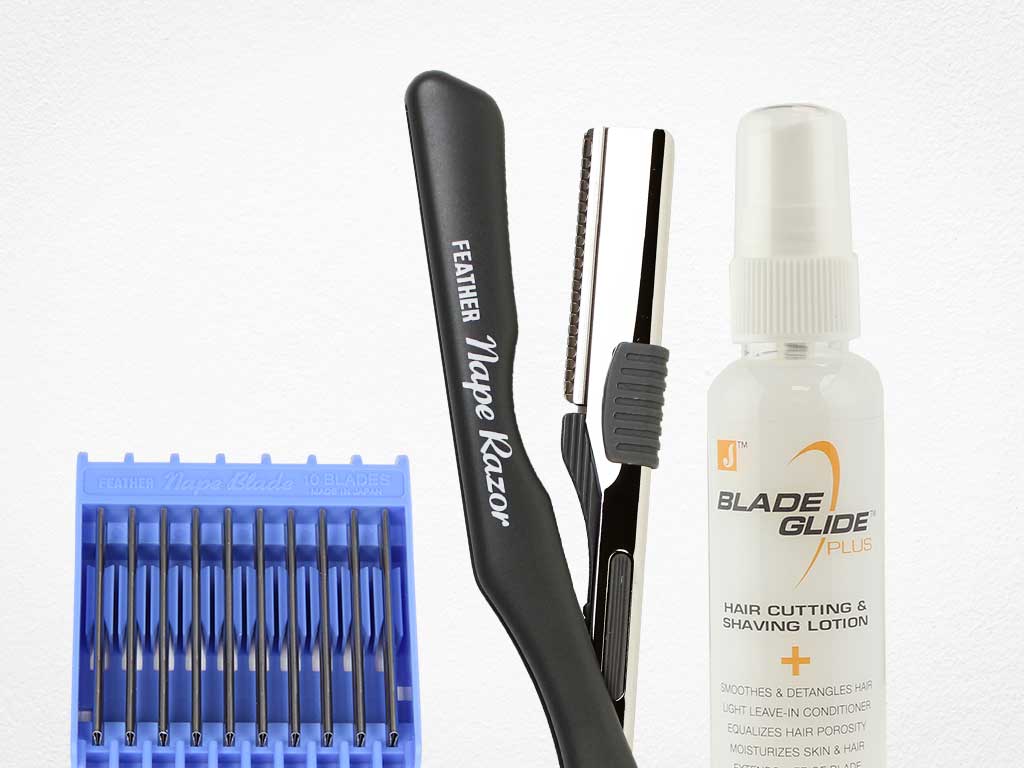
Now, this type of technique that I'm using here is kind of in between channel cutting and fillet cutting. So, this is uh the the razor is angled at a 45° against the head. So, it gives me a little bit of separation and a little bit of thinning.
So I'll go through put some texture in it and then see how it looks. This would be the channel cutting where I go directly in and force separation. This would be filleting where I lay the blade flat against the head.
This is in between where it's at a 45° angle. So I get a little bit of the channeling and a little bit of the of the filleting at the same time. So not only do I thin the piece out, but I also create a little bit of separation, but it's not a complete channel. I'll continue to work this all the way back.
And I'm just going to go through and do this to every section of hair on the entire head. And I'm going to be as diligent as I can and apply it as judiciously as I can and try to get that texturizing real even all over.
I'm going to pay attention to where the hair is a little thicker and I'll apply a little bit more. Where the hair is a little thinner, I'll apply a little bit less. And I'm just going to work all the way from front to back, every hair, every section, every piece on this entire head until I get everything texturized like I want.
And I feel like it's fitting in pretty well. And I'll look at each section as soon as I finish cutting it and seeing if I need to add a little bit more. And I think that that texture is looking pretty good.
Razored Bangs

Now, we're finishing up here with my last section on the top. And you can really go through and move fairly quickly once you get the methodology down. Now, we're going to start right here in the front. And I'm going to start fitting in our bang section.
And I'm going to take a little piece right there in the front. Cut that really short right in the center. Using that as my guide for both sides. I'll comb this down. Pick up and use that short piece in the middle and angle that down at about a 45, maybe a 40, 39-1/2° angle. I just want to go shorter in the middle, really longer towards the edges and force that hair to move out of the face while being really really short in the middle and instantly building up length.
Just being very, very patient, very methodical as I'm applying this because a razor can flat cut some hair off if you're not careful, which is great because it makes it easy to cut hair, easy to apply your shape, but you got to be respectful of it.
Modern Pixie Mullet with Fringe Final Look

Now, we're gonna go through and blow it dry and check it out and see what we got. Here's our end result. And I I think we're looking pretty good. I really like this shape. It's a beauty. And I love this little short little piece that gets really long and you get these wolfish bangs. You get this kind of ear muff of hair covering the ears, but yet it can separate right over the ear and give you a little bit of exposure right on your neck.
We got our little rock and roll mullet going on for such a classic smooth type of shape. And I think that this works really, really well on a lot of different hair types. Not only will it work on thick hair or thin hair, it will also work on wavy hair.
I would probably not do this on the thickest of curly hair. I probably wouldn't do this on real curly hair anyway. In terms of look, it might get a little poodle-ish with a little bit of a mud flap in the back and that would not be cool.
But I think this layered pixie mullet works really well. Give it a shot. Add it to your repertoire and I think it will expand your haircut opportunities for short hairstyles and pixie cuts.
Please check out the Jatai Academy. There's all kinds of fantastic information on there that will make you a better hair stylist and barber.
Also, let us know what you'd like to see in the future. If you have any questions, leave a comment below. Thank you so much for watching and we will see you next time.
SHARE