
Home
/
Trend Connect
/
Tutorial
/
How to Cut the Bangs 4 Ways: Birkin, Side Swept, Micro and Butterfly
How to Cut the Bangs 4 Ways: Birkin, Side Swept, Micro and Butterfly
by JATAI Academy,
11 Mar 2026
Let’s learn how to cut the bangs in four different popular ways, specifically Birkin, side swept, micro and butterfly curtain bangs. Whether it's building in completely new bangs or doing a trim of already existing fringe, these techniques work! Cut bangs with ease by watch this YouTube video and learning step-by-step how to cut the bangs and follow along with the transcript below.
How to Cut the Bangs 4 Ways:
Welcome back to Jatai Academy. I'm Russell Mayes, Director of Content. Today we're going to be sharing with you the four most popular bang styles there are: Birkin bangs, side swept bangs, micro bangs, and some butterfly curtain bangs.
Now, I'm going to show you how to section it properly, how to make sure it fits the head right, how to get the right texture, and not cut it too short. So, let's get started.
Birkin Bangs

We're going to start off with the Birkin Bang. The Birkin Bang is known after Jane Birkin from the, her 70s effortlessly glamorous bangs. And they were shorter in the middle and they gradually got longer towards the sides, maybe as long as the cheekbone, maybe a little bit less. But it was always this kind of just below the brow, a little longer towards the edges. It was beveled, but it was still heavy in its solidity, but the ends were really, really soft.
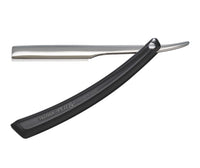
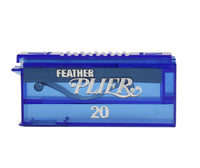
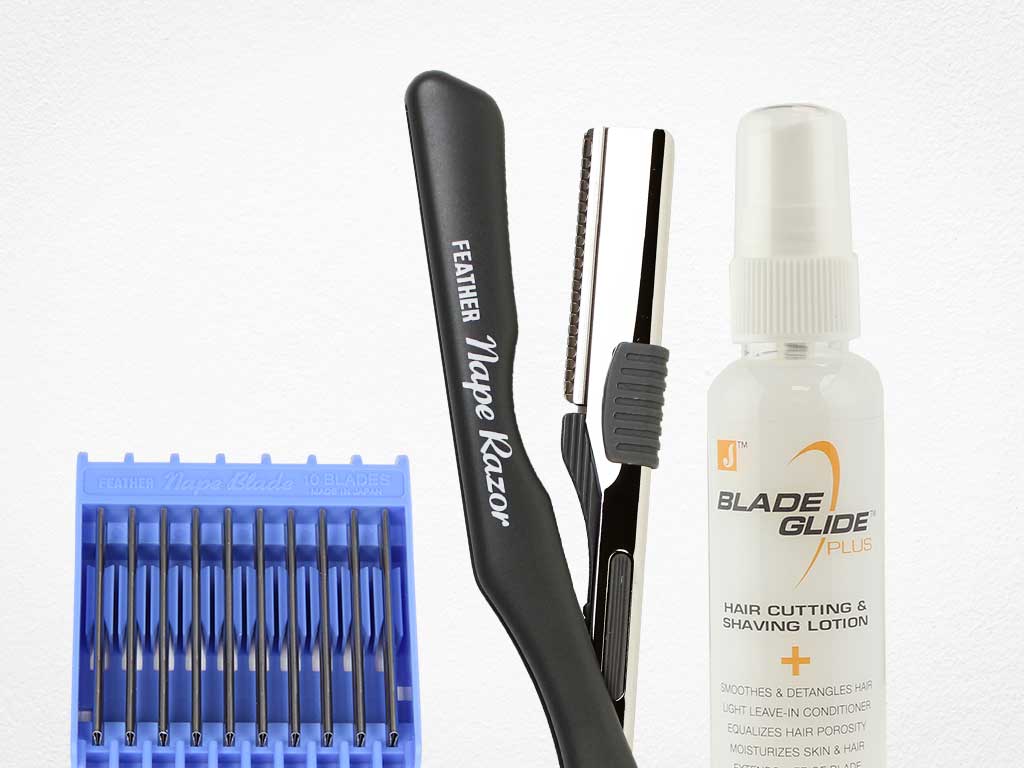
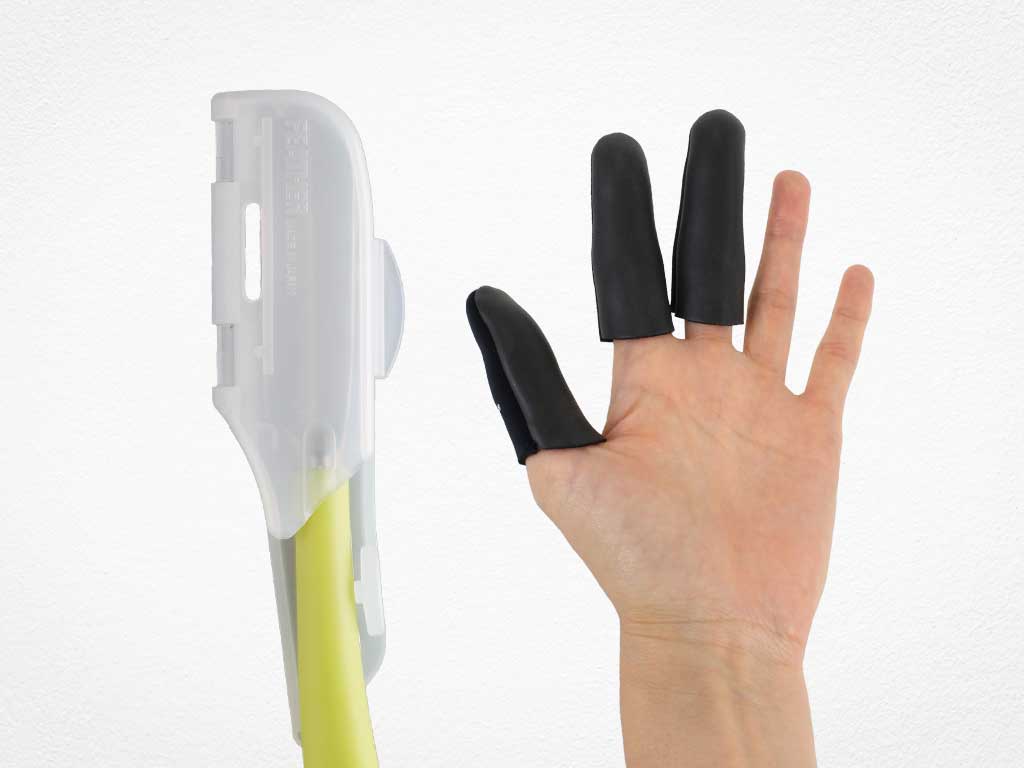
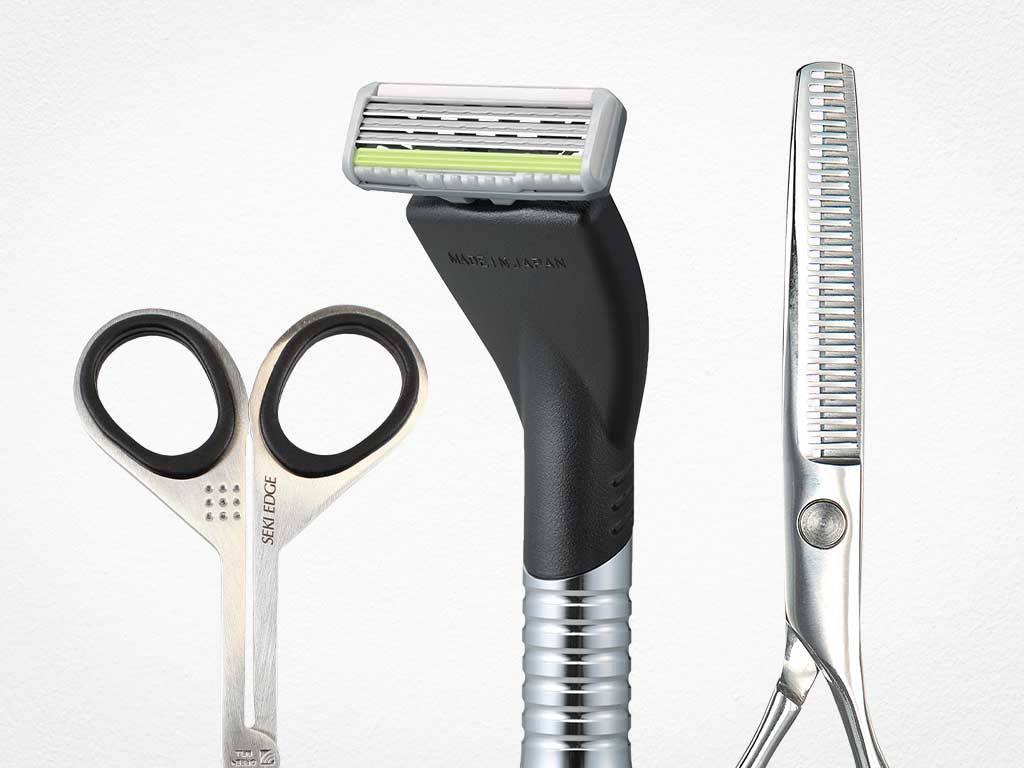
So, we're going to start with my Feather Plier Razor. Now, this is a guardless razor, so there's no guard. It gives me the most control and the cleanest cut over my cut line so I can keep it really solid, but yet really wispy and soft just on the edges if I want. That's what we're going to do.
So, we've taken a center part or a natural part from that first little bump of the head where the head starts to curve forward. We're going to take that to the center of the recession on both sides. So, this is going to split off all the hair that has the ability and tendency to fall in the eyes, to fall in the face.
If this hair tends to be a little thick, which this one is, I'm going to split that in half. Come on, baby. Here we go. Split that in half. And that way less hair I can control. More hair sometimes becomes a little harder to control.

Alright. So we're going to section out right here in the front. Now I'm going to take a section that's going to be from the inner eyebrow to the inner eyebrow. This is going to be my focal point for these bangs.
And wherever it's the shortest, that's the focal point. That's where your eye goes to first. It's going to be this little short piece in the middle. Then it's going to gradually get longer towards the edges. But I want to focus the attention right in the center of the face.
Follow us on your favorite social media @jataifeather
Take this little section here. Comb down. I want this to hit just a little below the crux of the nose. So I know that that's going to shrink up a little bit when it dries. So we're going to go a little longer than that. And I think right there is probably pretty good.
And I'm going to take a nice short even razor stroke to cut my length. My left hand is holding that hair as tight as a vice. Get that cutting through. If anything kind of sneaked out there, just cut that off. There's a little piece there. Come here. There we go. Now, from here, I want to see where it's going to fall on the cheekbones.
So, what I'm going to do is I'm going to comb the whole section out and forward. And then I'm going to visualize where I want this to fall on the cheekbone. And then I'm going to cut that straight across. So, we're going to go somewhere about there.
A little bit past the tip of the nose just to be safe. If we need to, I can cut more of that off. I cut everything straight across. Now, the reason I'll go through and bi-level this is so that I have a guide here that I know that's going to match on each side.
If I feel that that's too long, I can take that a little shorter, but I think that's going to be a good length there. Then I'm going to bevel this through to this corner right here. So, I have a guide for my cut to and my cut from.
So, we're going to comb this straight down. There's my guide I'm cutting to. I'm gonna hold that down and then angle the blade to where I'm going from short to long. Come here, baby.

And I want to hold this straight down as I'm cutting because I want these to be heavy, but I still want them to be soft. So, by holding it straight down, angling my fingers at the guide that I want to cut and then going through and cutting that, the same type of razor stroke I was cutting before and the center cutting that down and through to my guide on each side. There we go. I think we need to change this a little bit right through there.
Now, we're going to take and comb this next section down. Now, here to keep this from building up too much length, I'm going to introduce a longer razor stroke motion so I can soften that thickness.
There's my length. A longer stroke ending at the same spot right through there. A longer, broader razor stroke to get me a little bit more softness through there.
Alright, now we got our basic shape in. We're going shorter in the middle. Gradually beveling that out into a longer side piece. So, let's blow it dry. See what we got.

Okay, here's our end results of our Birkin bangs. Um, I think the shape's pretty good. Thicker hair sometimes gets a little broomy, so you have to texturize it a little bit more.
The key points to this to remember is that you want to go a little longer with the angle than you think you need. Use a razor, make it soft. Now, let's move on to the next.
Side Swept Bangs

So now we're going to do some side swipe, side swipe, side swept bangs. Yeah, we're going to sweep some bangs to the side. So whenever you're going to do that, that means the parting is going to be extreme on one side. Usually the center of the recession or if it goes lower, it looks a little funky, but usually around the center of the recession straight back. That's going to be our part.
We're going to do the same methodology where the head starts to curve forward. That's where we're taking our parting from going to the center of the recession. So now we have a bang on one side.
You could technically take this little sliver of bang right here on the right side. But if I take that always if I cut that, it always seems to hang out and look funky and never blend in.
So we're going to take a straight up and down section here. So, we're going to take this section, comb all the way over T to my part, cut about here, cut parallel to my parting. So, that automatically starts to introduce an extreme amount of movement into this section over to the other side.
We're going to take a parallel section, comb that over. There's my guide from underneath. Cut that down and through. Take the last of the section. Pulling that over. Anything that hangs over my guide length there, we're going to cut off.

Now, you'll see when I comb this down, I start to end up with this really extreme angle of about a 45°. Alright. And here is our side swept bangs. And I think this looks pretty neat. I like it. It's a little Judy Jetson-y. I think if we just had this kind of flip out a little bit, you'd look like Judy Jetson.
Micro Bangs

Alright. So now let's move on to the next one. Alright. So we're going to do micro bangs. Now micro bangs, probably the hardest and the thing that you have to be the most patient with.
We're going to take our same type of sectioning from the first bump of the head to the center of the recession. Now we're gonna take all this hair. I'm going to evenly wet it. And I want to make sure that when I'm going to cut this section, I'm using as little tension as possible.
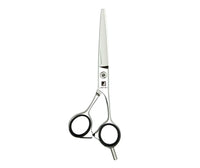
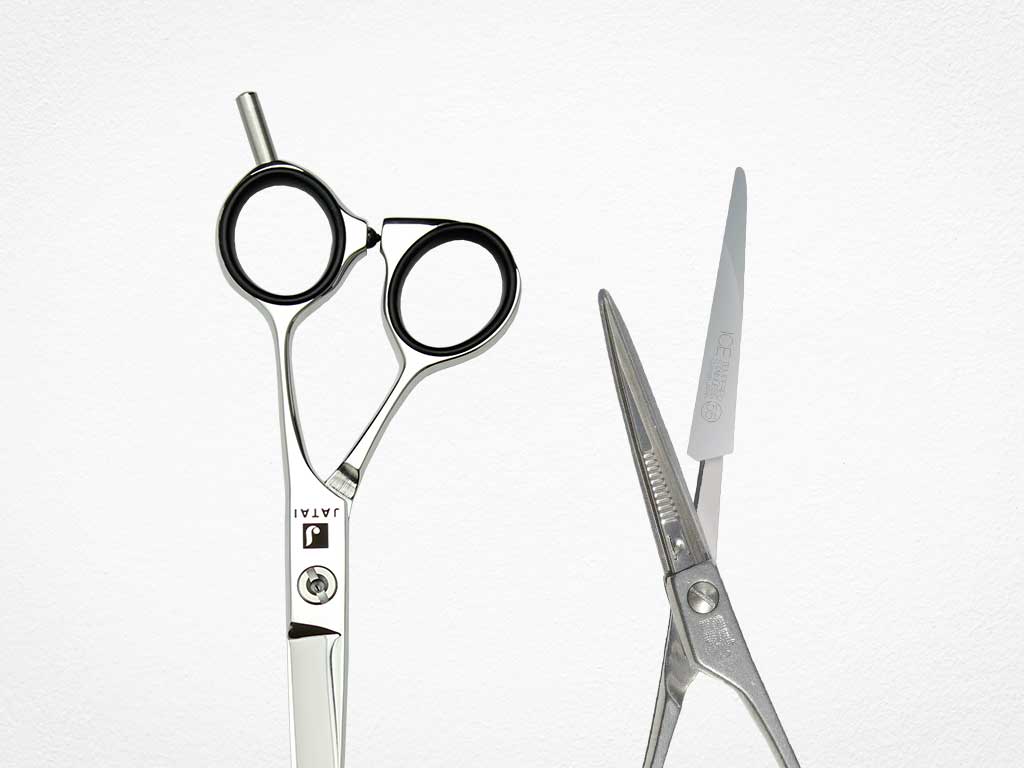
So, I'm going to start with my Jatai Tokyo Scissor. This is a long, skinny, thin blade with a nice point. It enables me to get in there and really precisely point cut exactly where I want, and it doesn't push the hair too much. So, let's get started.
We're going to comb everything straight down. Pick up with the comb. Find out where I want to cut it. And then I'm going to cut that straight across.
If the hair is too thick, then take this into two sections. If it's too thin, then a thicker section makes it easier to see your cut line. So, you'll get that choice by experience.
So, comb everything down. Now, as soon as I comb that down, I instantly see it start to kind of spring up. That's okay. I know it's going to spring up.
So, when I'm expecting it, I leave it a little longer than I think it should be so that it springs up. And then I can clean the spring up. So, I'm going to comb that straight down. No tension at all. Go through with my Tokyo Scissors and cut that straight across.

I'm going to point cut this so I have a little bit of softness to it, and it makes it a little bit easier to go through and cut. If I wanted to cut this straight across, like, you know, Mr. Spock bangs, then I'm going to take much, much smaller sections and point cut it first and then go through and clean up my line. I'm not going to try to cut my clean line right from the beginning. I'll point cut it and then cut it.
It makes it far easier to get a nice precise clean line doing it that way as opposed to trying to push the hair into shape. Comb that straight down. There's my guide in the middle.
There we go. And here I'm just trying to be as patient as I can be and be as diligent with my cutting as possible. The more patient I am, the more I continue to fine-tune these sections, the better that my end result will be.
And again, I'm not trying to get this perfect on the first pass while it's wet. I'm going to get it as close as I can, as close as I feel is necessary. And then I'll go through it after I dry it. Clean it up even more. I'm beginning to get a little neurotic now. I think it's time to move onto the next phase, drying it, and then we'll fine-tune it some more.
Now, we've got everything dry, and it's not nearly as clean as I expected. So, now let's just go through and start cleaning it up little bit by little bit by little bit until we get that nice micro bang that has this perfect amount of texture that we want and looks good straight across and is as effortless to style as possible.

And here's our micro bangs. I think patience with your bangs. Here we got some hanging over. We got this just mess of hair which I actually kind of like. And I think that the micro bangs really fit with this shape quite a bit. So, please be patient. You'll get there. Takes time.
Butterfly Curtain Bangs

So, now let's go through and do some butterfly bangs. Butterfly bangs are a lot like the Birkin bang in its shape where it's shorter in the middle and it gets longer as it goes towards the sides, but it's application is a lot different because you're going to start over-directing and introducing a lot of movement to it.
So, to learn how to cut curtain bangs we're going to start with a very, very small center section. Razor thin, wafer thin center section. Hold that forward and cut that somewhere above the eyebrows very gently, taking a pretty long broad stroke.
Cutting that length off through there. Taking my time. Making sure I get the thickness proper and getting those ends very, very texturized and then looking and seeing how that starts to separate there in the front. If I feel that that's short enough, then I'll go with that. If I feel like I need to make it shorter, now is the time to do that. So, now let's go through take a parallel section.
Start to hold everything over to the left. There's my guide from underneath. and then gently follow that guide as I cut down. I'll take the next section. Well, we'll just go ahead and take the whole thing.
Hold that over at an angle which is parallel to my angle parting here. There's my line underneath.
Cut that all the way across. Making sure you keep hair on this side of the section pinned out of the way so I don't pick that up and create a hair disaster for myself. Come on now. There we go.
So now when we see we got this shorter in the middle gradually getting longer towards the sides, but since we have that movement that's introduced to it from pulling it to the left, it gets much lighter and airier as it goes over where the Birkin bang ended up hanging with that solidity. This lightens the whole thing up.
Let's blow it dry and see what we got. All right, here's our butterfly bangs. You got nice and short, sassy in the middle, building up to a lot of length real quick on the edges here. A lot of texture through it. So, it has a tremendous amount of movement and airiness to it.
And I think because it has that airiness and texture to it, that's what gives it the effect. She looks pretty good. I like this one. I like this one. So, there we go.

How to Cut the Bangs Takeaway
The four most popular bang styles that you can get today. The key point to this is to just be patient. Make sure that you get the partings right. Make sure that the bangs fit the head right for the style that you're doing. And be patient with this with the length selection.
You don't want to cut it too short. Go a little longer if you're worried. And then you can always take it a little shorter. So cut a piece, see how it fits, add more to it as you see fit.
Whether you want to learn how to cut the bangs for short hair or how to cut the bangs for long hair, the techniques are the same. These techniques are meant to be done by a professional hairstylist.
Please check out the Jatai Academy. There's all kinds of fantastic information on there that will make you a better hair stylist and barber. Also, let us know what you'd like to see in the future. And I will see you next time. Thank you so much.
SHARE