
Home
/
Trend Connect
/
Tutorial
/
Different Techniques for Texturizing Hair with Scissors and a Razor
Different Techniques for Texturizing Hair with Scissors and a Razor
by JATAI Academy,
04 Jul 2024
In this tutorial you will learn different techniques for texturizing hair with scissors and a razor. Knowing how to texturize hair with scissors and razors for hair cutting can give you many different options for how to texture cut hair for removing weight, creating separation and pieciness and creating movement.
If you want to know how to texturize short hair and long hair, it doesn't matter the length. At least one or more of these techniques can work on your desired length, hair texture and hair thickness.
Russell Mayes, Director of Content for Jatai, will demonstrate various texturizing techniques and shows you how to use texturizing scissors, traditional scissors and razors to achieve your desired results. Watch this tutorial and follow along with the transcript.
Different Techniques for Texturizing Hair with Scissors and Razors:
Welcome to Jatai Academy. Today we're going to be doing a technical deep dive in how to cut texture into hair and we're going to approach it from two different ways.
We're going to approach it one way of texturizing to remove weight if the hair is overly thick and then we're going to also texturize it in a way to create separation and pieciness and add texture to the shapes you've already done. So we got a lot of different methods to show you. So let's begin.
Removing Weight from Thick Hair Using a Razor

So the very first way we want to create texture is let's think about we've got a one length haircut and the hair is just too thick. You know you get that broom effect and the hair doesn't have a whole lot of movement and swing to it.
So to know how to texturize thick hair, we want to remove some weight real gently just to diffuse the thickness of the hair so it's not so thick and bulbous. We don't want to introduce any kind of separation or any kind of movement to it. We're just trying to remove weight.
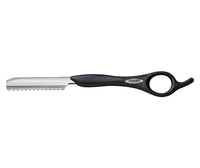
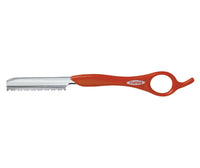
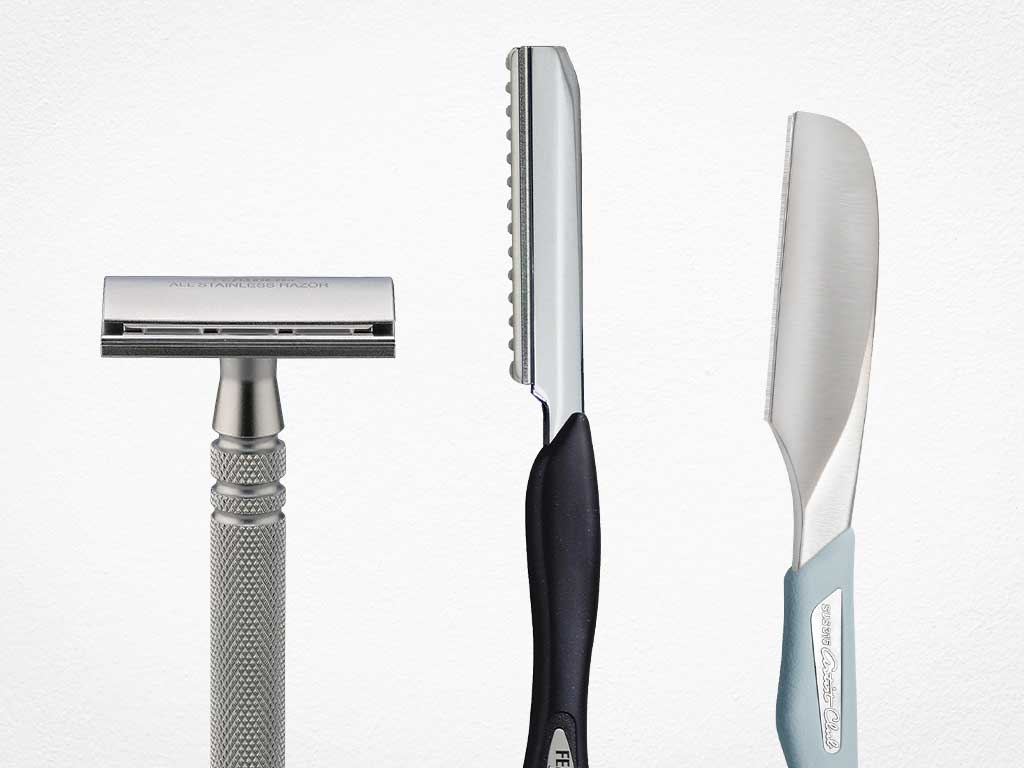
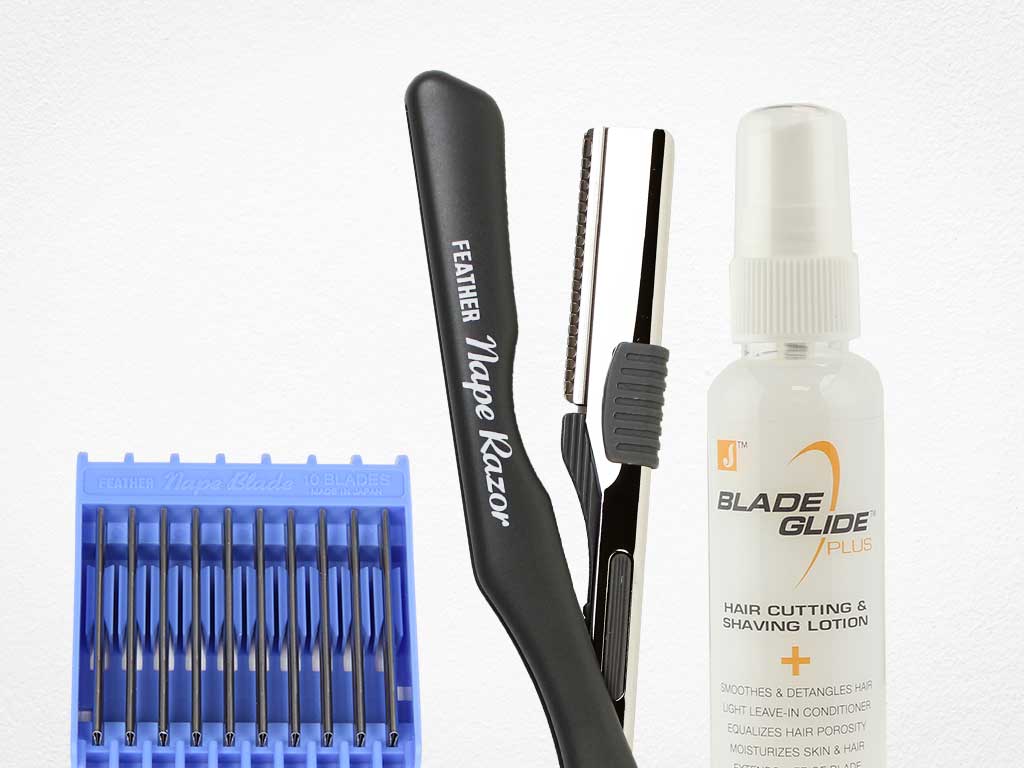
So I'm going to start with my Feather Styling Razor and I'm going to take a small thin section here in the back or you can start wherever you want to remove the weight. You just want to make sure that the sections are not too thick.
So I'll take a section, comb that straight through and now here I'll do the claw method on my razor where I'll take three fingers on one side, two fingers on the other, keep my wrist straight and I just very gently fillet the top of that section. And that's going to remove some of the thickness of the hair without introducing shifting back or forth or pieciness.
I'm going to go through and comb this section down to show you again. Do the claw method very gently. I don't want to make this section too wide because if it's on a curved part of the head...right? I want to keep that section flat through there. Because if it's on a curve it's going to thin one area of the section more than another area.
So I want to work in little flat sections of head so the razor will touch the hair at the same time. Comb that down and then very gently just push the razor against the hair, tilt the blade up and then just gently go through all the way towards the ends. I'll remove some weight, but I will still have a nice solid shape. Add a little bit more hair.
Little bit more. Now this section is a little bit wider across the head. So I've got three flat sections. I got the middle. I got to the right and I got to the left. So we're going to start in the middle again.
Very gently just like I'm filleting fish, just right on top as I go through and down. And I want to be very mindful. The more pressure that I put against the hair, the more hair that's going to come off. Alright, so I want to be... that's bad. I got too excited on that one. But that was an example.
So nice, easy gently laying the razor against the head and then just very gently filleting all the way down and through. And remove as much hair as you need to. So that's the first way of removing hair when the shape is too thick.
How to Texturize Hair for Pieciness

Okay so now say that I want to texturize the hair. I want to remove some weight but I also want to create a pieciness and a flickiness to it.
So instead of laying the razor flat against the head, I'm going to go in vertically and by vertically I will go through and start to put channels into the sections so that will not only thin it but it will create separation.
It will force the ends to separate into little pieces. The first method is not going to force separation. It's only going to diffuse the weight. This way I'll create separation.
So I'll go through, same method and just gently put the blade through the section and whatever kind of gap that I think I need, I go and cut me a nice little angle right into that and now I remove hair but I also force it to separate into pieces. And that will separate much better.
So now we go through and we'll do the same thing on the other side. With this method, I don't want to pick up much hair from underneath because then that's going to get recut.
The first method, since I'm only doing surface level texturizing and razoring, I don't have to worry so much about that. But as I start to do internal textures like this I only want to texturize the hair that's in my hand. So there's my section.
Try to maintain the same kind of gap and I'll curl my fingers away as I get closer to the root of my fingers. That's going to give me much more separation with each section that I go through and texturize like that. So internal texture with separation using my Feather Razor.
Removing Weight and Creating Separation at the Same Time

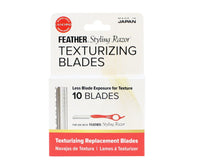
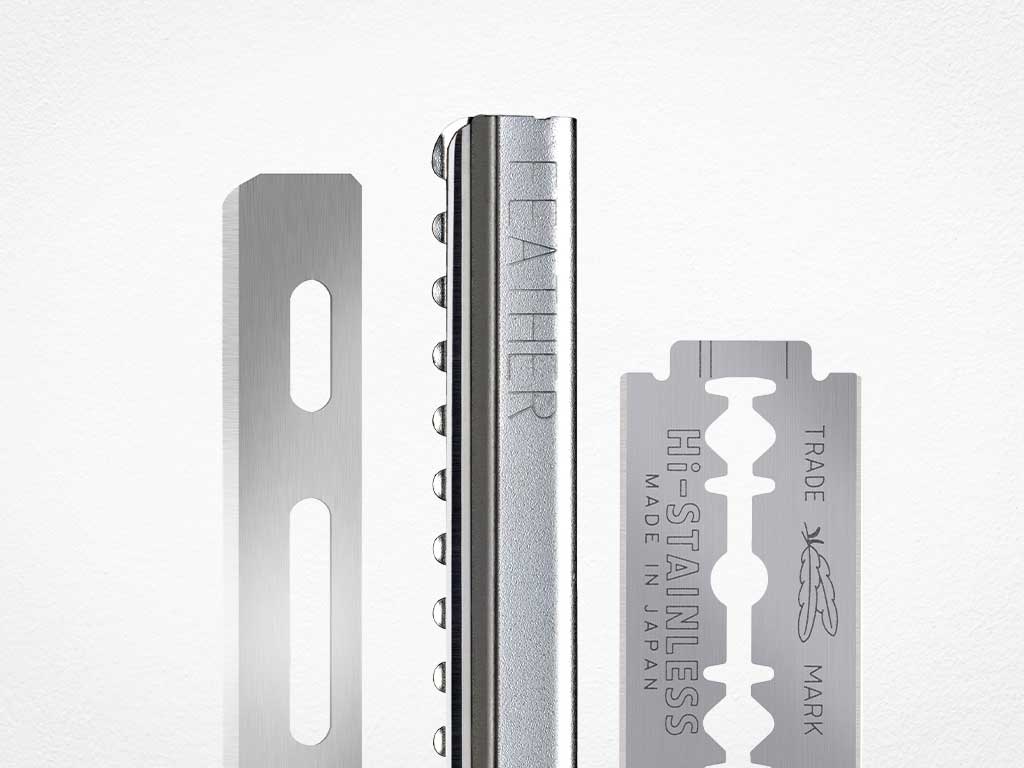
Now there is a way that I can go through and do kind of a stop gap between both of those where either I'm filleting it and just diffusing the weight or creating internal texture and separation. There's a way I can get in between both of those and that's by using the Texturizing Blade on my Feather Styling Razor.
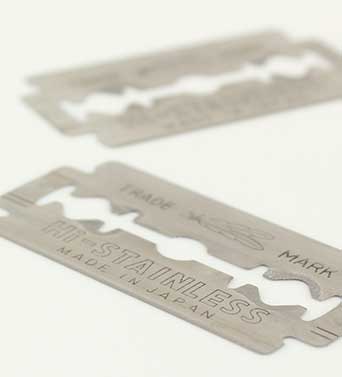
So I can use these blades instead. And so what happens here is I have a little area of guard that covers part of the blade and areas where the blades open and it has gaps. And where it has gaps that allows hair through to the blade and that's what cuts.
So I'll actually cut little channels as I fillet it. So it gives me a little less weight removal than just laying my Feather Razor against it solidly and removing the whole thing. It doesn't give me as much weight removal as if I go through and channel it. So it's in between.
So I'll take my Feather Styling Razor with my Texturizing Blade. Take a section about as wide as the blade. Start where I want my texturizing to start which is usually about halfway. I tend to never really go deeper than halfway.
After I get there, I'll just go through and gently glide all the way through to the end and now you can see I'll get separation and diffusion of weight at the same time. Pick up what I want to cut, comb through.
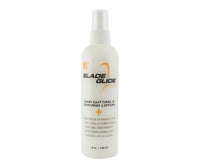
This is getting a little dry so I'm going to apply a little bit of Jatai Blade Glide just to keep all the hair nice and moist and evenly saturated. The more evenly saturated that the sections are the more even that my razor cuts going to be. There we go. Take my next section through there.
Start about halfway. Once I lay it on the head, on the hair, I don't remove it. There's a little bit right through there I need to take out. Boom. Got that perfect. Let's go to the other side. Pull this down and through.
Little bit right there. Down and through. And then you can see I get a little bit of internal texture, a little bit of weight removal and it's not nearly as severe as either the first two methods that I showed you. So Texturizing Blade with the Feather Styling Razor, filleting the section to create a little bit of separation and weight removal.
Should fine hair be texturized? It can if you want to create pieciness and some volume. This method would be the best way to texture fine hair as you don't remove as much hair but still create texture.
How to Use Texturizing Shears for Weight Removal

So now we're going to move on to texturizing dry hair. The razor works better on wet hair but thinning scissors and point cutting and things like that they work better on dry hair so that you can see how much weight removal that you're actually getting.
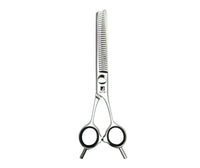
So the first way that we're going to approach this is very much an old school method way where you're just going to use a thinning scissor and cut it the same shape as the line that you cut.
So if I've cut straight across that's the way I'm going to go in with my thinning scissor. If I've cut it at an angle then that's the way I'm going to go in with my thinning scissor. That way the internal shape that I create is going to mimic the external shape so it has a better chance of everything flowing together.
Turned to where the straight blade is on the bottom. Put my fingers in the last inch or so. One. Pull out. Two. Pull out. And that's usually enough to give you enough texturizing and thinning on the ends to bevel it and to make the shape a lot more pliable and give it more movement. I don't have to go crazy. If the hair is very thick, I may go through and do it an extra time or two or depending upon the hair I may do it a lot.
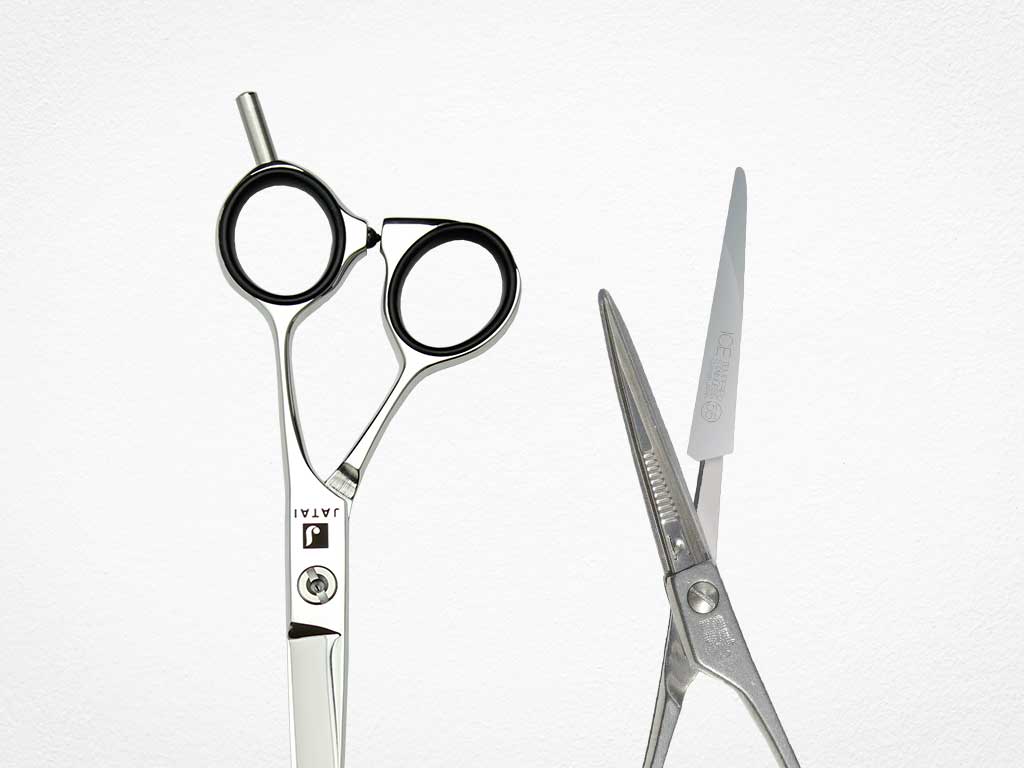
So we're going to continue to pull the section down, pull out any hair that was previously thinned. Get that together straight across. Now the good thing about these scissors, my Tokyo Thinning Scissors, is that they're seamless.
So when I go through and I put a line internally I don't instantly see a cut line internally. It diffuses and it blends away so I don't have a bunch of steps in the middle of this.
Next section I can go through and do the same thing. The longer the hair is the more internal that I can go. A nice seamless thinning scissor like the Tokyo is excellent for this type of work.
Try to not lift up any hair from previously cut sections because then I don't want to thin the same section two, three or four times. I only want to thin it once when it's in my hands and then that's it.
If I need to go back after I've done everything and thin it, then I'll go back after the fact. So that's texturizing with hair thinning scissors, blunt shapes and just softening the edge.

If I wanted to remove more hair and not work myself to death and I wanted to create some movement internally then I'll go through and take a vertical section, remove the hair that's already been cut, pull this hair forward and then go through parallel to my section and thin from about halfway through to the ends.
And I will remove a lot more hair that way and introduce more movement. You can already see how that shape is collapsing much more than the piece next to it so that will remove a lot more hair and it will be completely seamless.
And I can remove more hair where I feel like I need to and less hair where it needs. Because not all sections of the head are the same thickness. Like right here is a good example of that.
If I look at that it's thinner right through here. It's thinner right through there and then it's a little thicker there. So a little thicker, a little thicker, a little thinner. So maybe I hit it once and pull that section out and then where it's thicker up here, hit it a couple of times and diffuse.
So I can even out the amount of weight on each individual section as I'm working through by going through and doing this kind of method. So we're going to pull that out at an angle. Thin this through.
And I don't know what that's called, what that method's called. So we're just going to call it 'Russelling.' So I went through and Russelled this side by holding out my section vertically and removing weight internally as if I was point cutting with my hair thinning shears. I have a lot more control than just putting a straight line in.
Texturizing Hair with Scissors

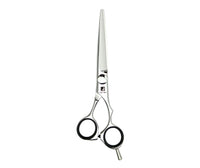
Let's move on to the next one. So the next way that I can thin a section of hair is going through and using my straight hairdressing scissors. I'm going to use my Kyoto Scissors from Jatai and this method is similar to what I've just done with the thinning scissors where I go through and point cut internally. But this method is going to be as controlled if not more controlled and it's not going to be as diffused.
So the way I'll do this is I'll go through and take a vertical section, put my fingers in pretty deep, roll my fingers over so I have a really good grip on that (I have a death grip on there) and now I'm going to take the stylist or barber scissors, put the blade in and as I bring the tip to the hair I will close the blade.
And you'll see me take little points out. And as I start to go a little faster it will start to look like this. Where it's thicker I can thin it a little bit more.
Where it's thinner I can thin it a little bit less. And this way it's more controlled than if I'm doing the thinning scissor because I can hit exactly where I want the removal of weight to be removed from. But it's also not going to be as diffused.
So maybe I want to keep my shape really solid but I need to remove some internal weight and this would be a good method for doing that. And this works really really well on curly hair as long as you don't get it too close to the scalp. So this is a great way for how to texturize curly hair.
Now one thing I want you to pay attention to is the angle of my hair shears when I do this. If I take my scissor and it's very parallel to the hair, I will take out very little when I hit it each time. The more of an angle that I go with the hair scissors, the larger the piece that I'm going to texturize out of it.
Real World Example for Texturizing Hair with Scissors

Let's give a real world example of how to texturize hair for effect. Now we have our model here. She's got her little blunt bangs. She's got her nice little haircut cut.
So say that I want to soften this hair up. So the first thing I want to do is go through and use my Tokyo Thinning Scissors. I'm going to separate right here in the middle and I'm going to be very very aggressive with how much hair I remove.
So I'm going to lay my fingers right up to her hairline, 2, 3, 4, 5, 6, 7, 8, 9, 10, 11, 12, 13, 14 and go through and thin it really really deep about half way. Well I'm going to thin this really deep. I'm going to go through and do it again because these mannequin heads have a lot of hair.
So now we've got that thinned and you can start to see it's wanting to separate already just by removing the weight. I'm going to do the same thing here. I did it two runs.
Two, three, four, five, six. One through. Let's do one more run through there. Maybe not as many hits. That's looking pretty good. You can see already just by going through and using my thinning scissors I have gone through and changed the entire feel of these bangs.
There we go. So now from here I'm just going to place my blade in and then gently close the blade all the way through and this is going to create a very very strong blunt separation to this diffused texture that I've already created with my thinning scissor.
So it's gone through and blunted everything up that I had just cut in through there. Try to keep all my gaps even but maybe for artistic reasons you don't want to. Just go through.
Don't poke her in the eye. And now we've got some nice short little piecey bangs.
Follow us on your favorite social media @jataifeather
Hair Texturizing Cut Final End Result
You're looking pretty good girl! Here's our end result. I think it looks pretty neat. You know if I could have bangs girl I would have my bangs just like yours. No not really. I'd have it like Elvis. Anyway, a lot of different texturizing techniques that we covered today.
Which one's your favorite? Which one do you use the most? And I would encourage you to practice some of the others and add them to your repertoire to make you a much more varied solid hairdresser that will give you a lot more options in how you want to texturize and thin hair. Not all texturizing methods work on all different types of hair.
So let us know what you'd like to see in the future. And also please check out the Jatai Academy. There's all kinds of fantastic information on there to make you a better hairstylist and barber. And thank you for watching. We'll see you next time.
Final Thoughts
Knowing how to texturize your hair or client's hair is a fundamental skill that all stylists and barbers should know. And as you mature as a hair professional, knowing what tool to use and how to use it to create the desired effect is important to developing your skills. It's also important to prevent over texturized hair or under texturized hair. Haircut texturizing is an art and science! We hope this tutorial taught you something new that you can take with you into the salon or shop.
SHARE