
David Cassidy Hairstyle: The Original Men’s 70s Shag
by JATAI Academy,
05 Dec 2025
Let's take a look at the famous David Cassidy hairstyle popularized in the 70s. This Partridge family icon made the men's shag haircut a fashion statement for the times. In this tutorial you will learn how to cut the original classic 70s shag that David wore and bring it back to life, not the modern version of it. Why? Because sometimes learning how to cut classic styles can inspire new creativity in your haircutting as the techniques are totally different from modern haircutting.
Watch this David Cassidy 1970s shag haircut tutorial and follow along with the transcript below.
David Cassidy Hairstyle Tutorial:
Welcome back to Jatai Academy. I'm Russell Mayes, Director of Content. Today we're going to be doing a study of the original 60s-70s man shag made popular by David Cassidy. His hair was iconically 70s and made the shag popular.
Now this is the original version of the shag, not the modern reinterpretation of it where it's really highly textured. This is going to be the original. So, we make sure that we get the layering in it really short to get fullness on top. Make sure you get some bangs in it.
Get the feathers because the feathers are very, very important. They're imperative to have in this shape. So, we're going to show you how to do all that. So, let's get started.
Pulling Everything Up

So, let's go through and section everything out before we even start cutting to make sure that we can work as cleanly as possible. Take a center section to the crown from the high point of the head to the top of the ear. Then in the back half of the head, I'm going to take the center section out. It's probably about a 3-in wide section.
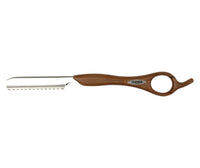
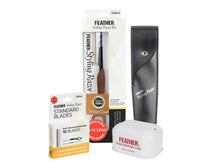
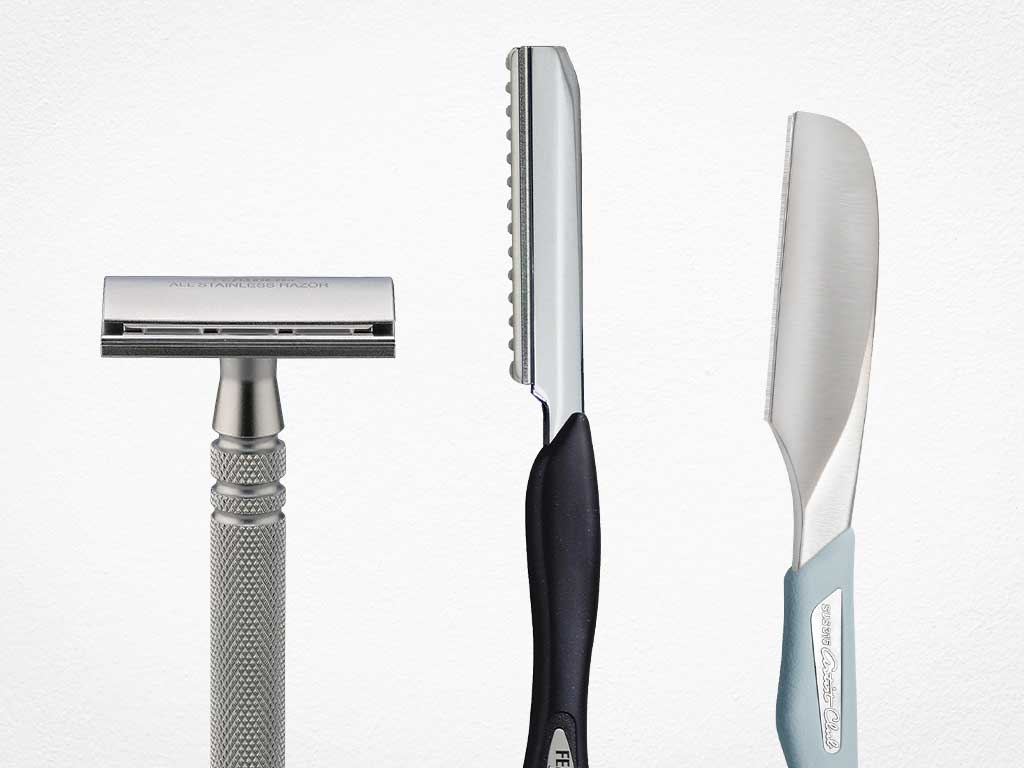
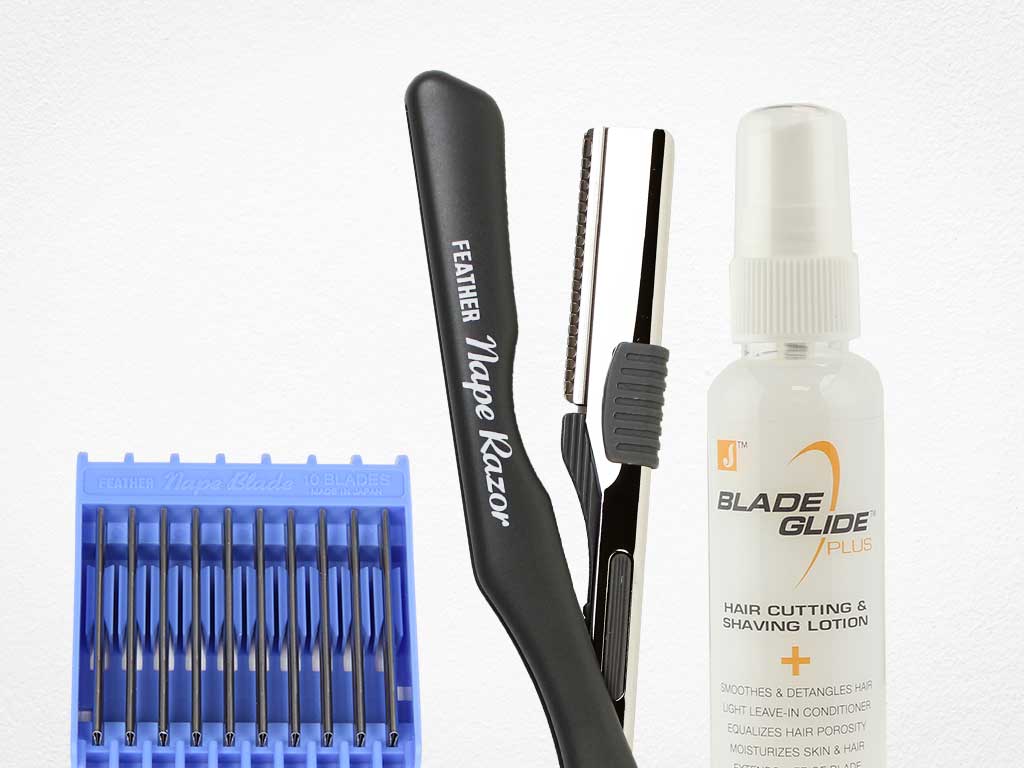
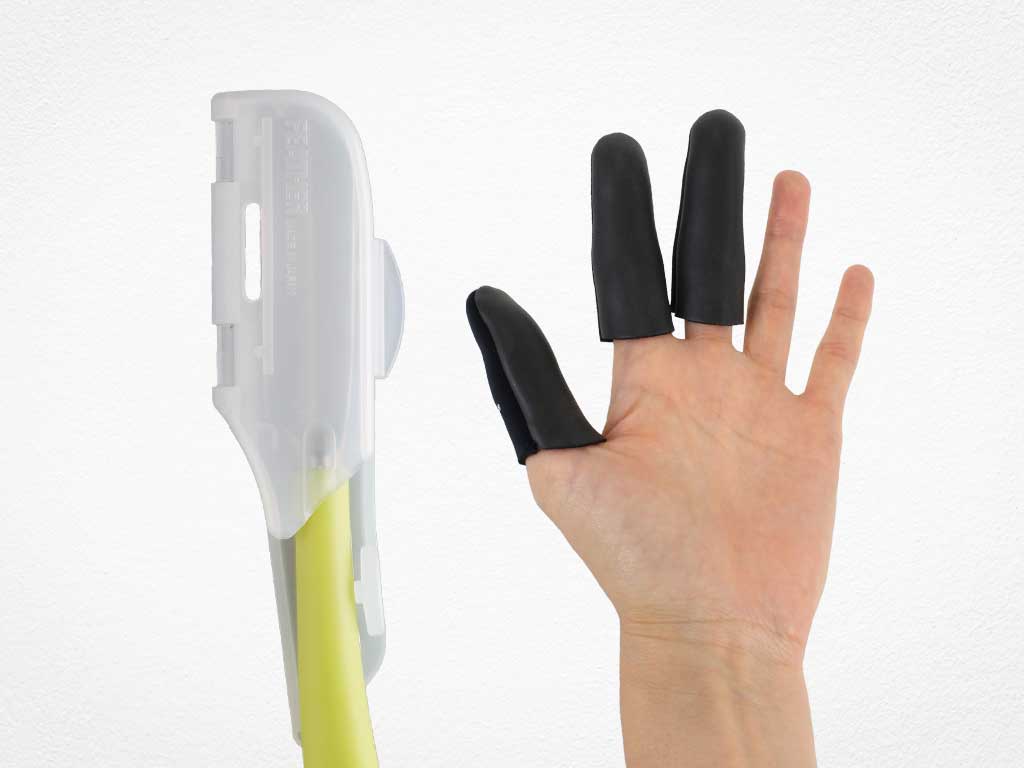
I'm using my Feather Styling Razor. This is the one with the guard. And the blade is very, very sharp on these Feather Styling Razors. So, I can work with a very large, thick section of hair as long as I'm patient as I go through and use my razor motion.
I'll cut that right at the top of the crown. I'll continue on taking section by section and pulling that into my original section. So, the first section was held straight up at the crown. Everything else is going to be pulled up into the crown as well. So, by pulling everything into the crown and having a stationary guide, that's actually going to give me an inconsistency in my elevation.
So the first section's held at 90° straight up and then everything else gets held at a greater elevation. So that allows me to build up an increase of length very very quickly, but it also gives me an inconsistent weight distribution which will cause the shape to collapse.
So I'll get a lot of fullness at the crown, but as it continues onto the perimeter, the shape is not going to be as round and as full. So, it's going to be fuller on top, less full on the sides, which is really iconic of the 70s type of look for this type of classic shag.
So, we're going to continue section by section, pulling everything straight up into my original section and just being patient with the razor. I'm not trying to force and muscle the razor through the hair.

I'm allowing the razor to do the work by just laying it against the sections of hair. So, it's the razor motion that's actually doing the cut. It's not me pressuring it against the hair. If I start pressuring it against the hair, I'll actually start pushing the hair and it's going to dull the blade fairly fairly quick. So, just the razor motion is what's cutting it.
Pulling everything up to the center again until I run out of hair. Now, we're going to go through and take the center section, split that in half, use one half of the center as my guide for the left and one half for the right.
Starting at the top again, right at the crown. Pulling everything straight up into the crown. Using my center section as my guide and cutting that straight across. Everything gets pulled up. The same sort of methodology I was doing in the back. And just using my guide and trying to be right on top of the guide as I cut that forward.
Now, we got our last section right here on the left side. Pulling everything up and just following my guide and making sure everything blends where I've cut the original guide at the top.
Checking out my layering on both sides. And I think we got that short enough. Now, we're going to go through and take a center section using the guide at my original crown section that I cut. Pull that straight up into the center of the head and then cut that forward.
Now, when I cut this section, I cut it too long. I didn't feel like it was short enough. So, I've gone back on this and cut it about an inch shorter. So, it's important to kind of monitor your lengths and make sure that they're appropriate as you're working towards the finish of the haircut because once you get finished, you don't want to go back and do the whole haircut again.
So, I'm going to try to check and make sure I cut it the right lengths as I'm going through step by step as opposed to trying to catch it at the very end. Now, we're going to continue working down towards the the perimeter of the head, pulling everything straight up into the center, following my original guide, and cutting that short.
Now, when I'm layering this, it is quite a bit shorter than I would layer most hair for this particular length. It feels a little uncomfortable, but practicing on a doll head really helps you get over that fear of cutting it too short, which is something that's been instilled in us since beauty school, the fear of cutting everything too short.
Now, we're going to continue to pull everything straight up into the middle of the head. There's my guide from underneath. And continue to cut everything that hangs over that off.
Follow us on your favorite social media at @jataifeather
Continuing to work that forward until I run out of hair. After I've cut the other side, I'm going to go back and now I'm going to cut the perimeter shape.
Cutting the Perimeter Shape

I'll take a horizontal section across the nape area. Hold that straight down. Wherever I want this length to be, that's what I'm going to cut straight across.
Using the razor to give me just a little bit of texture on the ends to soften it up, but I'm still keeping this shape fairly blunt. You know, I'm trying to keep it with the original feeling of the 70s shag. And it was a blunt shape. It was a blunt cut. It wasn't real overly textured.
I'm putting a little bit of texture in it to keep it a little more modern, but I want the shape to be really representative of what the original haircut was, which was overly layered on the top, very, very blunt but with a lot of movement to it.
So, we're holding everything down. Once we get our perimeter length cut, then we shall move on to the front. One more little piece right there we go. Perfect.
The Bangs

Now, we're going to section out our bang section. I'm going to take about half of that so I can start face framing our bangs here. I'm going to comb that first center section straight down with no tension at all. Cut that right at the bridge of the nose.
I'll take a blunt little shape and then put a little bit of softening into it as I cut that shape across. So, it's giving me a blunt shape, but then that one razor stroke really softens it up a little bit, but I'm not trying to make the whole thing real super soft.
I want to keep a solid shape but give it a little bit of airiness so that one long razor stroke helps lighten it up without it getting too piecey or too light. There we go. We've got that. I like the lengths there.
Now, we're going to continue and see if anything else hangs over. And anything that hangs over, we're going to cut off. Holding that straight down just like I cut the original section. Anything that hangs over. Boom. There we go. Got that off.
Now I'm going to go through and take a little bit in the center underneath and just lighten this piece up because I noticed that in a lot of the photos that I studied that he had a little bit of lightness right at the center where it kind of feathered back. So I'm taking a little bit of that bang out and making it lighter.
Blending

Now, we're going to take a diagonal section. I'm going to pull everything on the side of the head straight forward. I'm not worried if this blends in with my perimeter length. If it does, great. If it doesn't, that's okay. We're going to keep it disconnected.
But I want to make sure that I pull everything straight forward and cut that off. And this is where my feathers are coming from is because I'm pulling it all straight forward and blending it in with the bangs. If I don't blend it in with the bangs, it tends to not really have that feathery look to it. So, it has to blend with the bangs. After I've pulled everything forward, I'll comb everything straight down. And anything that gets revealed from the underneath hairline, I'll go through and make sure that that blends through.
Pulling everything straight forward from the back and seeing if anything hangs over, which it doesn't look like there's a whole lot. So, we're just going to make sure that that all blends through. There we go. Perfect. I like that.
Now, let's blow everything dry. Pull everything forward and blow it back. And then lean his head over and blow everything dry to get it nice and full and voluminous. Then use a vent brush just to polish everything off and get it all moving righteously.
Final Look

And here's our end result. And I think that we're looking pretty good. We got the key elements of the shape and we got the proportions right. You know, the key things are over layering it more on top than you think you need to, pulling everything forward on the sides and cutting that nice and short and so that you have this, you know, disconnect right here at the top of the ear. And it makes everything feather back.
And we got just the right amount of texture to it. And because of the way we layered it, it makes this top really full, but then collapses the weight on the sides. And by collapsing it, it forces the bottom to flip.
So this is a very versatile shape. If you have someone that wants really short full layers on top and wants it kind of out of their face. Sometimes a study of the old classic shapes can really break you out of your creative box because this really will test you because if you're used to doing modern shapes, they're not anywhere close to this.
This breaks a lot of modern rules by layering it so short and by pulling everything forward and feathering it all back. But I still think it looks pretty good. I think it's really cool. If I had hair, I'm telling you, this is what I'd be wearing. I think it looks great. Feathers are very, very important. You have to have the feathers if you're going to do a 70s hardcore shag.
Anyway, please check out the Jatai Academy. There's all kinds of fantastic information on there that will make you better hairstyles and barber. Also, let us know what you'd like to see in the future. Thank you so much for watching and we'll see you next time.
SHARE